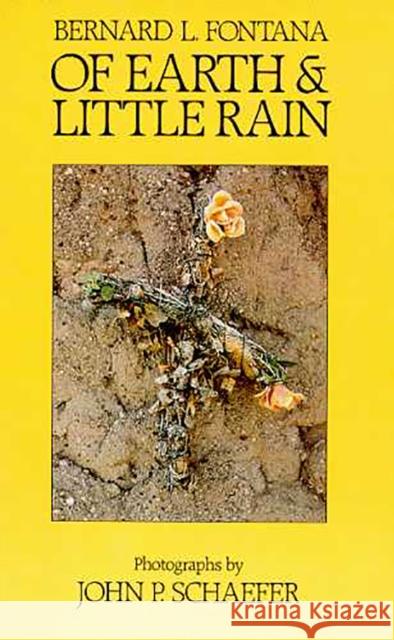
An appreciation of the Tohono O'odham (long known as the Papago) Indians, whose reservation is the second largest in the United States. "Fontana, who has lived at the edge of the Tohono O'odham (formerly Papago) Reservation for decades, provides sympathetic insight into the history and lifeways of these gentle desert dwellers. Schaefer's photographs, many of them portraits, add timeliness and immediate presence." Books of the Southwest "An unsurpassed insight into the Papago world, past and present." Arizona Highways"
An appreciation of the Tohono O'odham (long known as the Papago) Indians, whose reservation is the second largest in the United States. "F...
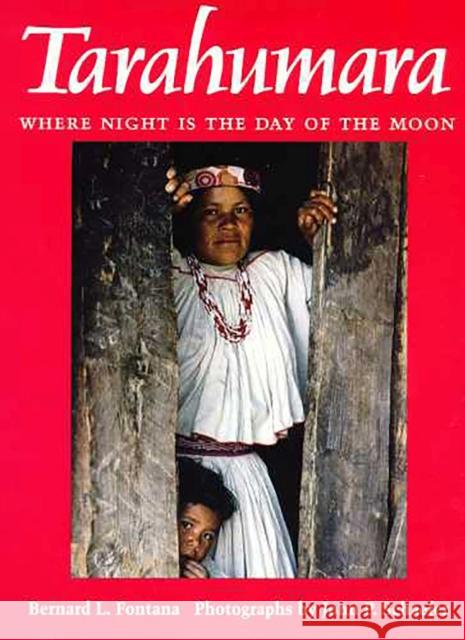
Inhabiting the Sierra Madre Occidental of southwestern Chihuahua in Mexico, the Tarahumara (or Raramuri) are known in their language as the "foot runners" due to the way in which they must navigate their rugged terrain. This book offers an accessible ethnography of their history, customs, and current life, accompanied by photographs that offer striking images of these gentle people. The subtitle of the book derives from the Tarahumara's belief that the soul works at night while the body sleeps and that during this "day of the moon" both the spirits of the dead and the souls of the...
Inhabiting the Sierra Madre Occidental of southwestern Chihuahua in Mexico, the Tarahumara (or Raramuri) are known in their language as the "fo...
When William John McGee set out from Washington, D.C., for the Sonoran Desert in 1894, he was inspired by a passion for adventure as much as a thirst for knowledge. McGee lived in an era when discovery was made through travel rather than study, and reputations were forged by going where no outsiders had gone before. A self-taught scientist in the newly forming field of anthropology, McGee led two expeditions through southern Arizona and northern Sonora for the Bureau of American Ethnology. There he conducted ethnographic research among the Papagos (Tohono O'odham) and the Seris,...
When William John McGee set out from Washington, D.C., for the Sonoran Desert in 1894, he was inspired by a passion for adventure as much as a ...
Bathed in desert light and shadow, rising up from the earth in improbable, faraway places, stand eight original Spanish missions on Mexico s Baja California peninsula. Built of stone by Roman Catholic priests and indigenous laborers in the eighteenth century, these stunning missions dominate the landscape around them. Baja California Missions: In the Footsteps of the Padres is a beautiful and informative book about the eight monumental Spanish colonial churches, buildings seldom seen by those familiar with the missions of California, Arizona, and Sonora, Mexico. With gorgeous...
Bathed in desert light and shadow, rising up from the earth in improbable, faraway places, stand eight original Spanish missions on Mexico s Baja Cali...
Ignaz Pfefferkorn Theodore E. Treutlein Bernard L. Fontana
"The bloodsucking bat, construction of bows and arrows, the punishment for adultery among the Apaches... all was grist that dropped into the industrious mill of Father Pfefferkorn's eyes, ears, and brain." Saturday Review "To be read for enjoyment; nevertheless, the historian will find in it a wealth of information that has been shrewdly appraised, carefully sifted, and creditably related." Catholic Historical Review "Of interest not only to the historian but to the geographer and anthropologist." Pacific Historical Review "
"The bloodsucking bat, construction of bows and arrows, the punishment for adultery among the Apaches... all was grist that dropped into the industrio...
An outstanding work crafted from the handwritten pages of translations from the Navajo of the late Father Berard Haile giving three separate versions of the Blessingway rite with each version consisting of a prose text accompanied by the ritual songs and prayers. Valuable insights into the character and use of the Blessingway rite; its ceremonial procedures, its mythology, and its drypaintings. The University of Arizona Press's Century Collection employs the latest in digital technology to make previously out-of-print books from our notable backlist available once again. Enriching...
An outstanding work crafted from the handwritten pages of translations from the Navajo of the late Father Berard Haile giving three separate versions ...
When Friar Diego Bringas penned his 1796-97 report on conditions in northwestern New Spain, he was imbued with an enthusiastic drive for reform. Hoping to gain the King of Spain's support in improving the missionary program, Bringas set down a detailed history of all that had happened in the region since Father Kino's day. His writings offer a valuable study of Spanish attempts to bring about cultural change among the Piman Indians. Daniel S. Matson and Bernard L. Fontana have translated the Bringas document and added an informative introduction, notes, and references. They analyze...
When Friar Diego Bringas penned his 1796-97 report on conditions in northwestern New Spain, he was imbued with an enthusiastic drive for reform. Hopin...