In the Name of Civil Society examines Philippine politics in a highly original and provocative way. Hedman's detailed analysis shows how dominant elites in the Philippines shore up the structures of liberal democracy in order to ensure their continued hegemony over Philippine society. This book will be of interest to everyone concerned with civil society and the processes of democratization and democracy in capitalist societies. --Paul D. Hutchcroft, University of Wisconsin, Madison
What is the politics of civil society? Focusing on the Philippines--home to the mother of all...
In the Name of Civil Society examines Philippine politics in a highly original and provocative way. Hedman's detailed analysis shows how dominant e...
Art as Politics explores the intersection of art, identity politics, and tourism in Sulawesi, Indonesia. Based on long-term ethnographic research from the 1980s to the present, the book offers a nuanced portrayal of the Sa'dan Toraja, a predominantly Christian minority group in the world's most populous Muslim country. Celebrated in anthropological and tourism literatures for their spectacular traditional houses, sculpted effigies of the dead, and pageantry-filled funeral rituals, the Toraja have entered an era of accelerated engagement with the global economy marked by on-going struggles...
Art as Politics explores the intersection of art, identity politics, and tourism in Sulawesi, Indonesia. Based on long-term ethnographic research f...
How did early Buddhists actually encounter the seminal texts of their religion? What were the attitudes held by monks and laypeople toward the written and oral Pali traditions? In this pioneering work, Daniel Veidlinger explores these questions in the context of the northern Thai kingdom of Lan Na. Drawing on a vast array of sources, including indigenous chronicles, reports by foreign visitors, inscriptions, and palm-leaf manuscripts, he traces the role of written Buddhist texts in the predominantly oral milieu of northern Thailand from the fifteenth to the nineteenth...
How did early Buddhists actually encounter the seminal texts of their religion? What were the attitudes held by monks and laypeople toward the writ...
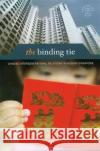
Since gaining independence in 1965, Singapore has become the most trade-intensive economy in the world and the richest country in Southeast Asia. This transformation has been accompanied by the emergence of a deep generational divide. More complex than simple disparities of education or changes in income and consumption patterns, this growing gulf encompasses language, religion, and social memory. The Binding Tie explores how expectations and obligations between generations are being challenged, reworked, and reaffirmed in the face of far-reaching societal change.
The family remains...
Since gaining independence in 1965, Singapore has become the most trade-intensive economy in the world and the richest country in Southeast Asia. T...
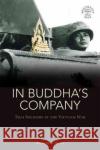
In Buddha's Company explores a previously neglected aspect of the Vietnam War: the experiences of the Thai troops who served there and the attitudes and beliefs that motivated them to volunteer. Thailand sent nearly 40,000 volunteer soldiers to South Vietnam to serve alongside the Free World Forces in the conflict, but unlike the other foreign participants, the Thais came armed with historical and cultural knowledge of the region. Blending the methodologies of cultural and military history, Richard Ruth examines the individual experiences of Thai volunteers in their wartime encounters with...
In Buddha's Company explores a previously neglected aspect of the Vietnam War: the experiences of the Thai troops who served there and the attitude...
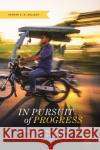
How are meta-narratives of development entangled in people's identities and life trajectories? How do they inhabit people's histories, their understandings of their place in the world, and their dreams for the future? The idea of development has been deconstructed and scrutinized as a "Western" metaphor ordering global difference and as a banner under which diverse schemes for societal improvement find legitimacy and common purpose. But how is development assimilated into the worldviews of development's subjects? How does it reshape identities and in what ways is it reshaped in the...
How are meta-narratives of development entangled in people's identities and life trajectories? How do they inhabit people's histories, their unders...
Making liquor isn't rocket science: some raw materials, a stove, and a few jury-rigged pots are all that's really needed. So when the colonial regime in turn-of-the-century French Indochina banned homemade rice liquor, replacing it with heavily taxed, tasteless alcohol from French-owned factories, widespread clandestine distilling was the inevitable result. The state's deeply unpopular alcohol monopoly required extensive systems of surveillance and interdiction and the creation of an unwieldy bureaucracy that consumed much of the revenue it was supposed to collect. Yet despite its heavy...
Making liquor isn't rocket science: some raw materials, a stove, and a few jury-rigged pots are all that's really needed. So when the colonial regi...
This strikingly original book examines how sport and ideas of physicality have shaped the politics and culture of modern Laos. Viewing the country's extraordinary transitions through the lens of physical culture, Simon Creak's lively and incisive narrative illuminates a nation that has no reputation in sport and is typically viewed, even from within, as a country of cheerful but lazy people.
This strikingly original book examines how sport and ideas of physicality have shaped the politics and culture of modern Laos. Viewing the country's e...
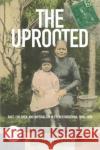
For over a century French officials in Indochina systematically uprooted metis children - those born of Southeast Asian mothers and white, African, or Indian fathers - from their homes. The Uprooted offers an in-depth investigation of this child-removal program: the motivations behind it, reception of it, and resistance to it.
For over a century French officials in Indochina systematically uprooted metis children - those born of Southeast Asian mothers and white, African, or...
An intimate ethnographic exploration of the ways in which Minangkabau people understand human value. Gregory Simon's book, based on extended ethnographic research in the small city of Bukittinggi, shines new light on Minangkabau social life by delving into people's interior lives, calling into question many assumptions about Southeast Asian values and the nature of Islamic practice.
An intimate ethnographic exploration of the ways in which Minangkabau people understand human value. Gregory Simon's book, based on extended ethnograp...