Revered by the public, respected by scholars, and imitated by politicians, Abraham Lincoln remains influential more than two hundred years after his birth. His memory has inspired books, monuments, and museums and also sparked controversies, rivalries, and forgeries. That so many people have been interested in Lincoln for so long makes him an ideal subject for exploring why history matters to ordinary Americans as well as to academic specialists.
In Everybody's History, Keith A. Erekson focuses on the Southwestern Indiana Historical Society -- an organization composed of lawyers,...
Revered by the public, respected by scholars, and imitated by politicians, Abraham Lincoln remains influential more than two hundred years after hi...
Author, collector, and historian Alice Morse Earle (1851--1911) was among the most important and prolific writers of her day. Between 1890 and 1904, she produced seventeen books as well as numerous articles, pamphlets, and speeches about the life, manners, customs, and material culture of colonial New England. Earle's work coincided with a surge of interest in early American history, genealogy, and antique collecting, and more than a century after the publication of her first book, her contributions still resonate with readers interested in the nation's colonial past.An intensely private...
Author, collector, and historian Alice Morse Earle (1851--1911) was among the most important and prolific writers of her day. Between 1890 and 1904, s...
In the 1970s, Argentina was the leader in the "Dirty War," a violent campaign by authoritarian South American regimes to repress left-wing groups and any others who were deemed subversive. Over the course of a decade, Argentina's military rulers tortured and murdered upwards of 30,000 citizens. Even today, after thirty years of democratic rule, the horror of that time continues to roil Argentine society.Argentina has also been in the vanguard in determining how to preserve sites of torture, how to remember the "disappeared," and how to reflect on the causes of the Dirty War. Across the...
In the 1970s, Argentina was the leader in the "Dirty War," a violent campaign by authoritarian South American regimes to repress left-wing groups and ...
Anyone who has encountered costumed workers at a living history museum may well have wondered what their jobs are like, churning butter or firing muskets while dressed in period clothing. In The Wages of History, Amy Tyson enters the world of the public history interpreters at Minnesota's Historic Fort Snelling to investigate how they understand their roles and experience their daily work. Drawing on archival research, personal interviews, and participant observation, she reframes the current discourse on history museums by analyzing interpreters as laborers within the larger service and...
Anyone who has encountered costumed workers at a living history museum may well have wondered what their jobs are like, churning butter or firing m...
Anyone who has encountered costumed workers at a living history museum may well have wondered what their jobs are like, churning butter or firing muskets while dressed in period clothing. In The Wages of History, Amy Tyson enters the world of the public history interpreters to investigate how they understand their roles and experience their daily work.
Anyone who has encountered costumed workers at a living history museum may well have wondered what their jobs are like, churning butter or firing musk...
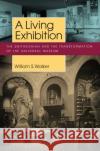
Since its founding in 1846 "for the increase and diffusion of knowledge," the Smithsonian Institution has been an important feature of the American cultural landscape. In A Living Exhibition, William S. Walker examines the tangled history of cultural exhibition at the Smithsonian from its early years to the chartering of the National Museum of the American Indian in 1989.
Since its founding in 1846 "for the increase and diffusion of knowledge," the Smithsonian Institution has been an important feature of the American cu...
Today well over two hundred museums focusing on African American history and culture can be found throughout the United States and Canada. Many of these institutions trace their roots to the 1960s and 1970s, when the struggle for racial equality inspired a movement within the black community to make the history and culture of African America more "public." This book tells the story of four of these groundbreaking museums: the DuSable Museum of African American History in Chicago (founded in 1961); the International Afro-American Museum in Detroit (1965); the Anacostia Neighborhood Museum...
Today well over two hundred museums focusing on African American history and culture can be found throughout the United States and Canada. Many of ...
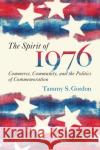
The most important national commemoration of the twentieth century, the 1976 bicentennial celebration gave rise to a broad-ranging debate over how the American Revolution should be remembered and represented. Federal planners seeking an uncritical glorification of the nation's founding came up against an array of constituencies with other interests and objectives. Inspired by the "new social history" that looked at the past "from the bottom up," Americans who had previously been disenfranchised by traditional national narratives -- African Americans, women, American Indians, workers, young...
The most important national commemoration of the twentieth century, the 1976 bicentennial celebration gave rise to a broad-ranging debate over how ...