During the long eighteenth century the moral and socio-political dimensions of family life and gender were hotly debated by intellectuals across Europe. John Millar, a Scottish law professor and philosopher, was a pioneer in making gendered and familial practice a critical parameter of cultural difference. His work was widely disseminated at home and abroad, translated into French and German and closely read by philosophers such as Denis Diderot and Johann Gottfried Herder. Taking Millar’s writings as his basis, Nicholas B. Miller explores the role of the family in Scottish Enlightenment...
During the long eighteenth century the moral and socio-political dimensions of family life and gender were hotly debated by intellectuals across Europ...
European culture in the seventeenth and eighteenth centuries witnessed a radical redefinition of ‘humanity’ and its place in the environment, together with a new understanding of animals and their relation to humans. In examining the dynamics of animal-human relations as embodied in the literature, art, farming practices, natural history, religion and philosophy of this period, leading experts explore the roots of much current thinking on interspecies morality and animal welfare. The animal-human relationship challenged not only disciplinary boundaries – between poetry and science, art...
European culture in the seventeenth and eighteenth centuries witnessed a radical redefinition of ‘humanity’ and its place in the environment, toge...
François Zanetti s’intéresse ici à une pratique médicale peu explorée par les historiens: l’utilisation de l’électricité. La transformation du fluide électrique en un médicament à part entière apparaît au milieu du XVIIIe siècle comme une nouveauté fascinante qui donne à voir les mystères et les merveilles de la nature. Remède employé dans le traitement de maladies chroniques ou nerveuses, suscitant espoirs et déceptions, l’électricité est associée aux bouleversements culturels et sociaux qui animent le monde médical et qui cristallisent les tensions sociales et...
François Zanetti s’intéresse ici à une pratique médicale peu explorée par les historiens: l’utilisation de l’électricité. La transformati...
S’il est désormais établi que le legs textuel des rencontres coloniales en révèle autant sur les observateurs que sur ce qu’ils observent, le passage de l’acte d’observation à l’acte d’écriture et le devenir des documents produits n’ont pas reçu l’attention qu’ils méritent. C’est ce que proposent les auteurs des neuf études composant cet ouvrage, qui reviennent aux sources archivistiques du discours colonial: les inscriptions d’expression française sur l’Amérique, entre le milieu du XVIIe siècle et la fin du XVIIIe. Cette période peut être considérée...
S’il est désormais établi que le legs textuel des rencontres coloniales en révèle autant sur les observateurs que sur ce qu’ils observent, le ...
Following his opposition to the establishment of a theatre in Geneva, Jean-Jacques Rousseau is often considered an enemy of the stage. Yet he was fascinated by drama: he was a keen theatre-goer, his earliest writings were operas and comedies, his admiration for Italian lyric theatre ran through his career, he wrote one of the most successful operas of the day, Le Devin du village, and with his Pygmalion, he invented a new theatrical genre, the Scène lyrique (‘melodrama’). Through multi-faceted analyses of Rousseau’s theatrical and musical works, authors re-evaluate his practical...
Following his opposition to the establishment of a theatre in Geneva, Jean-Jacques Rousseau is often considered an enemy of the stage. Yet he was fasc...
In eighteenth-century Europe, artistic production was characterised by significant geographical and cultural transfer. For innumerable musicians, composers, singers, actors, authors, dramatists and translators – and the works they produced – state borders were less important than style, genre and canon. Through a series of multinational case studies a team of authors examines the mechanisms and characteristics of cultural and artistic adaptability to demonstrate the complexity and flexibility of theatrical and musical exchanges during this period. By exploring questions of national...
In eighteenth-century Europe, artistic production was characterised by significant geographical and cultural transfer. For innumerable musicians, comp...
Although posterity has generally known Bernardin de Saint-Pierre for his bestselling Paul et Virginie, his output was encyclopaedic. Using new sources, this monograph explores the many facets of a celebrity writer in the Ancien Régime, the Revolution and the early nineteenth century. Bernardin attracted a readership to whom, irrespective of age, gender or social situation, he became a guide to living. He was nominated by Louis XVI to manage the Jardin des plantes, by Revolutionary bodies to teach at the École normale and to membership of the Institut. He deplored unquestioning adherence...
Although posterity has generally known Bernardin de Saint-Pierre for his bestselling Paul et Virginie, his output was encyclopaedic. Using new sources...
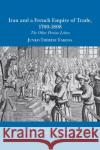
Iran and a French Empire of Trade examines the understudied topic of Franco-Persian relations in the long eighteenth century to highlight how rising tensions among Eurasian empires and revolutions in the Atlantic world were profoundly intertwined. Conflicts between Persia, Turkey, India and Russia, and European weapons-dealing with these empires occurred against a backdrop of climate change and food insecurities that destabilized markets. Takeda shows how the French state relied on “entrepreneurial imperialism” to extend commercial activities eastwards beyond the Mediterranean during this...
Iran and a French Empire of Trade examines the understudied topic of Franco-Persian relations in the long eighteenth century to highlight how rising t...