Violence was an inescapable part of people’s daily lives in eighteenth-century France. The Revolution in general and the Terror in particular were marked by intense outbursts of political violence, whilst the abuse of wives, children and servants was still rife in the home. But the representation of violence in its myriad forms remains aesthetically troublesome. Drawing on correspondence, pamphlets, novels and plays, authors analyse the portrayal of violence as a rational act, the basis of (re)written history, an expression of institutional power, and a challenge to morality....
Violence was an inescapable part of people’s daily lives in eighteenth-century France. The Revolution in general and the Terror in particular were m...
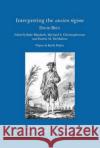
The work of David Bien, one of America’s foremost historians of eighteenth-century France, transformed our understanding of the ancien régime and the origins of the French Revolution. The editors bring together for the first time his most important articles, other previously unpublished essays and an interview transcript. Bien’s empirically-grounded approach made him a central figure in the ‘revisionist’ debates on the origins of the French Revolution. His re-reading of the Calas affair as an anomaly in a growing trend of tolerance (rather than a sign of widespread bigotry among an...
The work of David Bien, one of America’s foremost historians of eighteenth-century France, transformed our understanding of the ancien régime and ...
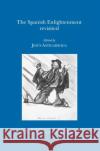
Traditional historiography has tended to disregard and even deny Spain’s role in the Enlightenment, banishing the country to a benighted geographical periphery. In The Spanish Enlightenment revisited a team of experts overturns the myth of the ‘dark side of Europe’ and examines the authentic place of Spain in the intellectual economy of the Enlightenment. Contributors to this book explore how institutional and social changes in eighteenth-century Spain sharpened the need for modernisation. Examination of major constitutional and social initiatives, such as the development of new...
Traditional historiography has tended to disregard and even deny Spain’s role in the Enlightenment, banishing the country to a benighted geographica...
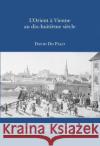
L’Orient joue un rôle essentiel dans l’histoire urbaine de Vienne au dix-huitième siècle: c’est une route commerciale, une communauté marchande et un outil de gestion administrative. Comment agit-il sur la transformation de la ville, de sa population et de son économie? David Do Paço analyse ici la place centrale qu’occupent les marchands et les diplomates ottomans dans la ville. Il adopte une approche administrative, sociale et urbaine qui replace les étrangers dans la diversité de leurs conditions sociales et de leurs identités religieuses. Rompant avec l’étude des...
L’Orient joue un rôle essentiel dans l’histoire urbaine de Vienne au dix-huitième siècle: c’est une route commerciale, une communauté marcha...
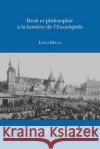
Quelle place occupe le droit dans l’Encyclopédie de Diderot et de D’Alembert? Quels rapports le mouvement encyclopédique et l’esprit de la Déclaration des droits de 1789 entretiennent-ils? Dans cette étude novatrice, Luigi Delia explore les enjeux du droit dans l’entreprise emblématique des Lumières. Encadrée par la publication de deux ouvrages fondamentaux – L’Esprit des lois de Montesquieu (1748) et le Traité des délits et des peines de Beccaria (1765) –, l’Encyclopédie propose une nouvelle conception de la justice en faisant dialoguer des cultures...
Quelle place occupe le droit dans l’Encyclopédie de Diderot et de D’Alembert? Quels rapports le mouvement encyclopédique et l’esprit de la D...
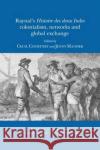
Histoire des deux Indes, was arguably the first major example of a world history, exploring the ramifications of European colonialism from a global perspective. Frequently reprinted and translated into many languages, its readers included statesmen, historians, philosophers and writers throughout Europe and North America. Underpinning the encyclopedic scope of the work was an extensive transnational network of correspondents and informants assiduously cultivated by Raynal to obtain the latest expert knowledge. How these networks shaped Raynal’s writing and what they reveal about...
Histoire des deux Indes, was arguably the first major example of a world history, exploring the ramifications of European colonialism from a global pe...
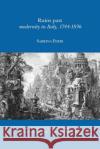
In an era haunted by its past, modern Europe sought to break with the old; the future and the new became the ideal. In Italy however, where the remains of the past dominated the landscape, ruins were a token both of decadence and of the inspiring legacy of tradition. Sabrina Ferri proposes a counter-narrative to the European story of progress by focusing on the often-marginalized and distinctive case of Italy. For Italians, ruins uncovered the creative potential of the past, transforming it into an inexhaustible source of philosophical speculation and poetic invention whilst simultaneously...
In an era haunted by its past, modern Europe sought to break with the old; the future and the new became the ideal. In Italy however, where the remain...
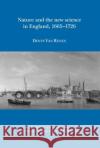
When scholars of cultural studies consider representations of the land by British writers, the Romantic poets continue to dominate the enquiry, as though the period right before the intensification of the Industrial Revolution offers readers one last glimpse of untarnished nature. Denys Van Renen instead examines the British authors writing in the decades following the Restoration of Charles II, writers whose literary works re-animate and re-embody the land as a site of dynamic interactions, and, through this, reveal how various cultural systems and ecologies shape notions of self and...
When scholars of cultural studies consider representations of the land by British writers, the Romantic poets continue to dominate the enquiry, as tho...
Drawing from literary studies, philosophy, and the history of science, in this interdisciplinary study Hanna Roman argues that the language of Buffon’s Histoire naturelle (1749-1788) could not be separated from the science it conveyed; the language communicated nature’s vital order, form and movement. In the Histoire naturelle, the ability of language to embody and communicate the living essence of nature grew increasingly poignant as Buffon established his hypothesis that the Earth, initially a molten ball of fire, was dying as it slowly became colder. The author highlights Buffon’s...
Drawing from literary studies, philosophy, and the history of science, in this interdisciplinary study Hanna Roman argues that the language of Buffonâ...