This second book in a three-volume work on the young Fyodor Dostoevsky is a diary-portrait of his early years drawn from letters, memoirs, and criticism of the writer, as well as from the testimony and witness of family and friends, readers and reviewers, and observers and participants in his life. The result of an exhaustive search of published materials on Dostoevsky, this volume sheds crucial light on the many unexplored corners of Dostoevsky's life in the time between the success of his first novel, Poor Folk, and the failure of his next four works. Thomas Gaiton Marullo lets the...
This second book in a three-volume work on the young Fyodor Dostoevsky is a diary-portrait of his early years drawn from letters, memoirs, and critici...
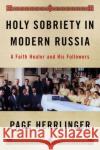
Drawing on multiple archives and primary sources, including secret police files and samizdat, Holy Sobriety in Modern Russia reconstructs the history of a spiritual movement that survived persecution by the Orthodox church and decades of official atheism, and still exists today. Since 1894, tens of thousands of Russians have found hope and faith through the teachings and prayers of the charismatic lay preacher and healer, Brother Ioann Churikov (1861–1933). Inspired by Churikov's deep piety, "miraculous" healing ability, and scripture-based philosophy known as holy sobriety, the...
Drawing on multiple archives and primary sources, including secret police files and samizdat, Holy Sobriety in Modern Russia reconstructs the history ...
Taking the Soviet Union Apart Room by Room investigates what happens to domestic spaces, architecture, and the lives of urbanites during a socioeconomic upheaval. Kateryna Malaia analyzes how Soviet and post-Soviet city dwellers, navigating a crisis of inadequate housing and extreme social disruption between the late 1980s and 2000s, transformed their dwellings as their countries transformed around them. Soviet infrastructure remained but, in their domestic spaces, urbanites transitioned to post-Soviet citizens. The two decades after the collapse of the USSR witnessed a major urban...
Taking the Soviet Union Apart Room by Room investigates what happens to domestic spaces, architecture, and the lives of urbanites during a socioeconom...
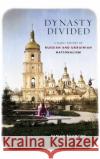
Dynasty Divided uses the story of a prominent Kievan family of journalists, scholars, and politicians to analyze the emergence of rivaling nationalisms in nineteenth-century Ukraine, the most pivotal borderland of the Russian Empire. The Shul'gins identified as Russians and defended the tsarist autocracy; the Shul'hyns identified as Ukrainians and supported peasant-oriented socialism. Fabian Baumann shows how these men and women consciously chose a political position and only then began their self-fashioning as members of a national community, defying the notion of nationalism as a direct...
Dynasty Divided uses the story of a prominent Kievan family of journalists, scholars, and politicians to analyze the emergence of rivaling nationalism...
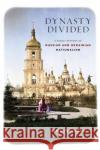
Dynasty Divided uses the story of a prominent Kievan family of journalists, scholars, and politicians to analyze the emergence of rivaling nationalisms in nineteenth-century Ukraine, the most pivotal borderland of the Russian Empire. The Shul'gins identified as Russians and defended the tsarist autocracy; the Shul'hyns identified as Ukrainians and supported peasant-oriented socialism. Fabian Baumann shows how these men and women consciously chose a political position and only then began their self-fashioning as members of a national community, defying the notion of nationalism as a direct...
Dynasty Divided uses the story of a prominent Kievan family of journalists, scholars, and politicians to analyze the emergence of rivaling nationalism...
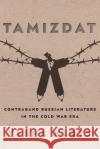
Tamizdat offers a new perspective on the history of the Cold War by exploring the story of the contraband manuscripts sent from the USSR to the West. A word that means publishing "over there," tamizdat manuscripts were rejected, censored, or never submitted for publication in the Soviet Union and were smuggled through various channels and printed outside the country, with or without their authors' knowledge. Yasha Klots demonstrates how tamizdat contributed to the formation of the twentieth-century Russian literary canon: the majority of contemporary Russian classics first appeared abroad...
Tamizdat offers a new perspective on the history of the Cold War by exploring the story of the contraband manuscripts sent from the USSR to the West. ...