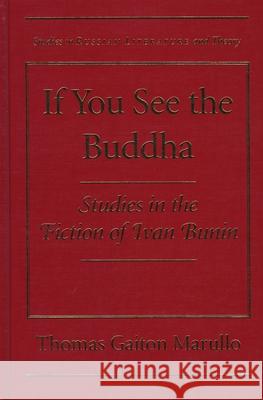
In a 1994 "American Scholar "article, Andrew Wachtel wrote of Ivan Bunin: " He] is undoubtedly the greatest Russian writer whom no one reads." With the collapse of communism, however, Bunin's works are undergoing a revival in both Russia and the West. As enthusiastic as readers and publishers have been, scholarship has not kept pace with this "rediscovery," in part due to the many contradictions in Bunin's writing, in part because much past criticism has been used to advanced the critic's own view of what they love or hate about "modern" life. In "If You See the Buddha, " Thomas Gaiton...
In a 1994 "American Scholar "article, Andrew Wachtel wrote of Ivan Bunin: " He] is undoubtedly the greatest Russian writer whom no one reads." With th...
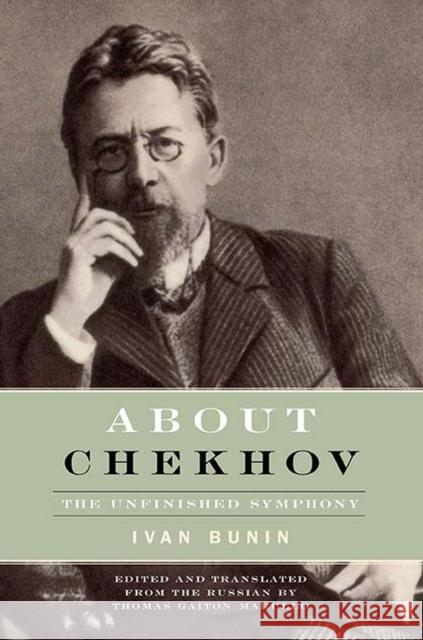
Seven years after the death of Anton Chekhov, his sister, Maria, wrote to a friend, "You asked for someone who could write a biography of my deceased brother. If you recall, I recommended Iv. Al. Bunin . . . . No one writes better than he; he knew and understood my deceased brother very well; he can go about the endeavor objectively. . . . I repeat, I would very much like this biography to correspond to reality and that it be written by I.A. Bunin." In About Chekhov Ivan Bunin sought to free the writer from limiting political, social, and aesthetic assessments of his life and work,...
Seven years after the death of Anton Chekhov, his sister, Maria, wrote to a friend, "You asked for someone who could write a biography of my deceased ...
Seven years after the death of Anton Chekhov, his sister, Maria, wrote to a friend, "You asked for someone who could write a biography of my deceased brother. If you recall, I recommended Iv. Al. Bunin . . . . No one writes better than he; he knew and understood my deceased brother very well; he can go about the endeavor objectively. . . . I repeat, I would very much like this biography to correspond to reality and that it be written by I.A. Bunin." In About Chekhov Ivan Bunin sought to free the writer from limiting political, social, and aesthetic assessments of his life and work,...
Seven years after the death of Anton Chekhov, his sister, Maria, wrote to a friend, "You asked for someone who could write a biography of my deceased ...
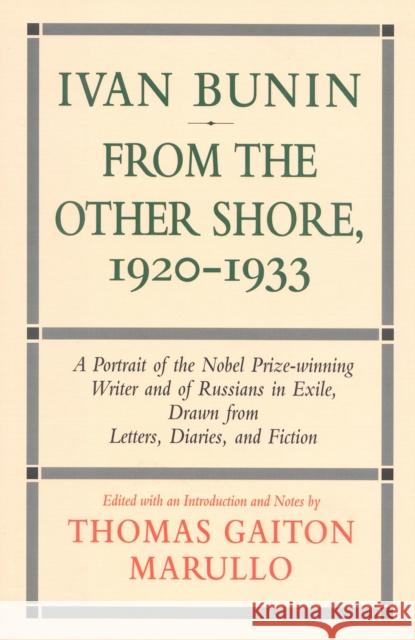
In this second volume of his major work on Bunin, the neglected master of Russian letters, Thomas Marullo recreates his life in exile, chiefly in Paris, after escaping from his newly bolshevized country in 1920. Drawing from Bunin's correspondence, his diaries, and his stories, and translating most of these materials into English for the first time, Mr. Marullo gives us a vivid picture of a man suddenly and agonizingly without a country. Bunin's life and art, which depended so heavily on traditional Russian values, seemed to be overthrown in a moment, and the writer found himself marooned...
In this second volume of his major work on Bunin, the neglected master of Russian letters, Thomas Marullo recreates his life in exile, chiefly in Pari...
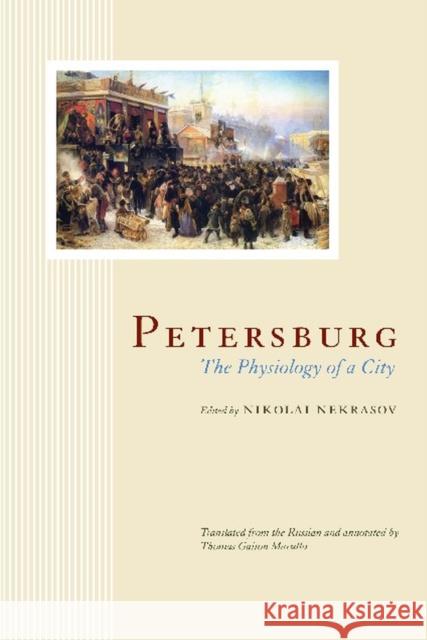
This landmark collection of short works forms a vivid documentary of life in midnineteenth-century St. Petersburg. Editor Nikolai Nekrasov was the most influential literary entrepreneur of the day, and he assembled works ranging from ethnography to fiction to literary criticism, all written by leading authors and thinkers of the time. The book he edited represents many important strands in Russian culture and history, including the development of Russian prose and the rise of the intelligentsia. A vital political document as well, "Petersburg "is a record of and served as a spur to the...
This landmark collection of short works forms a vivid documentary of life in midnineteenth-century St. Petersburg. Editor Nikolai Nekrasov was the ...
Fyodor Dostoevsky s first novel, "Netochka Nezvanova, "written in 1849, remains the least studied and understood of the writer s long fiction, but it was a seedbed for many topics and themes that became hallmarks of his major works. Specifically, "Netochka Nezvanova" was the first in Dostoevsky s corpus to focus on the psychology of children and the first to feature a woman in a leading and narrative role. It was also the first work in Russian literature to deal with problems of the family. In "Heroine Abuse, "Thomas Marullo contends that "Netochka Nezvanova" also provides a striking...
Fyodor Dostoevsky s first novel, "Netochka Nezvanova, "written in 1849, remains the least studied and understood of the writer s long fiction, but it ...
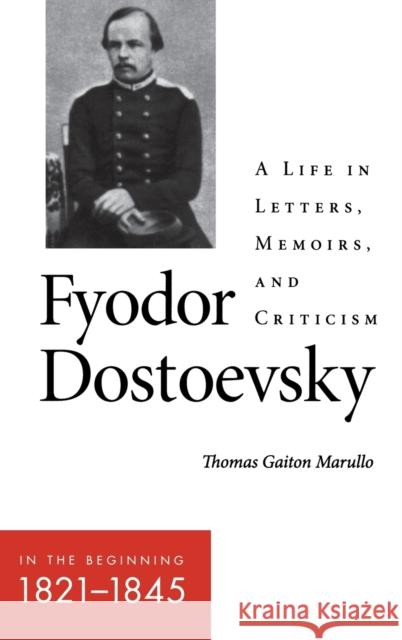
More than a century after his death in 1881, Fyodor Dostoevsky continues to fascinate readers and reviewers. Countless studies of his writing have been published--more than a dozen in the past few years alone. In this important new work, Thomas Marullo provides a diary-portrait of Dostoevsky's early years drawn from the letters, memoirs, and criticism of the writer, as well as from the testimony and witness of family and friends, readers and reviewers, and observers and participants in his life. Marullo's exhaustive search of published materials on Dostoevsky sheds light on many...
More than a century after his death in 1881, Fyodor Dostoevsky continues to fascinate readers and reviewers. Countless studies of his writing have bee...
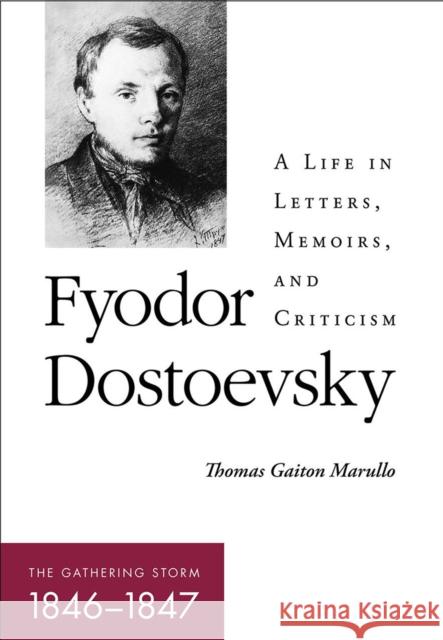
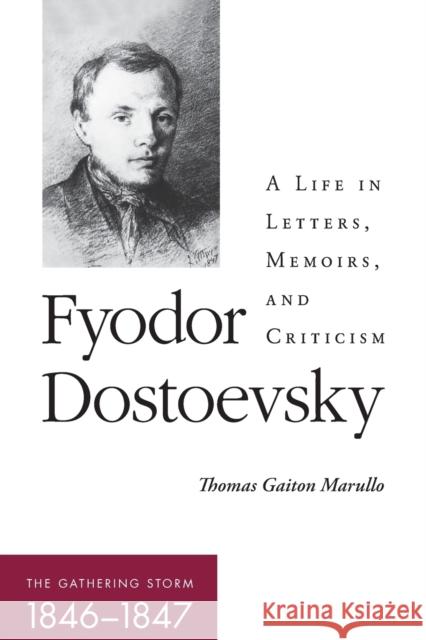
This second book in a three-volume work on the young Fyodor Dostoevsky is a diary-portrait of his early years drawn from letters, memoirs, and criticism of the writer, as well as from the testimony and witness of family and friends, readers and reviewers, and observers and participants in his life. The result of an exhaustive search of published materials on Dostoevsky, this volume sheds crucial light on the many unexplored corners of Dostoevsky's life in the time between the success of his first novel, Poor Folk, and the failure of his next four works. Thomas Gaiton Marullo lets the...
This second book in a three-volume work on the young Fyodor Dostoevsky is a diary-portrait of his early years drawn from letters, memoirs, and critici...