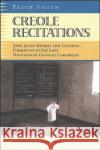
John Jacob Thomas (1841-1889) was one of the leading members of a newly emergent intelligentsia in nineteenth-century Trinidad--a group that could be identified as both -Victorian- and -Pan-Africanist---who not only challenged British imperialist accounts of Trinidad but also tried to show the interconnections, bloodlines, and origins of -Caribbean- and -English- identities usually perceived as separate and distinct. As a member of that emerging black lower middle class, Thomas was well known for his 1869 study of Trinidad's Creole language, as well as for Froudacity (1889), his pointed...
John Jacob Thomas (1841-1889) was one of the leading members of a newly emergent intelligentsia in nineteenth-century Trinidad--a group that could ...
John Jacob Thomas (1841-1889) was one of the leading members of a newly emergent intelligentsia in nineteenth-century Trinidad--a group that could be identified as both -Victorian- and -Pan-Africanist---who not only challenged British imperialist accounts of Trinidad but also tried to show the interconnections, bloodlines, and origins of -Caribbean- and -English- identities usually perceived as separate and distinct. As a member of that emerging black lower middle class, Thomas was well known for his 1869 study of Trinidad's Creole language, as well as for Froudacity (1889), his pointed...
John Jacob Thomas (1841-1889) was one of the leading members of a newly emergent intelligentsia in nineteenth-century Trinidad--a group that could ...
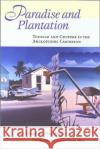
It is hard to ignore the hotels. They rise like mammoths of iron and concrete above the homes, the office buildings, the trees of New Providence, island of my birth. So begins Ian Strachan's history of the idea of the Caribbean as paradise. The modern image of the Bahamas as a carefree tourist oasis has its origins in much earlier cultural mythology: the first colonizers conceptualized the Caribbean as a place beyond time, beyond the real, and the region produced profit seemingly without work. Yet an Edenic experience was made possible only by the existence of the plantation - the very...
It is hard to ignore the hotels. They rise like mammoths of iron and concrete above the homes, the office buildings, the trees of New Providence, isla...
-It is hard to ignore the hotels. They rise like mammoths of iron and concrete above the homes, the office buildings, the trees of New Providence, island of my birth.- So begins Ian Strachan's history of the idea of the Caribbean as paradise. The modern image of the Bahamas as a carefree tourist oasis has its origins in much earlier cultural mythology: the first colonizers conceptualized the Caribbean as a place beyond time, beyond the real, and the region produced profit seemingly without work. Yet an Edenic experience was made possible only by the existence of the plantation--the very...
-It is hard to ignore the hotels. They rise like mammoths of iron and concrete above the homes, the office buildings, the trees of New Providence, ...
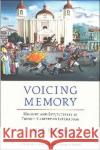
In Voicing Memory Nick Nesbitt argues that the aesthetic practices of twentieth-century French Caribbean writers reconstruct a historical awareness that had been lost amid the repressive violence of slavery, the plantation system, and colonial exploitation. Drawing on the work of Aime Cesaire, Edouard Glissant, Daniel Maximin, Maryse Conde, and Edwidge Danticat, he shows how these writers use the critical force of the aesthetic imagination to transform the parameters of Antillean experience.
The author takes the aesthetic practices of the black Atlantic--Antillean poetry, literature,...
In Voicing Memory Nick Nesbitt argues that the aesthetic practices of twentieth-century French Caribbean writers reconstruct a historical awareness...
In Voicing Memory Nick Nesbitt argues that the aesthetic practices of twentieth-century French Caribbean writers reconstruct a historical awareness that had been lost amid the repressive violence of slavery, the plantation system, and colonial exploitation. Drawing on the work of Aime Cesaire, Edouard Glissant, Daniel Maximin, Maryse Conde, and Edwidge Danticat, he shows how these writers use the critical force of the aesthetic imagination to transform the parameters of Antillean experience.
The author takes the aesthetic practices of the black Atlantic--Antillean poetry, literature,...
In Voicing Memory Nick Nesbitt argues that the aesthetic practices of twentieth-century French Caribbean writers reconstruct a historical awareness...
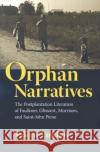
In Orphan Narratives, Valerie Loichot investigates the fiction and poetry of four writers who emerged from the postslavery plantation world of the Americas--William Faulkner (USA), Edouard Glissant (Martinique), Toni Morrison (USA), and Saint-John Perse (Guadeloupe)--to show how these descendants from slaves and from slaveholders wrote both in relation and in resistance to the violence of plantation slavery. She uses the term -orphan narrative- to capture the ways in which this violence severed the child, the text, and history from a traceable origin. Black or white, male or...
In Orphan Narratives, Valerie Loichot investigates the fiction and poetry of four writers who emerged from the postslavery plantation world...
In Orphan Narratives, Valerie Loichot investigates the fiction and poetry of four writers who emerged from the postslavery plantation world of the Americas--William Faulkner (USA), Edouard Glissant (Martinique), Toni Morrison (USA), and Saint-John Perse (Guadeloupe)--to show how these descendants from slaves and from slaveholders wrote both in relation and in resistance to the violence of plantation slavery. She uses the term -orphan narrative- to capture the ways in which this violence severed the child, the text, and history from a traceable origin. Black or white, male or...
In Orphan Narratives, Valerie Loichot investigates the fiction and poetry of four writers who emerged from the postslavery plantation world...
Gossip - long derided and dismissed by writers and intellectuals - is far from frivolous. In Idle Talk, Deadly Talk, Ana Rodriguez Navas reveals gossip to be an urgent, utilitarian, and deeply political practice - a means of staging the narrative tensions, and waging the narrative battles, that mark Caribbean politics and culture.
Gossip - long derided and dismissed by writers and intellectuals - is far from frivolous. In Idle Talk, Deadly Talk, Ana Rodriguez Navas reveals gossi...
Gossip - long derided and dismissed by writers and intellectuals - is far from frivolous. In Idle Talk, Deadly Talk, Ana Rodriguez Navas reveals gossip to be an urgent, utilitarian, and deeply political practice - a means of staging the narrative tensions, and waging the narrative battles, that mark Caribbean politics and culture.
Gossip - long derided and dismissed by writers and intellectuals - is far from frivolous. In Idle Talk, Deadly Talk, Ana Rodriguez Navas reveals gossi...