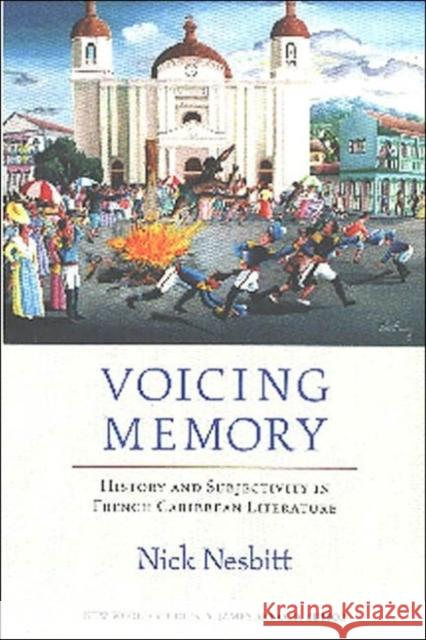
In Voicing Memory Nick Nesbitt argues that the aesthetic practices of twentieth-century French Caribbean writers reconstruct a historical awareness that had been lost amid the repressive violence of slavery, the plantation system, and colonial exploitation. Drawing on the work of Aime Cesaire, Edouard Glissant, Daniel Maximin, Maryse Conde, and Edwidge Danticat, he shows how these writers use the critical force of the aesthetic imagination to transform the parameters of Antillean experience.
The author takes the aesthetic practices of the black Atlantic--Antillean poetry, literature,...
In Voicing Memory Nick Nesbitt argues that the aesthetic practices of twentieth-century French Caribbean writers reconstruct a historical awareness...
In Voicing Memory Nick Nesbitt argues that the aesthetic practices of twentieth-century French Caribbean writers reconstruct a historical awareness that had been lost amid the repressive violence of slavery, the plantation system, and colonial exploitation. Drawing on the work of Aime Cesaire, Edouard Glissant, Daniel Maximin, Maryse Conde, and Edwidge Danticat, he shows how these writers use the critical force of the aesthetic imagination to transform the parameters of Antillean experience.
The author takes the aesthetic practices of the black Atlantic--Antillean poetry, literature,...
In Voicing Memory Nick Nesbitt argues that the aesthetic practices of twentieth-century French Caribbean writers reconstruct a historical awareness...
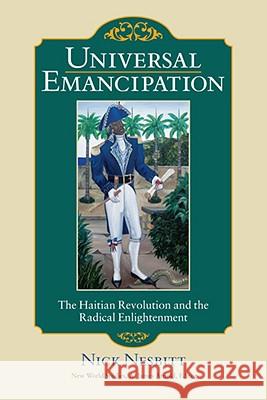
Unlike the American and French Revolutions, the Haitian Revolution was the first in a modern state to implement human rights universally and unconditionally. Going well beyond the selective emancipation of white adult male property owners, the Haitian Revolution is of vital importance, Nick Nesbitt argues, in thinking today about the urgent problems of social justice, human rights, imperialism, torture, and, above all, human freedom.
Combining archival research, political philosophy, and intellectual history, Nesbitt explores this fundamental event of modern history--the invention of...
Unlike the American and French Revolutions, the Haitian Revolution was the first in a modern state to implement human rights universally and uncond...
Unlike the American and French Revolutions, the Haitian Revolution was the first in a modern state to implement human rights universally and unconditionally. Going well beyond the selective emancipation of white adult male property owners, the Haitian Revolution is of vital importance, Nick Nesbitt argues, in thinking today about the urgent problems of social justice, human rights, imperialism, torture, and, above all, human freedom.
Combining archival research, political philosophy, and intellectual history, Nesbitt explores this fundamental event of modern history--the invention of...
Unlike the American and French Revolutions, the Haitian Revolution was the first in a modern state to implement human rights universally and uncond...