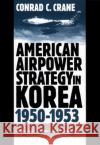
The Korean War was the first armed engagement for the newly formed U.S. Air Force, but far from the type of conflict it expected or wanted to fight. As the first air war of the nuclear age, it posed a major challenge to the service to define and successfully carry out its mission by stretching the constraints of limited war while avoiding the excesses of total war. Conrad Crane analyzes both the successes and failures of the air force in Korea, offering a balanced treatment of how the air war in Korea actually unfolded. He examines the Air Force's contention that it could play a decisive...
The Korean War was the first armed engagement for the newly formed U.S. Air Force, but far from the type of conflict it expected or wanted to fight. A...
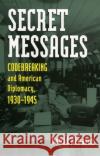
To defeat your enemies you must know them well. In wartime, however, enemy codemakers make that task much more difficult. If you cannot break their codes and read their messages, you may discover too late the enemy's intentions. That's why codebreakers were considered such a crucial weapon during World War II. In Secret Messages, David Alvarez provides the first comprehensive analysis of the impact of decoded radio messages (signals intelligence) upon American foreign policy and strategy from 1930 to 1945. He presents the most complete account to date of the U.S. Army's top-secret...
To defeat your enemies you must know them well. In wartime, however, enemy codemakers make that task much more difficult. If you cannot break their co...
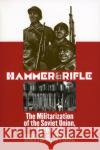
From 1926 to 1933, a vast transformation swept through the Soviet Union, a massive militarization of society that was as powerful and far-reaching as the Revolution itself. In Hammer and Rifle, David Stone chronicles this transformation and shows why it is so central to our understanding of Stalin's emergence and consolidation of power. While collectivization dramatically altered rural Russia and Stalin ruthlessly secured his control over the state apparatus, a military-industrial revolution remade the USSR into an immensely powerful war machine. As Stone reveals, the militarization of...
From 1926 to 1933, a vast transformation swept through the Soviet Union, a massive militarization of society that was as powerful and far-reaching as ...
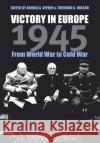
At the end of World War II in Europe, peace had finally come but at a terrible price: its cities and countryside were devastated, 35 million lay dead, and those who did survive faced extreme economic hardship and the threat of starvation. Ending the war was more than a matter of defeating the German army; it was about a new world order emerging in fits and starts from the smoldering ruins of a continent. In this provocative collection, eleven senior scholars explore the transition from war to uneasy peace. Authorities such as Warren Kimball, Randall Woods, and Garry Clifford examine how...
At the end of World War II in Europe, peace had finally come but at a terrible price: its cities and countryside were devastated, 35 million lay dead,...
Our hurly-burly sagas of war often overlook the deep connections between warriors and the families they left behind. In Tom Taylor's Civil War, eminent Civil War historian Albert Castel brings that familial connection back into sharp focus, reminding us again that soldiers in the field are much more than mere cogs in the machinery of war. A young Ohio lawyer, Thomas Taylor was a junior officer who fought under Sherman at Vicksburg and Chattanooga and on the march through Georgia, and his diary and letters contain vivid descriptions of numerous skirmishes and battles over four years. By...
Our hurly-burly sagas of war often overlook the deep connections between warriors and the families they left behind. In Tom Taylor's Civil War, eminen...
Adolf Hitler had high hopes for his conquest of Norway, which held both great symbolic and great strategic value for the Fuhrer. Despite early successes, however, his ambitious northern campaign foundered and ultimately failed. Adam Claasen for the first time reveals the full story of this neglected episode and shows how it helped doom the Third Reich to defeat. Hitler and Raeder, the chief of the German navy, were determined to take and keep Norway. By doing so, they hoped to preempt Allied attempts to outflank Germany, protect sea lanes for German ships, access precious Scandinavian...
Adolf Hitler had high hopes for his conquest of Norway, which held both great symbolic and great strategic value for the Fuhrer. Despite early success...
Most books on the War of 1812 focus on the burning of Washington, D.C., the Battles of Baltimore and New Orleans, and the war in the Old Northwest. Scant attention, however, has been paid the Niagara Campaign of 1814-the American army's ambitious but failed attempt to wrest Canada from British control. While a few writers have dealt with aspects of this effort, Richard Barbuto is the first to offer a comprehensive study of the entire campaign. Barbuto covers every aspect of a campaign that saw the American army come of age, even as its military leaders blundered away potential victory and...
Most books on the War of 1812 focus on the burning of Washington, D.C., the Battles of Baltimore and New Orleans, and the war in the Old Northwest. Sc...
Black Prisoner of War chronicles the story of James Daly, a young black soldier held captive for more than five years by the Viet Cong and North Vietnamese and subsequently accused (and acquitted) of collaboration with the enemy. One of the very few books about the Vietnam War by an African American, Daly's memoir is both a testament to survival and a provocative meditation on the struggle between patriotism and religious conviction. First published in 1975 as A Hero's Welcome, Daly's memoir had only a brief exposure before it sank from sight. At the time, most Americans...
Black Prisoner of War chronicles the story of James Daly, a young black soldier held captive for more than five years by the Viet Cong and Nort...
The writings of Carl von Clausewitz loom so large in the annals of military theory that they obscure the substantial contributions of thinkers who came after him. This is especially true for those German theorists who wrote during the half century preceding World War I. However, as Antulio Echevarria argues, although none of those thinkers approached Clausewitz's stature, they were nonetheless theorists of considerable vision. The Kaiser's theorists have long been portrayed as narrow-minded thinkers rigidly attached to an outmoded way of war, little altered since Napoleon's time....
The writings of Carl von Clausewitz loom so large in the annals of military theory that they obscure the substantial contributions of thinkers who cam...
Had Lee enjoyed the manpower or materiel advantages of Grant, would the South have triumphed? Had Hood possessed strength superior to Sherman's, would he still have lost their encounters in Georgia? Popular sentiment has long bowed to the military leadership of the Civil War's victorious generals--a view that has been disputed by modern scholarship. Many might be startled to learn that a British army officer also called these opinions into question long ago. Out of print for more than fifty years, Lee, Grant and Sherman is an unrecognized classic of Civil War history that presaged current...
Had Lee enjoyed the manpower or materiel advantages of Grant, would the South have triumphed? Had Hood possessed strength superior to Sherman's, would...