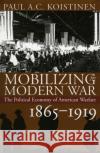
Although the military-industrial complex became familiar to most Americans during the Cold War, Paul Koistinen shows that its origins actually go back to the dawn of this century. Mobilizing for Modern War, the second of an extraordinary five-volume study on the political economy of American warfare, highlights the emergence of this pivotal relationship. In this volume, Koistinen examines war planning and mobilizing in an era of rapid industrialization and reveals how economic mobilization for defense and war is shaped at the national level by the interaction of political, economic,...
Although the military-industrial complex became familiar to most Americans during the Cold War, Paul Koistinen shows that its origins actually go back...
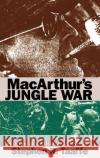
When General Douglas MacArthur led Allied troops into the jungles of New Guinea in World War II, he was already looking ahead. By successfully leapfrogging Japanese forces on that island, he placed his armies in a position to fulfill his personal promise to liberate the Philippines. The New Guinea campaign has gone down in history as one of MacArthur's shining successes. Now Stephen Taaffe has written the definitive history of that assault, showing why it succeeded and what it contributed to the overall strategy against Japan. His book tells not only how victory was gained through a...
When General Douglas MacArthur led Allied troops into the jungles of New Guinea in World War II, he was already looking ahead. By successfully leapfro...
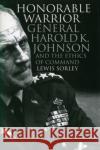
A man of extraordinary inner strength and patriotic devotion, General Harold K. Johnson was a soldier's officer, loved by his men and admired by his peers for his leadership, courage, and moral convictions. Lewis Sorley's biography provides a fitting testament to this remarkable man and his dramatic rise from obscurity to become LBJ's Army Chief of Staff during the Vietnam War. A native of North Dakota, Johnson survived more than three grueling years as a POW under the Japanese during World War II before serving brilliantly as a field commander in the Korean War, for which he was awarded...
A man of extraordinary inner strength and patriotic devotion, General Harold K. Johnson was a soldier's officer, loved by his men and admired by his p...
A fighter pilot who flew 75 combat missions in World War I, George C. Kenney was a charismatic leader who established himself as an innovative advocate of air power. As General MacArthur's air commander in the Southwest Pacific during World War II, Kenney played a pivotal role in the conduct of the war, but until now his performance has remained largely unexplored. Thomas Griffith offers a critical assessment of Kenney's numerous contributions to MacArthur's war efforts. He depicts Kenney as a staunch proponent of airpower's ability to shape the outcome of military engagements and a...
A fighter pilot who flew 75 combat missions in World War I, George C. Kenney was a charismatic leader who established himself as an innovative advocat...
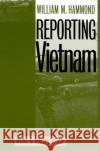
For many Americans during the Vietnam era, the war on the home front seemed nearly as wrenching and hardfought as the one in Southeast Asia. Its primary battlefield was the news media, its primary casualty the truth. But as William Hammond reveals, animosity between government and media wasn't always the rule; what happened between the two during the Vietnam War was symptomatic of the nation's experiences in general. As the "light at the end of the tunnel" dimmed, relations between them grew ever darker. Reporting Vietnam is an abridgment and updating of Hammond's massive...
For many Americans during the Vietnam era, the war on the home front seemed nearly as wrenching and hardfought as the one in Southeast Asia. Its prima...
When soldiers in the Civil War called on their religious beliefs in order to cope with the horrors of battle, many looked to the regimental chaplain for guidance and understanding. Clergy were always present to address the spiritual needs of the common soldier and administer to the wounded and dying. But as Warren Armstrong shows, military chaplains provided more than comfort. In a country profoundly shaped by religion, each side adapted its version of Christianity to support its political views. This book documents the role played by Union chaplains in making better soldiers and...
When soldiers in the Civil War called on their religious beliefs in order to cope with the horrors of battle, many looked to the regimental chaplain f...
The 1942-43 naval campaign against German U-boats known as the Battle of the Atlantic was a major victory not only for Allied warships but also for naval intelligence. Thanks to the coordinated efforts of submarine tracking rooms in London, Washington, and Ottawa, the antisubmarine forces' search-and-destroy missions helped preserve the safety of the seaways. Naval intelligence has been an aspect of World War II that has received scant attention. Now former naval intelligence officer Alan Harris Bath traces the coordination of Anglo-American efforts before and during the war, identifying...
The 1942-43 naval campaign against German U-boats known as the Battle of the Atlantic was a major victory not only for Allied warships but also for na...
Most often viewed as a prelude to Robert E. Lee's Civil War victories of 1862, Joseph E. Johnston's campaign in Virginia early that year has been considered uninspired at best, catastrophic at worst. Steven Newton now offers a revisionist account of Johnston's operations between the York and James Rivers to show how his performance in the "Peninsular War" contributed to a crucial strategic victory for the Confederacy. Newton acknowledges the limitations usually attributed to Johnston by other historians but suggests that assessments of the general's performance in Virginia have been...
Most often viewed as a prelude to Robert E. Lee's Civil War victories of 1862, Joseph E. Johnston's campaign in Virginia early that year has been cons...
Commanders who serve on the losing side of a battle, campaign, or war are often harshly viewed by posterity. Labeled as mere "losers," they go unrecognized for their very real abilities and achievements in other engagements. The writers in this volume challenge such simplistic notions. By looking more closely at Civil War generals who have borne the stigma of failure, these authors reject the reductionist view that significant defeats were due simply to poor generalship. Analyzing men who might be considered "capable failures"--officers of high pre-war reputation, some with distinguished...
Commanders who serve on the losing side of a battle, campaign, or war are often harshly viewed by posterity. Labeled as mere "losers," they go unrecog...
In 1846-1847, a ragtag army of 800 American volunteers marched 3,500 miles across deserts and mountains, through Indian territory and into Mexico. There they handed the Mexican army one of its most demoralizing defeats and helped the United States win its first foreign war. Their leader Colonel Alexander Doniphan, also a volunteer, was a "natural soldier" of towering stature who became a national hero in the wake of his wartime exploits. Doniphan was a small-town Missouri lawyer untrained in military matters when he answered President Polk's call for volunteers in the war with Mexico....
In 1846-1847, a ragtag army of 800 American volunteers marched 3,500 miles across deserts and mountains, through Indian territory and into Mexico. The...