In Housing Problems, Susan Bernstein studies the actual houses of Goethe, Walpole, and Freud alongside textual articulations of the architectonic problems of design, containment, shelter, and fragmentation. The linking of "text" and "house" brings into focus the historical tradition that has established a symmetry between design and instance, interior and exterior, author and house--an often unexamined fantasy of historicism. Taking as its point of departure Goethe's efforts to establish such a synthesis through the concept of Bildung, the book traces the destabilization of this...
In Housing Problems, Susan Bernstein studies the actual houses of Goethe, Walpole, and Freud alongside textual articulations of the architecton...
Radical Atheism presents a profound new reading of the influential French philosopher Jacques Derrida. Against the prevalent notion that there was an ethical or religious "turn" in Derrida's thinking, Hagglund argues that a radical atheism informs Derrida's work from beginning to end. Proceeding from Derrida's insight into the constitution of time, Hagglund demonstrates how Derrida rethinks the condition of identity, ethics, religion, and political emancipation in accordance with the logic of radical atheism. Hagglund challenges other major interpreters of Derrida's work and offers...
Radical Atheism presents a profound new reading of the influential French philosopher Jacques Derrida. Against the prevalent notion that the...
Disorientation is the first publication in English of the second volume of Technics and Time, in which French philosopher Bernard Stiegler engages in a close dialogue with Husserl, Derrida, and other philosophers who have devoted their energies to technics, such as Heidegger and Simondon.The author's broad intent is to respond to Western philosophy's historical exclusion of technics and techniques from its metaphysical questionings, and in so doing to rescue critical and philosophical thinking. For many years, Stiegler has explored the origins and philosophical, ethical, and...
Disorientation is the first publication in English of the second volume of Technics and Time, in which French philosopher Bernard Stiegl...
Acting Out is the first appearance in English of two short books published by Bernard Stiegler in 2003. In How I Became a Philosopher, he outlines his transformation during a five-year period of incarceration for armed robbery. Isolated from what had been his world, Stiegler began to conduct a kind of experiment in phenomenological research. Inspired by the Greek stoic Epictetus, Stiegler began to read, write, and discover his vocation, eventually studying philosophy in correspondence with Gerard Granel who was an important influence on a number of French philosophers,...
Acting Out is the first appearance in English of two short books published by Bernard Stiegler in 2003. In How I Became a Philosopher, ...
The three essays collected in this book offer a succinct introduction to Agamben's recent work through an investigation of Foucault's notion of the apparatus, a meditation on the intimate link of philosophy to friendship, and a reflection on contemporariness, or the singular relation one may have to one's own time. "Apparatus" (dispositif in French) is at once a most ubiquitous and nebulous concept in Foucault's later thought. In a text bearing the same name ("What is a dispositif?") Deleuze managed to contribute its mystification, but Agamben's leading essay illuminates the...
The three essays collected in this book offer a succinct introduction to Agamben's recent work through an investigation of Foucault's notion of the ap...
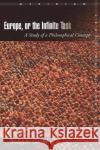
What exactly does "Europe" mean for philosophy today? Putting aside both Eurocentrism and anti-Eurocentrism, Gasche returns to the old name "Europe" to examine it as a concept or idea in the work of four philosophers from the phenomenological tradition: Husserl, Heidegger, Patočka, and Derrida. Beginning with Husserl, the idea of Europe became central to such issues as rationality, universality, openness to the other, and responsibility. Europe, or The Infinite Task tracks the changes these issues have undergone in phenomenology in order to investigate "Europe's" continuing...
What exactly does "Europe" mean for philosophy today? Putting aside both Eurocentrism and anti-Eurocentrism, Gasche returns to the old name "Europe" t...
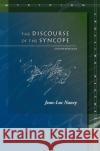
Why is it that the modern conception of literature begins with one of the worst writers of the philosophical tradition? Such is the paradoxical question that lies at the heart of Jean-Luc Nancy's highly original and now-classic study of the role of language in the critical philosophy of Kant. While Kant did not turn his attention very often to the philosophy of language, Nancy demonstrates to what extent he was anything but oblivious to it. He shows, in fact, that the question of philosophical style, of how to write critical philosophy, goes to the core of Kant's attempt to articulate...
Why is it that the modern conception of literature begins with one of the worst writers of the philosophical tradition? Such is the paradoxical questi...
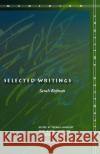
Sarah Kofman (1934-1994), Professor of Philosophy at the Sorbonne in Paris and the author of over twenty books, was one of the most significant postwar thinkers in France. Kofman's scholarship was wide-ranging and included work on Freud and psychoanalysis, Nietzsche, feminism and the role of women in Western philosophy, visual art, and literature. The child of Polish Jewish immigrants who lost her father in the Holocaust, she also was interested in Judaism and anti-Semitism, especially as reflected in works of literature and philosophy. This book is an anthology of some of Kofman's most...
Sarah Kofman (1934-1994), Professor of Philosophy at the Sorbonne in Paris and the author of over twenty books, was one of the most significant postwa...
Skirting the Ethical offers highly original readings of six works, each noted for its politico-ethical stance. The first four (Sophocles' Antigone, Plato's Symposium and Republic and Hamann's "Aesthetica in nuce") have a recognized and honored place in the canon. The last two, Sebald's The Emigrants and Jane Campion's film The Piano, are exemplary for our contemporary scene. Nevertheless, the straightforward assumptions about justice, divine and state power, the good, and identity politics that every reader or viewer inevitably comes upon are...
Skirting the Ethical offers highly original readings of six works, each noted for its politico-ethical stance. The first four (Sophocles' An...
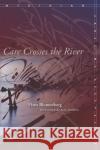
In this collection of short meditations on various topics, Hans Blumenberg eschews academic ponderousness and writes in a genre evocative of Montaigne's Essais, Walter Benjamin's Denkbilder, or Adorno's Minima Moralia. Drawing upon an intellectual tradition that ranges from Aesop to Wittgenstein and from medieval theology to astrophysics, he works as a detective of ideas scouring the periphery of intellectual and philosophical history for clues--metaphors, gestures, anecdotes--essential to grasping human finitude. Images of shipwrecks, attempts at ordering the world, and...
In this collection of short meditations on various topics, Hans Blumenberg eschews academic ponderousness and writes in a genre evocative of Montaigne...