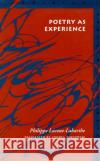
Lacoue-Labarthe's Poetry as Experience addresses the question of a lyric language that would not be the expression of subjectivity. In his analysis of the historical position of Paul Celan's poetry, Lacoue-Labarthe defines the subject as the principle that founds, organizes, and secures both cognition and action--a principle that turned, most violently during the twentieth century, into a figure not only of domination but of the extermination of everything other than itself. This thoroughly universal, abstract, and finally suicidal subject eradicates all experience, save the...
Lacoue-Labarthe's Poetry as Experience addresses the question of a lyric language that would not be the expression of subjectivity. In his anal...
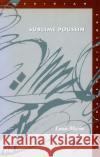
"Art history and art theory are inseparable. A history of art can be achieved only through the simultaneous construction of a theory of art." These words of the eminent scholar and critic Louis Marin suggest why he considered the paintings and the writings of Nicolas Poussin (1594-1665), painter and theoretician of painting, an enduring source of inspiration. Poussin was the artist to whom Marin returned most faithfully over the years. Since Marin did not live to write his proposed book on Poussin, the ten major essays in this volume will remain his definitive statement on the painter who...
"Art history and art theory are inseparable. A history of art can be achieved only through the simultaneous construction of a theory of art." These wo...
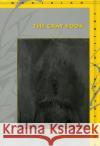
Generally considered the least lively and most bleak of casts, gray is the taint of vagueness and uncertainty. Marking the threshold region where luminous life seems suspended but death has not yet darkened the horizon, it belongs to an evasive and evanescent world, carrying the tint of smoke, fog, ashes, and dust. As the ambiguous space of thought and remembrance where things blend and blur, gray measures the difference between distance and proximity, shading into tinges of hesitation, hues of taciturnity, tones of time past and lost. Thus it may also be the spectral medium of literature...
Generally considered the least lively and most bleak of casts, gray is the taint of vagueness and uncertainty. Marking the threshold region where lumi...
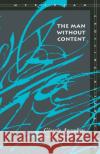
In this book, one of Italy's most important and original contemporary philosophers considers the status of art in the modern era. He takes seriously Hegel's claim that art has exhausted its spiritual vocation, that it is no longer through art that Spirit principally comes to knowledge of itself. He argues, however, that Hegel by no means proclaimed the -death of art- (as many still imagine) but proclaimed rather the indefinite continuation of art in what Hegel called a -self-annulling- mode. With astonishing breadth and originality, the author probes the meaning, aesthetics, and historical...
In this book, one of Italy's most important and original contemporary philosophers considers the status of art in the modern era. He takes seriously H...
Theodor Adorno is one of this century's most influential thinkers in the areas of social theory, philosophy, aesthetics, and music. Throughout the essays in this book, all of which concern musical matters, he displays an astonishing range of cultural reference, demonstrating that music is invariably social, political, even ethical. Adorno's insistence on the social character of aesthetic works will come as no surprise to those familiar with his writings, although many may be surprised by the volume's somewhat colloquial tone. This colloquialism, in dialogue with Adorno's unceasing rigor,...
Theodor Adorno is one of this century's most influential thinkers in the areas of social theory, philosophy, aesthetics, and music. Throughout the ess...
These are the opening words of Ernst Bloch's first major work, The Spirit of Utopia, written mostly in 1915-16, published in its first version just after the First World War, republished five years later, 1923, in the version here presented for the first time in English translation.
The Spirit of Utopia is one of the great historic books from the beginning of the century, but it is not an obsolete one. In its style of thinking, a peculiar amalgam of biblical, Marxist, and Expressionist turns, in...
I am. We are.
That is enough. Now we have to start.
These are the opening words of Ernst Bloch's first major work, The Spir...
This is the definitive analysis of art as a social and perceptual system by Germany's leading social theorist of the late twentieth century. It not only represents an important intellectual step in discussions of art--in its rigor and in its having refreshingly set itself the task of creating a set of distinctions for determining what counts as art that could be valid for those creating as well as those receiving art works--but it also represents an important advance in systems theory. Returning to the eighteenth-century notion of aesthetics as pertaining to the "knowledge of the senses,"...
This is the definitive analysis of art as a social and perceptual system by Germany's leading social theorist of the late twentieth century. It not on...
This collection of writings by Jean-Luc Nancy, the renowned French critic and poet, delves into the history of philosophy to locate a fundamentally poetic modus operandi there. The book represents a daring mixture of Nancy's philosophical essays, writings about artworks, and artwork of his own. With theoretical rigor, Nancy elaborates on the intrinsic multiplicity of art as a concept of "making," and outlines the tensions inherent in the faire, the "making" that characterizes the very process of production and thereby the structure of poetry in all its forms. Nancy shows that this...
This collection of writings by Jean-Luc Nancy, the renowned French critic and poet, delves into the history of philosophy to locate a fundamentally po...
Speech act theory has taught us "how to do things with words." Arresting Language turns its attention in the opposite direction--toward the surprising things that language can undo and leave undone. In the eight essays of this volume, arresting language is seen as language at rest, words no longer in service to the project of establishing conventions or instituting legal regimes. Concentrating on both widely known and seldom-read texts from a variety of philosophers, writers, and critics--from Leibniz and Mendelssohn, through Kleist and Hebel, to Benjamin and...
Speech act theory has taught us "how to do things with words." Arresting Language turns its attention in the opposite direction--toward the ...
This book demonstrates the presence of literature within speech act theory and the utility of speech act theory in reading literary works. Though the founding text of speech act theory, J. L. Austin's How to Do Things with Words, repeatedly expels literature from the domain of felicitous speech acts, literature is an indispensable presence within Austin's book. It contains many literary references but also uses as essential tools literary devices of its own: imaginary stories that serve as examples and imaginary dialogues that forestall potential objections. How to Do Things with...
This book demonstrates the presence of literature within speech act theory and the utility of speech act theory in reading literary works. Though the ...