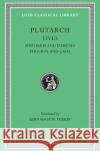
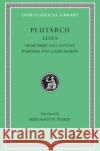
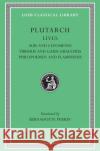
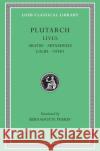
Plutarch (c. 45 120 CE) wrote on many subjects. His forty-six Parallel Lives are biographies planned to be ethical examples in pairs, one Greek figure and one similar Roman, though the last four lives are single. They not only record careers and illustrious deeds but also offer rounded portraits of statesmen, orators, and military leaders.
Plutarch (c. 45 120 CE) wrote on many subjects. His forty-six Parallel Lives are biographies planned to be ethical examples in pairs, one Greek figure...
Plutarch (c. 45 120 CE) wrote on many subjects. His forty-six Parallel Lives are biographies planned to be ethical examples in pairs, one Greek figure and one similar Roman, though the last four lives are single. They not only record careers and illustrious deeds but also offer rounded portraits of statesmen, orators, and military leaders.
Plutarch (c. 45 120 CE) wrote on many subjects. His forty-six Parallel Lives are biographies planned to be ethical examples in pairs, one Greek figure...
The police handling of the Yorkshire Ripper case, which spanned over 14 years, is investigated in this book. For the first time, the files have been opened, the detectives are talking and the victims are reliving the nightmare. For over 20 years, the dark secrets of the biggest criminal manhunt in British history have remained a closed book. Detectives refused all requests to tell the inside story of the Yorkshire Ripper investigation that logged over two million man-hours of police work. The victims who survived maintained a wall of silence. And the detailed forensic evidence, witness...
The police handling of the Yorkshire Ripper case, which spanned over 14 years, is investigated in this book. For the first time, the files have been o...
Plutarch (c. 45 120 CE) wrote on many subjects. His forty-six Parallel Lives are biographies planned to be ethical examples in pairs, one Greek figure and one similar Roman, though the last four lives are single. They not only record careers and illustrious deeds but also offer rounded portraits of statesmen, orators, and military leaders.
Plutarch (c. 45 120 CE) wrote on many subjects. His forty-six Parallel Lives are biographies planned to be ethical examples in pairs, one Greek figure...
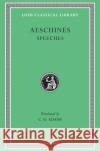
As examples of Greek oratory the speeches of Aeschines (390 or 389 314 BCE) rank next to those of Demosthenes, and are important documents for the study of Athenian diplomacy and inner politics. Aeschines powerful speeches include Against Timarchus, On the False Embassy, and Against Ctesiphon.
As examples of Greek oratory the speeches of Aeschines (390 or 389 314 BCE) rank next to those of Demosthenes, and are important documents for the stu...
History of the Wars by the Byzantine historian Procopius (late fifth century to after 558 CE) consists largely of sixth century CE military history, with much information about peoples, places, and special events. Powerful description complements careful narration. Procopius is just to the empire s enemies and boldly criticises emperor Justinian.
History of the Wars by the Byzantine historian Procopius (late fifth century to after 558 CE) consists largely of sixth century CE military history, w...
Thucydides of Athens, one of the greatest of historians, was born about 471 BCE. He saw the rise of Athens to greatness under the inspired leadership of Pericles. In 430, the second year of the Peloponnesian War, he caught and survived the horrible plague which he described so graphically. Later, as general in 423 he failed to save Amphipolis from the enemy and was disgraced. He tells about this, not in volumes of self-justification, but in one sentence of his history of the war that it befell him to be an exile for twenty years. He then lived probably on his property in Thrace, but was...
Thucydides of Athens, one of the greatest of historians, was born about 471 BCE. He saw the rise of Athens to greatness under the inspired leaders...
Thucydides of Athens, one of the greatest of historians, was born about 471 BCE. He saw the rise of Athens to greatness under the inspired leadership of Pericles. In 430, the second year of the Peloponnesian War, he caught and survived the horrible plague which he described so graphically. Later, as general in 423 he failed to save Amphipolis from the enemy and was disgraced. He tells about this, not in volumes of self-justification, but in one sentence of his history of the war that it befell him to be an exile for twenty years. He then lived probably on his property in Thrace, but was...
Thucydides of Athens, one of the greatest of historians, was born about 471 BCE. He saw the rise of Athens to greatness under the inspired leaders...
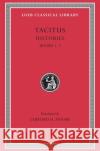
Tacitus (c. 55 c. 120 CE), renowned for concision and psychology, is paramount as a historian of the early Roman empire. What survives of Histories covers the dramatic years 69 70. What survives of Annals tells an often terrible tale of 14 28, 31 37, and, partially, 47 66.
Tacitus (c. 55 c. 120 CE), renowned for concision and psychology, is paramount as a historian of the early Roman empire. What survives of Histories co...
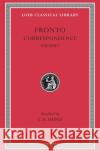
The correspondence of Fronto--a much admired orator and rhetorician who was befriended by the emperor Antoninus Pius and teacher of his adopted sons Marcus Aurelius and Lucius Verus--offers an invaluable picture of aristocratic life and literary culture in the 2nd century. His letters reveal Fronto's strong stylistic views and dislike of Stoicism as well as his family joys and sorrows. They portray the successes and trials of a prominent figure in the palace, literary salons, the Senate, and lawcourts, and they give a fascinating record of the relationship between the foremost teacher of...
The correspondence of Fronto--a much admired orator and rhetorician who was befriended by the emperor Antoninus Pius and teacher of his adopted son...