If the work of Hippocrates is taken as representing the foundation upon which the edifice of historical Greek medicine was reared, then the work of Galen, who lived some six hundred years later, may be looked upon as the summit of the same edifice.
He was born in Pergamum 129 CE, and both there and in other academic centres of the Aegean pursued his medical studies before being appointed physician to the Pergamene gladiators in 157. Becoming dissatisfied with this type of practice he emigrated to Rome, where he soon won acknowledgement as the foremost medical authority of his time and...
If the work of Hippocrates is taken as representing the foundation upon which the edifice of historical Greek medicine was reared, then the work o...
Aristotle, great Greek philosopher, researcher, reasoner, and writer, born at Stagirus in 384 BCE, was the son of Nicomachus, a physician, and Phaestis. He studied under Plato at Athens and taught there (367 47); subsequently he spent three years at the court of a former pupil, Hermeias, in Asia Minor and at this time married Pythias, one of Hermeias s relations. After some time at Mitylene, in 343 2 he was appointed by King Philip of Macedon to be tutor of his teen-aged son Alexander. After Philip s death in 336, Aristotle became head of his own school (of Peripatetics ), the Lyceum at...
Aristotle, great Greek philosopher, researcher, reasoner, and writer, born at Stagirus in 384 BCE, was the son of Nicomachus, a physician, and Phae...
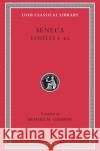
Seneca, Lucius Annaeus, born at Corduba (Cordova) ca. 4 BCE, of a prominent and wealthy family, spent an ailing childhood and youth at Rome in an aunt's care. He became famous in rhetoric, philosophy, money-making, and imperial service. After some disgrace during Claudius' reign he became tutor and then, in 54 CE, advising minister to Nero, some of whose worst misdeeds he did not prevent. Involved (innocently?) in a conspiracy, he killed himself by order in 65. Wealthy, he preached indifference to wealth; evader of pain and death, he preached scorn of both; and there were other contrasts...
Seneca, Lucius Annaeus, born at Corduba (Cordova) ca. 4 BCE, of a prominent and wealthy family, spent an ailing childhood and youth at Rome in an ...
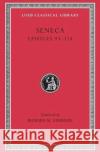
Seneca, Lucius Annaeus, born at Corduba (Cordova) ca. 4 BCE, of a prominent and wealthy family, spent an ailing childhood and youth at Rome in an aunt's care. He became famous in rhetoric, philosophy, money-making, and imperial service. After some disgrace during Claudius' reign he became tutor and then, in 54 CE, advising minister to Nero, some of whose worst misdeeds he did not prevent. Involved (innocently?) in a conspiracy, he killed himself by order in 65. Wealthy, he preached indifference to wealth; evader of pain and death, he preached scorn of both; and there were other contrasts...
Seneca, Lucius Annaeus, born at Corduba (Cordova) ca. 4 BCE, of a prominent and wealthy family, spent an ailing childhood and youth at Rome in an ...
Seneca, Lucius Annaeus, born at Corduba (Cordova) ca. 4 BCE, of a prominent and wealthy family, spent an ailing childhood and youth at Rome in an aunt's care. He became famous in rhetoric, philosophy, money-making, and imperial service. After some disgrace during Claudius' reign he became tutor and then, in 54 CE, advising minister to Nero, some of whose worst misdeeds he did not prevent. Involved (innocently?) in a conspiracy, he killed himself by order in 65. Wealthy, he preached indifference to wealth; evader of pain and death, he preached scorn of both; and there were other contrasts...
Seneca, Lucius Annaeus, born at Corduba (Cordova) ca. 4 BCE, of a prominent and wealthy family, spent an ailing childhood and youth at Rome in an ...
Enquiry into Plants and De Causis Plantarum by Theophrastus (c. 370 c. 285 BCE) are a counterpart to Aristotle s zoological work and the most important botanical work of antiquity now extant. In the former Theophrastus classifies and describes. His On Odours and Weather Signs are minor treatises.
Enquiry into Plants and De Causis Plantarum by Theophrastus (c. 370 c. 285 BCE) are a counterpart to Aristotle s zoological work and the most importan...
History of the Wars by the Byzantine historian Procopius (late fifth century to after 558 CE) consists largely of sixth century CE military history, with much information about peoples, places, and special events. Powerful description complements careful narration. Procopius is just to the empire s enemies and boldly criticises emperor Justinian.
History of the Wars by the Byzantine historian Procopius (late fifth century to after 558 CE) consists largely of sixth century CE military history, w...
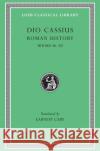
Dio Cassius (Cassius Dio), c. 150 235 CE, was born in Bithynia. Little of his Roman History survives, but missing portions are partly supplied from elsewhere and there are many excerpts. Dio s work is a vital source for the last years of the Roman republic and the first four Roman emperors.
Dio Cassius (Cassius Dio), c. 150 235 CE, was born in Bithynia. Little of his Roman History survives, but missing portions are partly supplied from el...
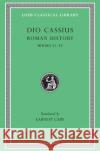
Dio Cassius (Cassius Dio), c. 150 235 CE, was born in Bithynia. Little of his Roman History survives, but missing portions are partly supplied from elsewhere and there are many excerpts. Dio s work is a vital source for the last years of the Roman republic and the first four Roman emperors.
Dio Cassius (Cassius Dio), c. 150 235 CE, was born in Bithynia. Little of his Roman History survives, but missing portions are partly supplied from el...
The Greek Anthology ('Gathering of Flowers') is the name given to a collection of about 4500 short Greek poems (called epigrams but usually not epigrammatic) by about 300 composers. To the collection (called 'Stephanus', wreath or garland) made and contributed to by Meleager of Gadara (1st century BCE) was added another by Philippus of Thessalonica (late 1st century CE), a third by Diogenianus (2nd century), and much later a fourth, called the 'Circle', by Agathias of Myrina. These (lost) and others (also lost) were partly incorporated, arranged according to contents, by Constantinus Cephalas...
The Greek Anthology ('Gathering of Flowers') is the name given to a collection of about 4500 short Greek poems (called epigrams but usually not epigra...