This Key Concepts pivot explores the aesthetic concept of ‘imaginative contemplation.’ Drawing on key literature to provide a comprehensive and systematic study of the term, the book offers a unique analysis and definition of the connotations of the term, describing its aesthetic mentality and examining the issue of imaginative contemplation versus imagination in artistic creative thinking, especially as regards the characteristics of contingent thinking in aesthetics. It focuses on drawing parallels between imaginative contemplation and aesthetic emotions, aesthetic rationality, and...
This Key Concepts pivot explores the aesthetic concept of ‘imaginative contemplation.’ Drawing on key literature to provide a comprehensive and...
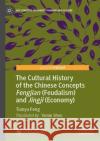
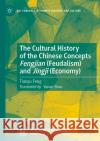
This book interprets the typical Chinese concepts of fengjian (feudalism) and jingji (economy) by reviewing the mistranslation and mismatching of concepts from ancient to modern times and from a Western language to Chinese and exploring Chinese and Western acculturation, which is in line with Mr. Chen Yinque’s theory—”To interpret a Chinese character is to write a history of culture”. In the coordinates of time and space for the transformation of Chinese concepts from ancient to modern times and their translation from Western languages, this book explores the generation and...
This book interprets the typical Chinese concepts of fengjian (feudalism) and jingji (economy) by reviewing the mistranslation and mismatching of c...
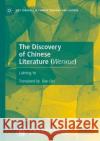
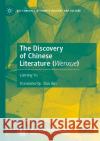
This booktraces the origin and evolvement of two Chinese characters “wenxue”(literature) by using the methods of conceptual history and historical and cultural semantics, and by taking the evolution and changes of the concept of the these two characters and their interpretations in the west as a window, and re-examining the contemporary morphology of concept evolution in the historical context of concept generation and development to discover the historical and cultural connotations hidden behind the characters, so as to embark on a vivid journey to explore the...
This booktraces the origin and evolvement of two Chinese characters “wenxue”(literature) by using the methods of conceptual...
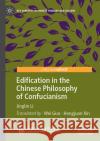
This pivot focuses on “the concept of edification” in a bid to systematically expound its connotative structure and logical evolution. It is divided into ten chapters, embracing various issues, such as human nature as the foundation of edification, the development of edification and cultivation, the evolution of edification and the resultant life based on ritual and music, the political orientation and ultimate care of edification, and the nurturing of social edification, in an effort to offer a panoramic view of the intellectual features of Confucianism, and consequently a profound...
This pivot focuses on “the concept of edification” in a bid to systematically expound its connotative structure and logical evolution. It is di...
This book interprets the typical Chinese concepts of fengjian (feudalism) and jingji (economy) by reviewing the mistranslation and mismatching of concepts from ancient to modern times and from a Western language to Chinese and exploring Chinese and Western acculturation, which is in line with Mr. Chen Yinque’s theory—”To interpret a Chinese character is to write a history of culture”. In the coordinates of time and space for the transformation of Chinese concepts from ancient to modern times and their translation from Western languages, this book explores the generation and...
This book interprets the typical Chinese concepts of fengjian (feudalism) and jingji (economy) by reviewing the mistranslation and mismatching of c...
This booktraces the origin and evolvement of two Chinese characters “wenxue”(literature) by using the methods of conceptual history and historical and cultural semantics, and by taking the evolution and changes of the concept of the these two characters and their interpretations in the west as a window, and re-examining the contemporary morphology of concept evolution in the historical context of concept generation and development to discover the historical and cultural connotations hidden behind the characters, so as to embark on a vivid journey to explore the...
This booktraces the origin and evolvement of two Chinese characters “wenxue”(literature) by using the methods of conceptual...
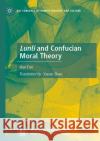
This book interprets the concepts, philosophies and cultural traditions of lunli (roughly construed as "relationships and rationality") from the perspective and domain of 'dialogue civilization.' On the conceptual level, it expounds the common reference and different tenets of the Chinese lunli and the Western "ethic", exploring the characteristics of lunli and "ethic" in civilization history, considering notably the difference between unification of family and state and division of the two at the embryonic stage of civilization. The book draws on the lunli-oriented culture and...
This book interprets the concepts, philosophies and cultural traditions of lunli (roughly construed as "relationships and rationality") from the pe...
This book presents the concept of Fenggu, one of the most important aesthetic categories of ancient China. As an inspiring aesthetic principle, it once encapsulated the particularities of various types of artistic creation and played an important role in traditional artistic creation and theoretic critique. The present volume aims to systematically elaborate on its etymological origin, connotations and generation, its great role in overcoming the tendency of creative stereotypes, its logical positioning in the ancient aesthetic system and its profound connection with...
This book presents the concept of Fenggu, one of the most important aesthetic categories of ancient China. As an inspiring aesthetic ...