In the early twentieth century, publicly staged productions of significant historical, political, and religious events became increasingly popular and increasingly grand in Ireland. These public pageants, a sort of precursor to today s opening ceremonies at the Olympic games, mobilized huge numbers of citizens to present elaborately staged versions of Irish identity based on both history and myth. Complete with marching bands, costumes, fireworks, and mock battles, these spectacles were suffused with political and national significance. Dean explores the historical significance of these...
In the early twentieth century, publicly staged productions of significant historical, political, and religious events became increasingly popular ...
From the late nineteenth century through the early twentieth century, the story of the Israelites' liberation from bondage in Egypt served as the archetypal narrative for the birth of the Irish nation. Exodus was critical to both colonial and anticolonial conceptions of Ireland and Irishness. Although the Irish-Israelite analogy has been cited often, a thorough exploration has never before been documented. Bender successfully fills this gap with Israelites in Erin. Drawing upon both canonical and little-known texts of the Literary Revival, including works by Joyce, plays by Lady...
From the late nineteenth century through the early twentieth century, the story of the Israelites' liberation from bondage in Egypt served as the a...
Postcolonial Overtures explores the importance of sound in contemporary Northern Irish writing, focusing on the work of three canonical poets: Ciaran Carson, Derek Mahon, and Paul Muldoon. Obert argues that these poets respond to what Edward Said calls "geographical violence" to the stratification of the North s visual spaces; to the sectarian symbols splashed across Belfast and beyond by turning from the eye to the ear, tentatively remapping place in acoustic space. Carson, for instance, casts Troubles-era Belfast as a "demolition city," its landmarks "swallowed in the maw of time and...
Postcolonial Overtures explores the importance of sound in contemporary Northern Irish writing, focusing on the work of three canonical poets: Ciaran ...
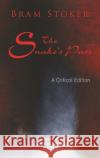
In 1890, The Snake's Pass was published in serialized form in the periodical The People. It is the story of Arthur Severn, an Englishman who has inherited wealth and a title through an aunt who took him under her wing to the exclusion of closer relations. His inheritance includes land in Ireland, and now that he is a man of leisure, he decides to tour the west of Ireland. As Bram Stoker's first full-length novel, The Snake's Pass is a heady blend of romance, travel narrative, adventure tale, folk tradition, and national tale. This early novel shows that, long before Dracula, Stoker used the...
In 1890, The Snake's Pass was published in serialized form in the periodical The People. It is the story of Arthur Severn, an Englishman who has inher...
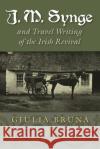
Between the late 1890s and the early 1900s, the young Irish writer John Millington Synge journeyed across his home country, documenting his travels intermittently for ten years. His body of travel writing includes the travel book The Aran Islands, his literary journalism about West Kerry and Wicklow published in various periodicals, and his articles for the Manchester Guardian about rural poverty in Connemara and Mayo. Although Synge's nonfiction is often considered of minor weight compared with his drama, Bruna argues persuasively that his travel narratives are instances of a pioneering...
Between the late 1890s and the early 1900s, the young Irish writer John Millington Synge journeyed across his home country, documenting his travels...
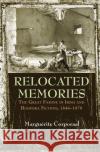
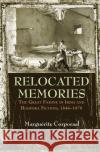
The Great Famine radically transformed Ireland; nearly one million people of the rural countryside died, and the eviction of farmers led to massive emigration. The Famine encouraged anti-English, nationalist sentiments, and this trauma is seen as pivotal in the development of an Irish anticolonial consciousness and in the identity formation of transatlantic Irish communities. In Relocated Memories, Corporaal challenges the persistent assumption that the first decades after the Great Irish Famine were marked by a pervasive silence on the catastrophe. Discussing works by well-known authors...
The Great Famine radically transformed Ireland; nearly one million people of the rural countryside died, and the eviction of farmers led to massive...
Challenges the persistent assumption that the first decades after the Great Irish Famine were marked by a pervasive silence on the catastrophe. Discussing works by well-known authors such as William Carleton and Anthony Trollope as well as more obscure texts, Corporaal charts the reconfigurations of memory in fiction across generations and national borders.
Challenges the persistent assumption that the first decades after the Great Irish Famine were marked by a pervasive silence on the catastrophe. Discus...
One of the most important Irish novelists of the twentieth century, Kate O'Brien (1897-1974) was also a pioneer of women's writing. In this highly original approach to O'Brien's work, Davison traces the influence of three leading Spanish writers - Jacinto Benavente, Miguel de Cervantes, and Teresa of Avila - on O'Brien's work.
One of the most important Irish novelists of the twentieth century, Kate O'Brien (1897-1974) was also a pioneer of women's writing. In this highly ori...
One of the most important Irish novelists of the twentieth century, Kate O'Brien (1897-1974) was also a pioneer of women's writing. In this highly original approach to O'Brien's work, Davison traces the influence of three leading Spanish writers - Jacinto Benavente, Miguel de Cervantes, and Teresa of Avila - on O'Brien's work.
One of the most important Irish novelists of the twentieth century, Kate O'Brien (1897-1974) was also a pioneer of women's writing. In this highly ori...