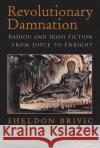
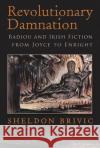
In Irish fiction, the most famous example of the embrace of damnation in order to gain freedom politically, religiously, and creatively is Joyce s Stephen Dedalus. His "non serviam," though, is not just the profound rebellion of one frustrated young man, but, as Brivic demonstrates in this sweeping account of twentieth-century Irish fiction, the emblematic and necessary standpoint for any artist wishing to envision something truly new. Revolutionary fervor is what allowed a country with a population lower than that of Connecticut to produce so many of the greatest writers of the...
In Irish fiction, the most famous example of the embrace of damnation in order to gain freedom politically, religiously, and creatively is Joyce s ...
In Irish fiction, the most famous example of the embrace of damnation in order to gain freedom politically, religiously, and creatively is Joyce s Stephen Dedalus. His "non serviam," though, is not just the profound rebellion of one frustrated young man, but, as Brivic demonstrates in this sweeping account of twentieth-century Irish fiction, the emblematic and necessary standpoint for any artist wishing to envision something truly new. Revolutionary fervor is what allowed a country with a population lower than that of Connecticut to produce so many of the greatest writers of the...
In Irish fiction, the most famous example of the embrace of damnation in order to gain freedom politically, religiously, and creatively is Joyce s ...
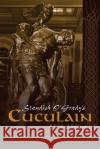
Between 1878 and 1881, Standish O Grady published a three-volume "History of Ireland "that simultaneously recounted the heroic ancient past of the Irish people and helped to usher in a new era of cultural revival and political upheaval. At the heart of this history was the figure of Cuculain, the great mythic hero who would inspire a generation of writers and revolutionaries, from W. B. Yeats and Lady Augusta Gregory to Patrick Pearse. Despite the profound influence O Grady s writings had on literary and political culture in Ireland, they are not as well known as they should be,...
Between 1878 and 1881, Standish O Grady published a three-volume "History of Ireland "that simultaneously recounted the heroic ancient past of the ...
Since the establishment of the Northern Irish state in 1921, theatre has often captured and reflected the political, social, and cultural changes that the North has experienced. From the mid-twentieth century, theatre has played a particularly important role in documenting women's experiences and in showing how women's social and political status has changed with the transformation of the state. Throughout the North's history, women's dramatic writing and performance have often contradicted mainstream narratives of the sectarian conflict, creating a rich and daring trove of...
Since the establishment of the Northern Irish state in 1921, theatre has often captured and reflected the political, social, and cultural changes t...
Between 1878 and 1881, Standish O Grady published a three-volume History of Ireland that simultaneously recounted the heroic ancient past of the Irish people and helped to usher in a new era of cultural revival and political upheaval. At the heart of this history was the figure of Cuculain, the great mythic hero who would inspire a generation of writers and revolutionaries, from W. B. Yeats and Lady Augusta Gregory to Patrick Pearse. Despite the profound influence O Grady s writings had on literary and political culture in Ireland, they are not as well known as they should be,...
Between 1878 and 1881, Standish O Grady published a three-volume History of Ireland that simultaneously recounted the heroic ancient past of th...
Since the establishment of the Northern Irish state in 1921, theatre has often captured and reflected the political, social, and cultural changes that the North has experienced. From the mid twentieth century, theatre has played a particularly important role in documenting women s experiences and in showing how women s social and political status has changed with the transformation of the state. Throughout the North s history, women s dramatic writing and performance have often contradicted mainstream narratives of the sectarian conflict, creating a rich and daring trove of...
Since the establishment of the Northern Irish state in 1921, theatre has often captured and reflected the political, social, and cultural changes t...
The first biography of Asenath Nicholson, Compassionate Stranger recovers the largely forgotten history of an extraordinary woman. Trained as a school teacher, Nicholson was involved in the abolitionist, temperance, and diet reforms of the day before she left New York in 1844 "to personally investigate the condition of the Irish poor." She walked alone throughout nearly every county in Ireland and reported on conditions in rural Ireland on the eve of the Great Irish Famine. She published Ireland's Welcome to the Stranger, an account of her travels in 1847. She returned to...
The first biography of Asenath Nicholson, Compassionate Stranger recovers the largely forgotten history of an extraordinary woman. Trained a...
The first biography of Asenath Nicholson, Compassionate Stranger recovers the largely forgotten history of an extraordinary woman. Trained as a school teacher, Nicholson was involved in the abolitionist, temperance, and diet reforms of the day before she left New York in 1844 "to personally investigate the condition of the Irish poor." She walked alone throughout nearly every county in Ireland and reported on conditions in rural Ireland on the eve of the Great Irish Famine. She published Ireland's Welcome to the Stranger, an account of her travels in 1847. She returned to Ireland in December...
The first biography of Asenath Nicholson, Compassionate Stranger recovers the largely forgotten history of an extraordinary woman. Trained as a school...
Ireland's Abbey Theatre was founded in 1904. Under the guidance of W. B. Yeats and Lady Augusta Gregory it became instrumental to the success of many of the leading Irish playwrights and actors of the early twentieth century.
Conventional wisdom holds that the playwright Sean O'Casey was the first to offer a new vision of Irish authenticity in the people and struggles of inner-city Dublin in his groundbreaking trilogy "The Shadow of a Gunman," "The Plough and the Stars," and "Juno and the Paycock." Challenging this view, Mannion argues that there was an established tradition of urban...
Ireland's Abbey Theatre was founded in 1904. Under the guidance of W. B. Yeats and Lady Augusta Gregory it became instrumental to the success of ma...