Joshua P. Hochschild studied at Yale (B.A. 1994) and the University of Notre Dame (Ph.D. 2001), and his primary research is in medieval logic, semantics, and metaphysics. He has published articles and reviews inInternational Philosophical Quarterly,Journal of the History of Philosophy,Medieval Philosophy and Theology, andThe Thomistamong other journals. He is the author ofThe Semantics of Analogy: Rereading Cajetan’sDe Nominum Analogia (University of Notre Dame Press, 2010), and translator of Claude Panaccio’sMental Language: From Plato to Ockham(Fordham University Press, 2017). He...
Joshua P. Hochschild studied at Yale (B.A. 1994) and the University of Notre Dame (Ph.D. 2001), and his primary research is in medieval logic, semant...
This volume emphasizes the diversity and fruitfulness of early modern mechanism as a program, as a concept, as a model. Mechanistic study of the living body but also of the mind and mental processes are examined in careful historical focus, dealing with figures ranging from the first-rank (Bacon, Descartes, Spinoza, Cudworth, Gassendi, Locke, Leibniz, Kant) to less well-known individuals (Scaliger, Martini) or prominent natural philosophers who have been neglected in recent years (Willis, Steno, etc.). The volume moves from early modern medicine and physiology to late Enlightenment and even...
This volume emphasizes the diversity and fruitfulness of early modern mechanism as a program, as a concept, as a model. Mechanistic study of the livi...
This book provides a new account of the emergence of the philosophy of personal identity in the early modern period. Reflection on personal identity is often thought to have begun in earnest with John Locke’s famous consciousness-based account, published in the 2ndEdition of theEssayin 1694. The present work argues that we ought to understand modern notions of personal identity, including Locke’s own, as emerging from within debates about the metaphysics of resurrection across the seventeenth century. It recovers and analyses theories of personal identity and resurrection in Locke and...
This book provides a new account of the emergence of the philosophy of personal identity in the early modern period. Reflection on personal identity i...
This book offers a detailed analysis of John Locke’s case for toleration and proposes an interpretation that shows the links between his political reasoning and his reflection on the ethics of belief. Locke is concerned with toleration not only when he discusses the ends of the Commonwealth, but also when he assesses the duties of private persons regarding the search for truth. The purpose of this book is to shed light on both of these branches, which have not been sufficiently explored in other studies on Locke.With particular attention to the notions of charity, obstinacy, fallibility,...
This book offers a detailed analysis of John Locke’s case for toleration and proposes an interpretation that shows the links between his political r...
The volume provides the first book-length study of Chrysostomus Javelli’s philosophical works. An Italian university professor and a prominent figure in the intellectual landscape of sixteenth-century Europe, Javelli (ca. 1470-1540) was the author of insightful commentaries on both Plato and Aristotle as well as of original works in which he laid the foundations of a new Christian philosophy. In this volume, a group of leading scholars from around the world guide readers through the many facets of Javelli’s philosophical corpus, showing the long-term impact of his ideas on Western...
The volume provides the first book-length study of Chrysostomus Javelli’s philosophical works. An Italian university professor and a prominent figu...
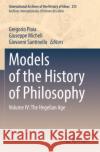
This is the fourth volume ofModels of the History of Philosophy, a collaborative work on the history of the history of philosophy dating from the Renaissance to the end of the nineteenth century. The volume covers the so-called Hegelian age, in which the approach to the past of philosophy is placed at the foundation of “doing philosophy”, up to identifying with the same philosophy. A philosophy which is however understood in a different way: as dialectical development, as hermeneutics, as organic development, as eclectic option, as a philosophy of experience, as a progressive search for...
This is the fourth volume ofModels of the History of Philosophy, a collaborative work on the history of the history of philosophy dating from the Rena...
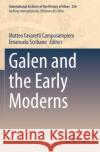
This book explores the presence of Galen of Pergamon (129 – c. 216 AD) in early modern philosophy, science, and medicine. After a short revival due to the humanistic rediscovery of his works, the influence of the great ancient physician on Western thought seemed to decline rapidly as new discoveries made his anatomy, physiology, and therapeutics more and more obsolete. In fact, even though Galenism was gradually dismissed as a system, several of his ideas spread through the modern world and left their mark on natural philosophy, rational theology, teleology, physiology, biology, botany, and...
This book explores the presence of Galen of Pergamon (129 – c. 216 AD) in early modern philosophy, science, and medicine. After a short revival due ...