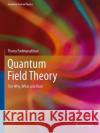
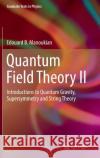
This book describes, in clear terms, the Why, What and the How of Quantum Field Theory. The raison d'etre of QFT is explained by starting from the dynamics of a relativistic particle and demonstrating how it leads to the notion of quantum fields. Non-perturbative aspects and the Wilsonian interpretation of field theory are emphasized right from the start. Several interesting topics such as the Schwinger effect, Davies-Unruh effect, Casimir effect and spontaneous symmetry breaking introduce the reader to the elegance and breadth of applicability of field theoretical concepts. Complementing the...
This book describes, in clear terms, the Why, What and the How of Quantum Field Theory. The raison d'etre of QFT is explained by starting from the dyn...
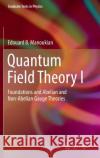
This textbook covers a broad spectrum of developments in QFT, emphasizing those aspects that are now well consolidated and for which satisfactory theoretical descriptions have been provided. The book is unique in that it offers a new approach to the subject and explores many topics merely touched upon, if covered at all, in standard reference works.
A detailed and largely non-technical introductory chapter traces the development of QFT from its inception in 1926. The elegant functional differential approach put forward by Schwinger, referred to as the quantum dynamical (action)...
This textbook covers a broad spectrum of developments in QFT, emphasizing those aspects that are now well consolidated and for which satisfactory theo...
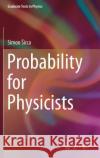
This book is designed as a practical and intuitive introduction to probability, statistics and random quantities for physicists. The book aims at getting to the main points by a clear, hands-on exposition supported by well-illustrated and worked-out examples. A strong focus on applications in physics and other natural sciences is maintained throughout. In addition to basic concepts of random variables, distributions, expected values and statistics, the book discusses the notions of entropy, Markov processes, and fundamentals of random number generation and Monte-Carlo methods.
This book is designed as a practical and intuitive introduction to probability, statistics and random quantities for physicists. The book aims at gett...
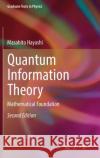
This graduate textbook provides a unified view of quantum information theory. Clearly explaining the necessary mathematical basis, it merges key topics from both information-theoretic and quantum- mechanical viewpoints and provides lucid explanations of the basic results. Thanks to this unified approach, it makes accessible such advanced topics in quantum communication as quantum teleportation, superdense coding, quantum state transmission (quantum error-correction) and quantum encryption. Since the publication of the preceding book Quantum Information: An Introduction, there...
This graduate textbook provides a unified view of quantum information theory. Clearly explaining the necessary mathematical basis, it merges key to...
This book takes a pedagogical approach to explaining quantum gravity, supersymmetry and string theory in a coherent way. It is aimed at graduate students and researchers in quantum field theory and high-energy physics.
The first part of the book introduces quantum gravity, without requiring previous knowledge of general relativity (GR). The necessary geometrical aspects are derived afresh leading to explicit general Lagrangians for gravity, including that of general relativity. The quantum aspect of gravitation, as described by the graviton, is introduced and perturbative quantum GR is...
This book takes a pedagogical approach to explaining quantum gravity, supersymmetry and string theory in a coherent way. It is aimed at graduate st...
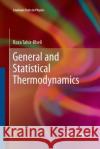
Scheck's textbook starts with a concise introduction to classical thermodynamics, including geometrical aspects. Then a short introduction to probabilities and statistics lays the basis for the statistical interpretation of thermodynamics. Phase transitions, discrete models and the stability of matter are explained in great detail.Thermodynamics has a special role in theoretical physics. Due to the general approach of thermodynamics the field has as a bridging function between several areas like the theory of condensed matter, elementary particle physics, astrophysics and cosmology. The...
Scheck's textbook starts with a concise introduction to classical thermodynamics, including geometrical aspects. Then a short introduction to probabil...
Tailored to advanced undergraduates, this textbook provides a thorough explanation of general and statistical thermodynamics. It begins with an introduction to statistical mechanics, deriving all the important formulae meticulously and explicitly, without mathematical short cuts.
Tailored to advanced undergraduates, this textbook provides a thorough explanation of general and statistical thermodynamics. It begins with an introd...
This comprehensive and yet approachable textbook emphasizes a few fundamental principles and extracts from them a wealth of information. This approach enables the authors to unify an enormous and diverse subject which might at first appear too disjointed.
This comprehensive and yet approachable textbook emphasizes a few fundamental principles and extracts from them a wealth of information. This approach...