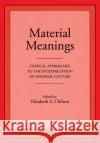
This volume emphasizes the complex interactions between ceramic containers and people in past and present contexts.
Pottery, once it appears in the archaeological record, is one of the most routinely recovered artifacts. It is made frequently, broken often, and comes in endless varieties according to economic and social requirements. Moreover, even in shreds ceramics can last almost forever, providing important clues about past human behavior.
The contributors to this volume, all leaders in ceramic research, probe the relationship between humans and ceramics. Here they offer new...
This volume emphasizes the complex interactions between ceramic containers and people in past and present contexts.
"Material Meanings" focuses on the social context in which things are produced and in which they are given meaning.
With firm roots in antiquarianism, archaeology began as the study and collection of things. Even today objects take center stage in many areas of archaeological inquiry. But the past few decades have seen a proliferation of the ways anthropological archaeologist analyze raw materials, tools, techniques, finished products, and discarded objects.
"Material Meanings" examines current approaches to material culture in the archaeological record from three perspective:...
"Material Meanings" focuses on the social context in which things are produced and in which they are given meaning.
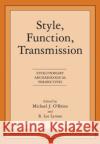
Darwin's theory of evolutionary descent with modification rests in part on the notion that there is heritable continuity affected by transmission between ancestor and descendant. It is precisely this continuity that allows one to trace hylogenetic histories between fossil taxa of various ages and recent taxa. Darwin was clear that were an analyst to attempt such tracings, then the anatomical characters of choice are those least influenced by natural selection, or what are today referred to as adaptively neutral traits. The transmission of these traits is influenced solely by such...
Darwin's theory of evolutionary descent with modification rests in part on the notion that there is heritable continuity affected by transmission b...
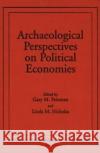
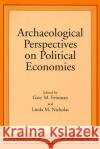
"Archaeological Perspectives on Political Economies" explores past societies that are characterized by hierarchical organization where the production and circulation of goods transcend domestic units. Based on contributions to the biennial Foundations of Archaeological Inquiry Roundtable, Gary Feinman and Linda Nicholas bring together twelve leaders in the field whose contributions consider such questions as the emergence of rank within a previously egalitarian society, the regional organization of preindustrial economic systems, different modes of craft specializations, and the relation...
"Archaeological Perspectives on Political Economies" explores past societies that are characterized by hierarchical organization where the producti...
Archaeological Perspectives on Political Economies explores past societies that are characterized by hierarchical organization where the production and circulation of goods transcend domestic units. Based on contributions to the biennial Foundations of Archaeological Inquiry Roundtable, Gary Feinman and Linda Nicholas bring together twelve leaders in the field whose contributions consider such questions as the emergence of rank within a previously egalitarian society, the regional organization of preindustrial economic systems, different modes of craft specializations, and the...
Archaeological Perspectives on Political Economies explores past societies that are characterized by hierarchical organization where the pro...
World trends such as tourism, diaspora, and media globalization have led to new forms of relationship with the past. Yet these global processes also threaten to silence local or alternate claims to that past. How should archaeologists respond to this dispersal of archaeological knowledge and interest? Many have come to accept the need for dialogue. In "Archaeology Beyond Dialogue," Ian Hodder argues that there is a need to do more than engage in dialogue with participating communities; archaeologists must consider the implications of...
How do global trends affect our view of the past?
World trends such as tourism, diaspora, and media globalization have led to new forms of relati...
World trends such as tourism, diaspora, and media globalization have led to new forms of relationship with the past. Yet these global processes also threaten to silence local or alternate claims to that past. How should archaeologists respond to this dispersal of archaeological knowledge and interest? Many have come to accept the need for dialogue. In "Archaeology Beyond Dialogue," Ian Hodder argues that there is a need to do more than engage in dialogue with participating communities; archaeologists must consider the implications of...
How do global trends affect our view of the past?
World trends such as tourism, diaspora, and media globalization have led to new forms of relati...
Although plastic and metal vessels offer significant advantages and have almost universally supplanted ceramics throughout the world, pottery fragments are one of the most ubiquitous artifacts in the archaeological record. The southwestern region of Ethiopia is one of the few places in the world where locally made pottery is still the dominant choice for everyday domestic use. The Gamo people continue to produce and use pottery for transporting water, cooking, storing, and serving. Ethnoarchaeology undertaken in a society where people still use low-fired ceramics in daily life provides a...
Although plastic and metal vessels offer significant advantages and have almost universally supplanted ceramics throughout the world, pottery fragment...
A work that redresses the skewed conception and approach to craft production focused on separate, single medium crafts, and expresses a need for a balanced evaluation of the roles of producer and consumer, and the importance of properly contextualized workshop excavations.
A work that redresses the skewed conception and approach to craft production focused on separate, single medium crafts, and expresses a need for a bal...