About 4000 medical compounds are being used in the drugs applied today. It is estimated that worldwide consumption of active compounds amounts to some 100,000 tons or more per year. Consequently, there is a need to highlight the most important questions and issues related to presence of pharmaceuticals in the environment. Pharmaceuticals in the Environment: current knowledge and need assessment to reduce presence and impact brings together results of previous and on-going EU projects with published data from both governmental sources and scientific literature and manufacturers' data on...
About 4000 medical compounds are being used in the drugs applied today. It is estimated that worldwide consumption of active compounds amounts to some...
Many EU cities are experiencing increasing problems with their water pipeline infrastructure. The cost of replacing these old, worn-out systems, if left to deteriorate beyond repair, is astronomical and clearly beyond the resources of many communities. Replacement, however, is not the only choice as many of these systems can be rehabilitated at 30 to 70 percent of the cost of replacement. Accordingly, resources are now increasingly being allocated to address pipeline rehabilitation management issues. Due to the emphasis on sustainable management, risk-based approaches for the rehabilitation...
Many EU cities are experiencing increasing problems with their water pipeline infrastructure. The cost of replacing these old, worn-out systems, if le...
Advanced Tools and Models to Improve River Basin Management in Europe in the Context of Climate Change - AquaTerra has developed from an integrated project of the 6th EU RTD Framework Programme that aims to provide the scientific basis for an improved river basin management through a better understanding of the river-sediment-soil-groundwater system as a whole, by integrating both natural and socio-economics aspects at different temporal and spatial scales. This book aims:
To provide better understanding of the river-sediment-soil-groundwater system at various temporal and...
Advanced Tools and Models to Improve River Basin Management in Europe in the Context of Climate Change - AquaTerra has developed from an integrated pr...
The strategy and methodology for improved IWRM project, (STRIVER) has developed interdisciplinary methods to assess and implement IWRM. Based on the development of a multidisciplinary knowledge base assessment in all case studies (policy, social and natural sciences) and an early stage development of IWRM conceptual framework, this book investigates IWRM in the four selected twinned catchments covering six countries in Europe and Asia. Twinning activities based on a problem-based approach have been performed in four case river basins: Tunga Bahdra (2 states in India), Sesan...
The strategy and methodology for improved IWRM project, (STRIVER) has developed interdisciplinary methods to assess and implement IWRM. Based on the d...
The complex dimensions of the Mediterranean freshwater resources, their fragility and their scarcity have been highlighted and have received considerable attention as a primary priority issue politically, technically and scientifically. Membrane technology, with its different applications in water treatment (desalination, potable water treatment, wastewater treatment and reuse) has showed to be a powerful tool to abate the water crisis in the Mediterranean region. The primary objective of Membrane Technology in Water Treatment in the Mediterranean Region is to support the current...
The complex dimensions of the Mediterranean freshwater resources, their fragility and their scarcity have been highlighted and have received considera...
The adoption of the Urban Waste Water Treatment Directive requires sewage sludge to be subsequently treated and the Sewage Sludge Directive regulates the uses and properties of stabilised sludge for being either recycled or disposed. Both directives drive specific actions in two complementary ways. Reduction, Modification and Valorisation of Sludge aims at developing strategies for the disposal and reuse of waste sludge. It aims to develop several processes for reducing both amount and toxicity of sludge, with simultaneous transformation into green energy vectors such as methane or hydrogen....
The adoption of the Urban Waste Water Treatment Directive requires sewage sludge to be subsequently treated and the Sewage Sludge Directive regulates ...
Reverse osmosis is the dominant technology in water desalination. However, some critical issues remain open: improvement of water quality, enhancement of the recovery factor, reduction of the unit water cost, minimizing the brine disposal impact. This book aims to solve these problems with an innovative approach based on the integration of different membrane operations in pre-treatment and post-treatment stages. Membrane-Based Desalination: An Integrated Approach (acronym MEDINA) has been a three year project funded by the European Commission within the 6th Framework Program. The project...
Reverse osmosis is the dominant technology in water desalination. However, some critical issues remain open: improvement of water quality, enhancement...
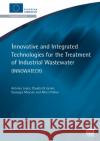
Innovative and Integrated Technologies for the Treatment of Industrial Wastewater deals with advanced technological solutions for the treatment of industrial wastewater such as aerobic granular biomass based systems, advanced oxidation processes integrated with biological treatments, membrane contactors and membrane chemical reactors. Wastewater from pharmaceutical, chemical and food industries as well as landfill leachates are specifically considered as representative of major problems encountered when treating industrial streams. The economic and environmental sustainability of the above...
Innovative and Integrated Technologies for the Treatment of Industrial Wastewater deals with advanced technological solutions for the treatment of ind...
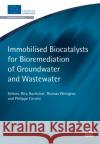
The European project MINOTAURUS explored innovative bio-processes to eliminate emerging and classic organic pollutants. These bio-processes are all based on the concept of immobilization of biocatalysts (microorganisms and enzymes) and encompass bioaugmentation, enzyme technology, rhizoremediation with halophytes, and a bioelectrochemical remediation process. The immobilization-based technologies are applied as engineered ex situ treatment systems as well as natural systems in situ for the bioremediation of groundwater, wastewater and soil. The selection and application of tailored...
The European project MINOTAURUS explored innovative bio-processes to eliminate emerging and classic organic pollutants. These bio-processes are all ba...