In 1983 the Eisenhower Center at the University of New Orleans began a project to record the recollections of as many people as possible -- civilians as well as soldiers -- who were involved in one of the most pivotal events of the century. Skillfully edited by Ronald J. Drez and first published on the fifty-year anniversary of D-Day, the award-winning Voices of D-Day tells the story of that momentous operation almost entirely through the words of the people who were there.
In 1983 the Eisenhower Center at the University of New Orleans began a project to record the recollections of as many people as possible -- civilia...
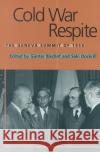
At the mid-point of the high Cold War, when most people in North America and Europe thought catastrophic nuclear onslaught was almost inevitable, an unprecedented event took place in Geneva in July 1955. The heads of state from the United States, the Soviet Union, Britain and France came together in an attempt at diplomatic dialogue, primarily over the questions of German unification, European security and nuclear disarmament. Although the Summit ended with no tangible results, its ramifications were extensive, and it provided the world with a brief repose from escalating east-west tension.
At the mid-point of the high Cold War, when most people in North America and Europe thought catastrophic nuclear onslaught was almost inevitable, an u...
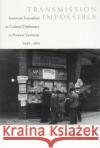
In this study, Jessica Gienow-Hecht challenges long-standing analyses of the Unites States' cultural imperialism that emphasize the determination of policy makers to export U.S. culture to spread capitalism and gain access to overseas markets and raw materials. She also contests scholars of reception theory who claim that foreign audiences deliberately condition the reception of U.S. culture abroad. Studying the example of the U.S. Army newspaper, the Neue Zeitung - published for the German population from 1945 to 1955 - she demonstrates that U.S. officials actually exerted little direct...
In this study, Jessica Gienow-Hecht challenges long-standing analyses of the Unites States' cultural imperialism that emphasize the determination of p...
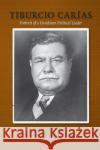
Honduras's longest-serving head of government, Tiburcio Carias (1876--1969) was a larger-than-life figure who had the air of an ordinary, approachable person. During his rule from 1933 to 1949, he variously employed the tactics of a liberal, a conservative, a constitutionalist, and a dictator. Modern Honduras cannot be understood without comprehending his influence. In the -- amazingly -- first biography of this powerful Latin American caudillo, Thomas J. Dodd, a former ambassador to Uruguay and to Costa Rica, offers a vital, riveting account of Carias's life and career.
Dodd shows...
Honduras's longest-serving head of government, Tiburcio Carias (1876--1969) was a larger-than-life figure who had the air of an ordinary, approacha...