Perhaps no country benefitted more from the Marshall Plan for assistance in reconstruction of Europe after World War II than Austria. On a per capita basis, each American taxpayer invested $80 per person in the Plan; each Austrian received $133 from the European recovery program, more than any other of the sixteen participating countries. Without the Marshall Plan, the Austrian economic miracle of the 1950s would have been unthinkable. Despite this, contemporary Austria seems to have forgotten this essential American contribution to its postwar reconstruction. This volume in the...
Perhaps no country benefitted more from the Marshall Plan for assistance in reconstruction of Europe after World War II than Austria. On a per cap...
After Stalin's death, during a respite in Cold War tensions in 1955, Austria managed to rid itself of a quadripartite occupation regime and become a neutral state. As the Cold War continued, Austria's policy of neutrality helped make this small country into an important mediator of East-West differences, and neutrality became a crucial part of Austria's postwar identity. In the post-Cold War era Austrian neutrality seems to demand redefinition. The work addresses such issues as what neutrality means when Austria's neighbors are joining NATO? What is the difference between Austrian neutrality...
After Stalin's death, during a respite in Cold War tensions in 1955, Austria managed to rid itself of a quadripartite occupation regime and become a n...
Political, economic, social, and cultural modernization dramatically transformed twentieth-century Austria. Innovative new methods of production and management, such as the assembly line, changed Austrian business after World War I, much as the Marshall Plan shaped the economy after World War II. At the same time, jazz, Hollywood movies, television programming, and mass commodities were as popular in Austria as elsewhere in Western Europe. Even political campaigns followed American trends. All this occurred despite the fact that in West Germany, American nostrums and models had been rejected,...
Political, economic, social, and cultural modernization dramatically transformed twentieth-century Austria. Innovative new methods of production and m...
Austria joined the European Union in 1995, with the overwhelming support of its citizenry. In June 1994, a record 66.6 percent of the Austrian population voted in favor of joining the Union, and Austria acceded on January 1, 1995. Only three years later, in the second half of 1998, Austria assumed its first presidency of the European Union. Its competent conduct of the Union's business enhanced its reputation. The sense that Austria was a role model collapsed overnight, after a new conservative People's Party (iVP/FPi) coalition government was formed in Austria in early February 2000....
Austria joined the European Union in 1995, with the overwhelming support of its citizenry. In June 1994, a record 66.6 percent of the Austrian popu...
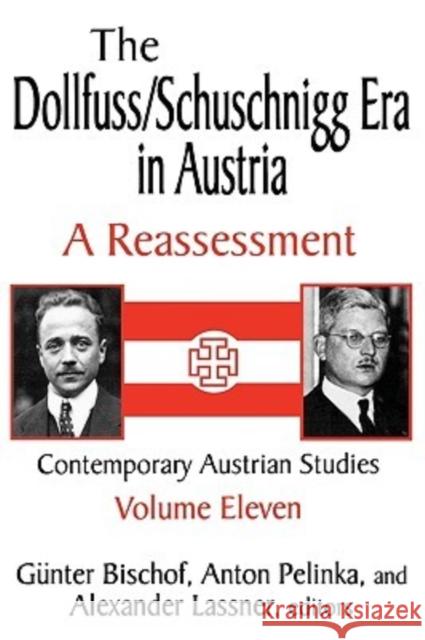
The years of Chancellors Dollfuss and Schuschnigg's authoritarian governments (1933/34-1938) have been denounced as "Austrofascism" from the left, or defended as a Christian corporate state ("Stondestaat") from the right. During this period, Austria was in a desperate struggle to maintain its national independence vis-o-vis Hitler's Germany, a struggle that ultimately failed. In the end, the Nazis invaded and annexed Austria (Anschluss").
Volume 11 of the Contemporary Austrian Studies series stays away from these heated historiographical debates and looks at economic,...
The years of Chancellors Dollfuss and Schuschnigg's authoritarian governments (1933/34-1938) have been denounced as "Austrofascism" from the left, ...
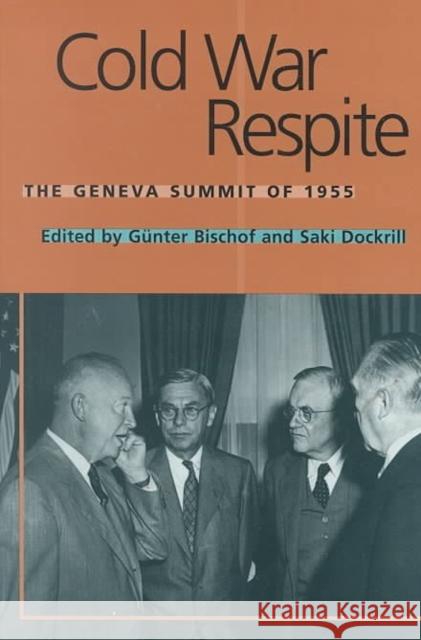
At the mid-point of the high Cold War, when most people in North America and Europe thought catastrophic nuclear onslaught was almost inevitable, an unprecedented event took place in Geneva in July 1955. The heads of state from the United States, the Soviet Union, Britain and France came together in an attempt at diplomatic dialogue, primarily over the questions of German unification, European security and nuclear disarmament. Although the Summit ended with no tangible results, its ramifications were extensive, and it provided the world with a brief repose from escalating east-west tension.
At the mid-point of the high Cold War, when most people in North America and Europe thought catastrophic nuclear onslaught was almost inevitable, an u...
In 2005, Austria celebrated the sixtieth anniversary of its liberation from the Nazi regime and the fiftieth anniversary of the State Treaty that ended the occupation and returned full sovereignty to the country. This volume of Contemporary Austrian Studies covers foreign policy in the twentieth century. It offers an up-to-date status report of Austria's foreign policy trajectories and diplomatic options.
Eva Nowotny, the current Austrian ambassador to the United States, introduces the volume with an analysis of the art and practice of Austrian diplomacy in historical perspective....
In 2005, Austria celebrated the sixtieth anniversary of its liberation from the Nazi regime and the fiftieth anniversary of the State Treaty that ...
Scholars have increasingly been investigating human sexuality as an important field of social history in particular national cultures. This volume examines both continuities and changing patterns of sexual behavior in Austria.
Scholars have increasingly been investigating human sexuality as an important field of social history in particular national cultures. This volu...
When the Hapsburg monarchy disintegrated after World War I, Austria was not considered to be a viable entity. In a vacuum of national identity the hapless country drifted toward a larger Germany. After World War II, Austrian elites constructed a new identity based on being a "victim" of Nazi Germany. Cold war Austria, however, envisioned herself as a neutral "island of the blessed" between and separate from both superpower blocs. Now, with her membership in the European Union secured, Austria is reconstructing her painful historical memory and national identity. In 1996 she celebrates her...
When the Hapsburg monarchy disintegrated after World War I, Austria was not considered to be a viable entity. In a vacuum of national identity the ...
At the height of the first Cold War in the early 1950s, the Western powers worried that occupied Austria might become 'Europe's Korea' and feared a Communist takeover. The Soviets exploited their occupation zone for maximum reparations. American economic aid guaranteed Austria's survival and economic reconstruction. Their military assistance turned Austria into a 'secret ally' of the West. Austrian diplomacy played a vital role in securing the Austrian treaty in bilateral negotiations with Stalin's successors in the Kremlin demonstrating the leverage of the weak in the Cold War.
At the height of the first Cold War in the early 1950s, the Western powers worried that occupied Austria might become 'Europe's Korea' and feared a Co...