Innocence may be lost in the post-Cold War West, but the "imitation" of innocence is evident in the social and political landscape of the 1990s. Eminent sociologist David Reisman has argued that the current culture attempts to imitate a purity of action, motive, and spirit commonly associated with the 1950s: faith in government, optimism concerning the future, and a can-do social and political attitude. These essays by prominent scholars and former policy makers carry forward Reisman's assertions in exposing the pretense in supposedly moral-driven Western policy, especially as it pertains to...
Innocence may be lost in the post-Cold War West, but the "imitation" of innocence is evident in the social and political landscape of the 1990s. Emine...
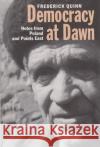
From the sweeping changes of democratic reform to the bloody conflict of the Chechen Republic, 1993-95 was a tumultuous and critical time for Eastern Europe and the former Soviet republics. During that two-year period, Frederick Quinn traveled the former Soviet empire as head of the rule of law programs of the Warsaw Office of Democratic Institutions and Human Rights (ODIHR), part of the Organization for Security and Cooperation in Europe (OSCE). His primary task was to help the new nations of the region write new constitutions and modernize their judicial systems. Keenly aware of the...
From the sweeping changes of democratic reform to the bloody conflict of the Chechen Republic, 1993-95 was a tumultuous and critical time for Eastern ...
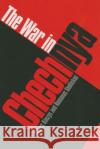
The recent war in Chechnya, despite all the media coverage, remains a confusing tangle for many people. The war was the result of many conflicting political, economic, judicial, and military issues that had been fermenting for decades. Only the most fundamental goals became clearly visible: for Moscow, the preservation of its territorial integrity; for Chechens, the struggle for national independence. In this carefully researched and extensively documented study, Stasys Knezys and Romanas Sedlickas examine the Chechnyan war from a military viewpoint. As they evenhandedly depict the...
The recent war in Chechnya, despite all the media coverage, remains a confusing tangle for many people. The war was the result of many conflicting pol...
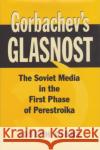
Glasnost, most commonly translated into English as "openness," was a key concept of Mikhail Gorbachev's administration as general secretary of the Communist Party of the Soviet Union. This adapted tool of Leninist media control became not only a part of perestroika, Gorbachev's plan to rejuvenate Soviet ideology during the 1980s, but also an independent concept that redefined how the USSR's media were employed as an instrument of leadership.In Gorbachev's Glasnost: The Soviet Media in the First Phase of Perestroika, author Joseph Gibbs traces the development of glasnost as both concept and...
Glasnost, most commonly translated into English as "openness," was a key concept of Mikhail Gorbachev's administration as general secretary of the Com...
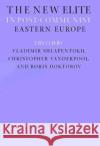
With the collapse of the Soviet Union, a radical metamorphosis took place in Eastern Europe as major power structures were replaced by new systems of power and authority. With new power systems came new types of dominant elites. "The New Elite in Post-Communist Eastern Europe" identifies those elites who have gained control of the political, economic, cultural, and scientific institutions of the new state systems and examines the nature of power in the post-Communist world and the relationships between the old and new elite. This study of the new elite in Eastern Europe developed from a...
With the collapse of the Soviet Union, a radical metamorphosis took place in Eastern Europe as major power structures were replaced by new systems of ...
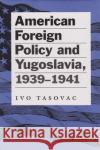
In American Foreign Policy and Yugoslavia, 1939-1941, Ivo Tasovac contends that Yugoslavia acted as an unwilling prop for American involvement in World War II. As a result of America's commitment to Britain as an exception to their doctrine of neutrality, and of Winston Churchill and Franklin Roosevelt's shared eagerness for conflict and suppression of Germany, the war and ensuing Communist takeover of Eastern Europe were inevitable. With Yugoslavia cast as the endangered barrier between the Germans and the Mediterranean, Churchill was able to establish a unquestionable need for U.S. military...
In American Foreign Policy and Yugoslavia, 1939-1941, Ivo Tasovac contends that Yugoslavia acted as an unwilling prop for American involvement in Worl...
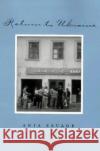
Nearly fifty years after fleeing Ukraine during World War II, Ania Savage returned with her mother and aunt--their first trip back to their homeland. In this riveting account of the journey, she records both the changes they found in Ukraine in the early days of postSoviet existence and the memories they had gone to seek. Savage, a journalist traveling to teach at Kyiv State University, records in vivid detail her experiences in her homeland, including the political turmoil that gripped Ukraine as it struggled to establish a democracy. In a moving subtext, Savage also describes the...
Nearly fifty years after fleeing Ukraine during World War II, Ania Savage returned with her mother and aunt--their first trip back to their homeland. ...
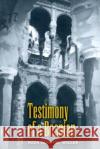
Surrounded by terror and genocide, Naza Tanovic-Miller and her family witnessed starvation, rape, and murder during the horrible war in Bosnia and the tense days and nights that led up to it. Now in Testimony of a Bosnian, Tanovic-Miller gives a personal, riveting account of these dreadful events, a testimony that tells more than the news accounts Americans watched at the time. Seeking refuge in her husband's home country of the United States in October, 1992, Tanovic-Miller and her husband, Harry Miller, immediately began efforts to raise the awareness of Americans about the ethnic...
Surrounded by terror and genocide, Naza Tanovic-Miller and her family witnessed starvation, rape, and murder during the horrible war in Bosnia and the...
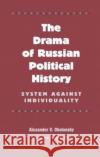
In his introduction, Alexander Obolonsky notes that Russian history and life are full of paradoxes, most of them rather sad. Why, he asks, have the Russians, who have not only been endowed by nature with enormous natural, human, and intellectual resources, but who have also developed a great literary and scientific heritage and made significant contributions to world civilization, proved unable to arrange the conditions of their own existence to realize their great potential? "What fundamental deficiency," he wonders, "made this great anomaly possible?"Alexander Obolonsky has undertaken the...
In his introduction, Alexander Obolonsky notes that Russian history and life are full of paradoxes, most of them rather sad. Why, he asks, have the Ru...
In "The Muslim-Croat Civil War in Central Bosnia, 1992-1994" Charles R. Shrader offers the first full-scale military history of a crucial conflict in Bosnia between two former allies. When the Bosnian Serbs and their Serbian allies attacked Bosnia-Herzegovina in March, 1992, the Bosnian Croats and Muslims collaborated to defend themselves. As Serbian pressure increased and it became clear that the West would not intervene, the two allies began to stake out their own claims. Drawing on testimony and exhibits from cases presented before the International Criminal Tribunal for the former...
In "The Muslim-Croat Civil War in Central Bosnia, 1992-1994" Charles R. Shrader offers the first full-scale military history of a crucial conflict in ...