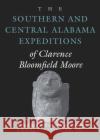
Covering 19 years of excavations, this volume provides an invaluable collection of Moore's pioneering archaeological investigations along Alabama's waterways.
In 1996, The University of Alabama Press published The Moundville Expeditions of Clarence Bloomfield Moore, which covered a large part of Moore's early archaeological expeditions to the state of Alabama. This volume collects the balance of Moore's Alabama expeditions, with the exception of those Moore made along the Tennessee River, which will be collected in another, forthcoming volume focusing on the Tennessee...
Covering 19 years of excavations, this volume provides an invaluable collection of Moore's pioneering archaeological investigations along Alabam...
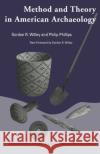
This collection elucidates the key role played by the National Research Council seminars, reports, and pamphlets in setting an agenda that has guided American archaeology in the 20th century.
In the 1920s and 1930s, the fascination that Americans had for the continent's prehistoric past was leading to a widespread and general destruction of archaeological evidence. In a drive toward the commercialization of antiquities, amateur collectors and "pot hunters" pillaged premier and lesser-known sites before the archaeological...
A Dan Josselyn Memorial Publication
This collection elucidates the key role played by the National Research Council seminars,...
A Dan Josselyn Memorial Publication This invaluable classic provides the framework for the development of American archaeology during the last half of the 20th century.
In 1958 Gordon R. Willey and Philip Phillips first published Method and Theory in American Archaeology--a volume that went through five printings, the last in 1967 at the height of what became known as the new, or processual, archaeology. The advent of processual archaeology, according to Willey and Phillips, represented a "theoretical debate . . . a question of whether archaeology should be the study of...
A Dan Josselyn Memorial Publication This invaluable classic provides the framework for the development of American archaeology during the las...
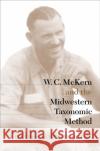
This volume explains the deep influence of biological methods and theories on the practice of Americanist archaeology by exploring W.C. McKern's use of Linnaean taxonomy as the model for development of a pottery classification system.
This volume explains the deep influence of biological methods and theories on the practice of Americanist archaeology by exploring W.C. McKern's use o...
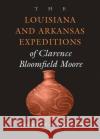
The ninth and final volume in the C.B. Moore reprint series that covers archaeological discoveries along North American Waterways.
Clarence B. Moore (1852-1936), a wealthy Philadelphia socialite, paper company heir, and photographer, made the archaeology of the Southeast his passion. Beginning in the 1870s, Moore systematically explored prehistoric sites along the major waterways of the region, from the Ohio River south to Florida and as far west as Texas, publishing his findings, at his own expense, with the Academy of...
A Dan Josselyn Memorial Publication
The ninth and final volume in the C.B. Moore reprint series that covers archaeological discoveri...
A premier mound site offers a wealth of primary data on mortuary practices in the Mississippian Period. The largest prehistoric mound site in Georgia is located in modern-day Macon and is known as Ocmulgee. It was first recorded in August 1739 by General James Oglethorpe s rangers during an expedition to the territory of the Lower Creeks. The botanist William Bartram wrote extensively of the ecology of the area during his visit in 1773, but the 1873 volume by Charles C. Jones, "Antiquities of the Southern Indians, Particularly of the Georgia Tribes,"...
A Dan Josselyn Memorial Publication
A premier mound site offers a wealth of primary data on mortuary practices in the Mississippian Period. The l...
A premier mound site offers a wealth of primary data on mortuary practices in the Mississippian Period. The largest prehistoric mound site in Georgia is located in modern-day Macon and is known as Ocmulgee. It was first recorded in August 1739 by General James Oglethorpe s rangers during an expedition to the territory of the Lower Creeks. The botanist William Bartram wrote extensively of the ecology of the area during his visit in 1773, but the 1873 volume by Charles C. Jones, "Antiquities of the Southern Indians, Particularly of the Georgia Tribes,"...
A Dan Josselyn Memorial Publication
A premier mound site offers a wealth of primary data on mortuary practices in the Mississippian Period. The l...
A Dan Josselyn Memorial Publication A classic work by three important scholars who document prehistoric human occupation along the lower reaches of the continent's largest river.
The Lower Mississippi Survey was initiated in 1939 as a joint undertaking of three institutions: the School of Geology at Louisiana State University, the Museum of Anthropology at the University of Michigan, and the Peabody Museum at Harvard. Fieldwork began in 1940 but was halted during the war years. When fieldwork resumed in 1946, James Ford had joined the American Museum of Natural History, which...
A Dan Josselyn Memorial Publication A classic work by three important scholars who document prehistoric human occupation along the lower reache...
A Dan Josselyn Memorial Publication A classic resource on early knowledge of prehistoric mounds and the peoples who constructed them in the eastern United States. With this accessible volume, Henry Clyde Shetrone made available to general readers the archaeological research data and conclusions concerning the ancient mounds and earthworks that dot the landscape of eastern North America. Dismissing popularly held theories of mysterious giants who built these structures, he explained that their purposes were defensive and ceremonial, that they had been used for habitation, burial,...
A Dan Josselyn Memorial Publication A classic resource on early knowledge of prehistoric mounds and the peoples who constructed them in the ea...
A 17th-century trading post and Indian town in central Georgia reveal evidence of culture contact and change.
Ocmulgee Old Fields near Macon, Georgia, is the site of a Lower Creek village and associated English trading house dating from the late 17th and early 18th centuries. It was excavated in the early 1930s as part of a WPA project directed by A. R. Kelly, which focused primarily on the major Mississippian temple mounds of Macon Plateau. The specific data for the Old Fields was not analyzed until nearly 30 years...
A Dan Josselyn Memorial Publication
A 17th-century trading post and Indian town in central Georgia reveal evidence of culture c...