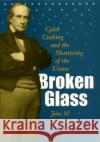
One of the most colorful, controversial, and misunderstood public figures of the 19th century
"The most hated man in New England,"as critics dubbed him on the eve of the Civil War, Caleb Cushing, brash and controversial, was perhaps the last of 19th-century America's renaissance figures. Poet and politician, essayist and diplomat, general and lawyer, this multidimensional scion of a Newburyport, Massachusetts, mercantile family moved in and out of positions of power and influence for more than fifty years.
First as a spokesman for the Whig and then the...
One of the most colorful, controversial, and misunderstood public figures of the 19th century
The personal story of the men and women of Cortland, New York and their efforts to support the war effort
Most regimental histories focus narrowly on military affairs and the battlefield exploits to the exclusion of the broader social and political context, while community studies examine civilian life divorced of the military situation. Banners South documents the influences and events that define the Civil War from the perspective of Northern soldiers and civilians, moving beyond the boundaries of the battlefield by exploring the civilian community, Cortland, New...
The personal story of the men and women of Cortland, New York and their efforts to support the war effort
Civil War letters from soldiers serving in a German regiment Organized by Colonel August Willich, a former Prussian army officer who led troops during the German Revolution of 1848, Indiana's German 32nd Indiana regiment fought in the Western Theater of the Civil War. The 32nd Indiana forged an enviable combat record on the battlefields at Rowlett's Station in Kentucky; at Shiloh, Stones River, and Missionary Ridge in Tennessee; and at Chickamauga and Pickett's Mill in Georgia. The letters collected here originally appeared in German in wartime issues of German American newspapers. These rare...
Civil War letters from soldiers serving in a German regiment Organized by Colonel August Willich, a former Prussian army officer who led troops during...
A 19th-century midwestern woman's reflections on her role in society
Celestia Rice Colby, born in Ohio in 1827, had lifestyle options that were relatively straightforward for the typical white female child born in the first half of the nineteenth century: she married in 1848, had five children, spent much of her life working as a dairy farmer and housewife, and died in 1900.
Her rich legacy, however, extended beyond her children and grandchildren and survived in the form of detailed and reflective diaries and writings. Her private and published writings show that...
A 19th-century midwestern woman's reflections on her role in society
Celestia Rice Colby, born in Ohio in 1827, had lifestyle optio...
Lt. Col. Theodore Lyman served as Gen. George Gordon Meade's aide-de-camp from September 1863 until the end of the Civil War. Lyman was a Harvard-trained natural scientist who was exceptionally disciplined in recording the events, the players, and his surroundings during his wartime duty. His private notebooks document his keen observations. Published here for the first time, Meade's Army: The Private Notebooks of Lt. Col. Theodore Lyman contains anecdotes, concise vignettes of officers, and lively descriptions of military campaigns as witnessed by this key figure in the Northern...
Lt. Col. Theodore Lyman served as Gen. George Gordon Meade's aide-de-camp from September 1863 until the end of the Civil War. Lyman was a Harvard-t...
Cultural politics and American bohemians in pre-Civil War New York
Amid the social and political tensions plaguing the United States in the years leading up to the Civil War, the North experienced a boom of cultural activity. Young transient writers, artists, and musicians settled in northern cities in pursuit of fame and fortune. Calling themselves "bohemians" after the misidentified homeland of the Roma immigrants to France, they established a coffeehouse society to share their thoughts and creative visions. Popularized by the press, bohemians became known for...
Cultural politics and American bohemians in pre-Civil War New York
Amid the social and political tensions plaguing the Uni...
Essays on the Northern home front by a preeminent Civil War historian
"The essays in this collection are snapshots about particular questions, bodies of evidence, and theoretical issues. Taken together these essays map out a portion of my own professional evolution, from the questions that absorbed my attention when I was first thinking about the Civil War home front, to the issues that have seemed most interesting to me in the last several years."--from the Introduction
Northerners at War brings together noted historian J. Matthew Gallman's most...
Essays on the Northern home front by a preeminent Civil War historian
"The essays in this collection are snapshots about p...
Eyewitness Civil War testimony from a major American writer
This facsimile edition of Albion W. Tourgee's regimental history of the 105th Ohio Volunteer Infantry was first published in 1896. Tourgee, a lawyer and outspoken abolitionist from Williamsfield, Ohio, is best known for his semi-fictional novels about the reconstruction of the South following the Civil War, A Fool's Errand and Bricks Without Straw. Both critically acclaimed best sellers, the novels catapulted Tourgee and his relentless efforts to secure equality for African Americans into...
Eyewitness Civil War testimony from a major American writer
This facsimile edition of Albion W. Tourgee's regimental histo...
The chronicle of a Union soldier's seven months in captivity
Besides the risks of death or wounding in combat, the average Civil War soldier faced the constant threat of being captured by the enemy. It is estimated that one out of every seven soldiers was taken captive--more than 194,000 of them from Union regiments--and held in prison camps infamous for breeding disease and death.
Sgt. Lyle G. Adair of the 111th United States Colored Troops joined the thousands of Union prisoners when part of his regiment tasked with guarding the rail lines between...
The chronicle of a Union soldier's seven months in captivity
Besides the risks of death or wounding in combat, the average...
Among collections of letters written between American soldiers and their spouses, the Civil War correspondence of William and Jane Standard stands out for conveying the complexity of the motives and experiences of Union soldiers and their families.
Among collections of letters written between American soldiers and their spouses, the Civil War correspondence of William and Jane Standard stands out...