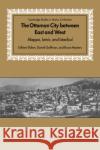
In a pioneering reinterpretation, the authors challenge the orientalist perception of the Islamic city. By considering the histories of three Ottoman cities in the seventeenth and eighteenth centuries, they depart from the piecemeal methods of previous studies to emphasize the importance of these cities and to highlight their essentially Ottoman character. While the essays provide an overall view, each can be approached separately. Their exploration of the sources and the agendas of those who have conditioned our understanding of these cities will make them essential reading for students.
In a pioneering reinterpretation, the authors challenge the orientalist perception of the Islamic city. By considering the histories of three Ottoman ...
Why and under what circumstances did the religion of Islam emerge in a remote part of Arabia at the beginning of the seventh century? Traditional scholarship maintains that Islam developed in opposition to the idolatrous and polytheistic religion of the Arabs of Mecca and the surrounding regions. In this study of pre-Islamic Arabian religion, G. R. Hawting adopts a comparative religious perspective to suggest an alternative view. By examining the various bodies of evidence which survive from this period, the Koran and the vast resources of the Islamic tradition, the author argues that in fact...
Why and under what circumstances did the religion of Islam emerge in a remote part of Arabia at the beginning of the seventh century? Traditional scho...
In a pioneering reinterpretation, the authors challenge the orientalist perception of the Islamic city. By considering the histories of three Ottoman cities in the seventeenth and eighteenth centuries, they depart from the piecemeal methods of previous studies to emphasize the importance of these cities and to highlight their essentially Ottoman character. While the essays provide an overall view, each can be approached separately. Their exploration of the sources and the agendas of those who have conditioned our understanding of these cities will make them essential reading for students.
In a pioneering reinterpretation, the authors challenge the orientalist perception of the Islamic city. By considering the histories of three Ottoman ...
By focusing on Mamluk Cairo, Adam Sabra explores the attitude of medieval Muslims to poverty and the experience of being poor in an Islamic society. He also considers the role of pious endowments (waqfs) in sustaining the poor. In this way the book affords fascinating insights into a world far removed from elite society, hitherto the focus of Mamluk studies. This trend, in conjunction with comparisons offered between the Islamic world, Europe and China, will entice a broad range of scholars from within the field and beyond.
By focusing on Mamluk Cairo, Adam Sabra explores the attitude of medieval Muslims to poverty and the experience of being poor in an Islamic society. H...
David Powers analyzes the application of Islamic law through six cases which took place during the period 1300 to 1500 in the Maghrib. The source for these disputes are fatwas issued by the muftis, which Powers uses to situate each case in its historical context and to interpret the principles of law. He demonstrates that, contrary to popular stereotypes, muftis were dedicated to reasoned argument. The book represents a ground-breaking approach to a complex subject area for students and scholars.
David Powers analyzes the application of Islamic law through six cases which took place during the period 1300 to 1500 in the Maghrib. The source for ...
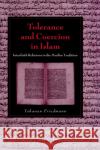
Since the beginning of its history, Islam has encountered other religious communities both in Arabia and in the territories conquered during its expansion. Muslims faced other religions from the position of a ruling power and were therefore able to determine the nature of that relationship in accordance with their world-view and beliefs. Yohanan Friedmann's original and erudite study examines questions of religious tolerance as they appear in the Quran and in the prophetic tradition, and analyses the principle that Islam is exalted above all religions, discussing the ways in which this...
Since the beginning of its history, Islam has encountered other religious communities both in Arabia and in the territories conquered during its expan...
The empire of the Qara Khitai, which was one of the least known and most fascinating dynasties in the history of Central Asia, existed for nearly a century before it was conquered by the Mongols in 1218. Arriving in Central Asia from China, the Qara Khitai ruled over a mostly Muslim population. Their history affords a unique window onto the extensive cross-cultural contacts between China, Inner Asian nomads and the Muslim world in the period preceding the rise of Chinggis Khan. Using an extensive corpus of Muslim and Chinese sources, Michal Biran comprehensively examines the political,...
The empire of the Qara Khitai, which was one of the least known and most fascinating dynasties in the history of Central Asia, existed for nearly a ce...
Gabor Agoston examines the weapons technology and armaments industries of the Ottoman Empire, the only Islamic empire that threatened Europe on its own territory in the Gunpowder Age. Considering topics such as technology transfer, the integration of firearms in the Ottoman army and navy, and saltpeter and gunpowder production, the book demonstrates the success of the Ottoman military machine against its European and Muslim rivals from the fifteenth through seventeenth centuries.
Gabor Agoston examines the weapons technology and armaments industries of the Ottoman Empire, the only Islamic empire that threatened Europe on its ow...
What were the attitudes to diplomacy and kingship in the medieval Islamic world? Anne Broadbridge examines struggles over ideology in the Middle East and Central Asia from 1260 to 1405. She explores two very different ideological worlds: the Islamic world of the Mamluk Sultans of Egypt and Syria, and the Mongol world inhabited by the Golden Horde in Central Asia, the Ilkhanids in Iran and Anatolia, the Ilkhanids' successors, and Temur. The relationships among these rival rulers were often highly charged, and diplomatic missions were exchanged in an effort to promote each ruler's ideology....
What were the attitudes to diplomacy and kingship in the medieval Islamic world? Anne Broadbridge examines struggles over ideology in the Middle East ...
Adam Silverstein's book offers a fascinating account of the official methods of communication employed in the Near East from pre-Islamic times through the Mamluk period. Postal systems were set up by rulers in order to maintain control over vast tracts of land. These systems, invented centuries before steam-engines or cars, enabled the swift circulation of different commodities - from letters, people and horses to exotic fruits and ice. As the correspondence transported often included confidential reports from a ruler's provinces, such postal systems doubled as espionage-networks through...
Adam Silverstein's book offers a fascinating account of the official methods of communication employed in the Near East from pre-Islamic times through...