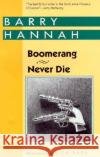
In Boomerang, a novel told in vignettes both real and fictive, a father attempting to cope with the tragic murder of his son learns that actions return to haunt or reward. He becomes the embodiment of Hannah's ideal of forbearance, dignity, and decency in the face of incomprehensible death. In Never Die Hannah mingles hilarity and horror as the frontier West is killed off by the onset of automobiles, biplanes, and nitroglycerine bombs. A gallery of grotesque characters - a judges' evil dwarf henchman, a nymphomaniacal schoolteacher, and a homosexual doctor named Fingo - populate this...
In Boomerang, a novel told in vignettes both real and fictive, a father attempting to cope with the tragic murder of his son learns that actions retur...
The elderly couple in this fine novel, a retired schoolteacher and the doctor with whom she has had a lifelong, tender love affair, find that, almost by accident, they have forfeited control of their own lives. Trapped in a nursing home, they are the victims of the biblical "apostles of light," the deceitful do-gooders who profess righteousness. In subtle, elegant prose Ellen Douglas recounts a gripping story of their brave attempt to free themselves from a dreadful plight. They must confront both their corrupt and evil custodians and their well-meaning younger relatives who are tempted by...
The elderly couple in this fine novel, a retired schoolteacher and the doctor with whom she has had a lifelong, tender love affair, find that, almost ...
The problem of -the color line, - W.E.B. Du Bois's ever-present polemical theme, is at the core of this novel of sensual love, radical politics, and the quest for racial justice. Originally published by Harcourt Brace and Co. in 1928, Dark Princess was one of two novels written by Du Bois. Toward the end of his life he ranked it as his favorite of all his works.
For the fantastical storyline, heavy with propagandist overtones, Du Bois depicts 1920s America as a racist nation primed for radical protest and terrorism. Matthew Townes, the protagonist, is a medical student expelled...
The problem of -the color line, - W.E.B. Du Bois's ever-present polemical theme, is at the core of this novel of sensual love, radical politics, an...
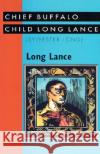
Written by one who claimed to have lived through the perils and adventures he describes, a thrilling fictional account of the Blackfoot Indian's last days of freedom
Written by one who claimed to have lived through the perils and adventures he describes, a thrilling fictional account of the Blackfoot Indian's last ...
Elizabeth Spencer is captivated by Italy. For her it has been a second home. A one-time resident who returns there, this native-born Mississippian has found Italy to be an enchanting land whose culture lends itself powerfully to her artistic vision.
Some of her most acclaimed work is set there. Her American characters encounter but never quite wholly adjust to the mysteries of the Italian mores. Collected here in one volume are Spencer's six Italian tales. Their plots are so alluring and enigmatic that Boccaccio would have been charmed by their delightful ironies and their sinister...
Elizabeth Spencer is captivated by Italy. For her it has been a second home. A one-time resident who returns there, this native-born Mississippian ...
In 1967, when this brave book was first published, Myrlie Evers said, -Somewhere in Mississippi lives the man who murdered my husband.-
Medgar Evers died in a horrifying act of political violence. Among both blacks and whites the killing of this Mississippi civil rights leader intensified the menacing moods of unrest and discontent generated during the civil rights era. His death seemed to usher in a succession of political shootings--Evers, then John Kennedy, then Martin Luther King, Jr., then Robert Kennedy.
At thirty-seven while field secretary for the NAACP, Evers was gunned down...
In 1967, when this brave book was first published, Myrlie Evers said, -Somewhere in Mississippi lives the man who murdered my husband.-
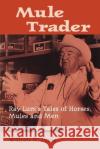
Readers captivated by this book will be happy that Bill Ferris found Ray Lum and that he thought to turn on a tape recorder. Lum (1891-1977) was a mule skinner, a livestock trader, an auctioneer, and an American original.
This delightful book, first published in 1992 as You Live and Learn. Then You Die and Forget It All, preserves Lum's colorful folk dialect and captures the essence of this one-of-a-kind figure who seems to have stepped full-blooded from the pages of Mark Twain. This riveting tale-spinner was tall, heavy-set, and full of body rhythm as he talked. In his special...
Readers captivated by this book will be happy that Bill Ferris found Ray Lum and that he thought to turn on a tape recorder. Lum (1891-1977) was a ...
After several years of silence and seclusion in Beetlecreek's black quarter, a carnival worker named Bill Trapp befriends Johnny Johnson, a Pittsburgh teenager living with relatives in Beetlecreek. Bill is white. Johnny is black. Both are searching for acceptance, something that will give meaning to their lives. Bill tries to find it through good will in the community. Johnny finds it in the Nightriders, a local gang. David Diggs, the boy's dispirited uncle, aspires to be an artist but has to settle for sign painting. David and Johnny's new friendship with Bill kindles hope that their...
After several years of silence and seclusion in Beetlecreek's black quarter, a carnival worker named Bill Trapp befriends Johnny Johnson, a Pittsb...
This fascinating history set in the Reconstruction South is a testament to African-American resilience, fortitude, and independence. It tells of three attempts to create an ideal community on the river bottom lands at Davis Bend south of Vicksburg. There Joseph Davis's effort to establish a cooperative community among the slaves on his plantation was doomed to fail as long as they remained in bondage. During the Civil War the Yankees tried with limited success to organize the freedmen into a model community without trusting them to manage their own affairs. After the war the intrepid...
This fascinating history set in the Reconstruction South is a testament to African-American resilience, fortitude, and independence. It tells of t...
This is a new edition of the autobiography of Mary Craig Kimbrough Sinclair (1883-1961). She started life innocently and happily on her father's Mississippi Delta plantation but went on to know deprivation and danger when she married Upton Sinclair, the crusading social activist. As she joined him in his struggles to rescue -the disinherited of the earth, - collaborating with him in writing a shelf of books, she gave up the moonlight and magnolias but not her grace. After her death, Sinclair recalled her as -the loveliest woman I have ever known.-
She moved North with him and began an...
This is a new edition of the autobiography of Mary Craig Kimbrough Sinclair (1883-1961). She started life innocently and happily on her father's Mi...