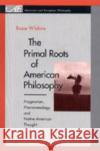
Continuing his quest to bring American philosophy back to its roots, Bruce Wilshire connects the work of such thinkers as Thoreau, Emerson, Dewey, and James with Native American beliefs and practices. His search is not for exact parallels, but rather for fundamental affinities between the equally "organismic" thought systems of indigenous peoples and classic American philosophers.
Wilshire gives particular emphasis to the affinities between Black Elk's view of the hoop of the world and Emerson's notion of horizon, and also between a shaman's healing practices and James's ideas of...
Continuing his quest to bring American philosophy back to its roots, Bruce Wilshire connects the work of such thinkers as Thoreau, Emerson, Dewey, ...
Some poems can change our lives; they lead us to look at the world through new eyes. In this book, inspired by Martin Heidegger--who found in poetry the most fundamental insights into the human condition--John Lysaker develops a concept of ur-poetry to explore philosophically how poetic language creates fresh meaning in our world and transforms the way in which we choose to live in it.
Not limited to a single poem or collection of poems, ur-poetry arises when, in the interaction of an author's principal tropes, the origin of poetry is exposed as a process whereby words with...
Some poems can change our lives; they lead us to look at the world through new eyes. In this book, inspired by Martin Heidegger--who found in poetr...
This book offers a radically new interpretation of the entire philosophy of J. G. Fichte by showing the impact of nineteenth-century psychological techniques and technologies on the formation of his theory of the imagination--the very centerpiece of his philosophical system. By situating Fichte's philosophy within the context of nineteenth-century German science and culture, the book establishes a new genealogy, one that shows the extent to which German idealism's transcendental account of the social remains dependent upon the scientific origins of psychoanalysis in the material techniques...
This book offers a radically new interpretation of the entire philosophy of J. G. Fichte by showing the impact of nineteenth-century psychological ...
Aesthetic experience has had a long and contentious history in the Western intellectual tradition. Following Kant and Hegel, a human's interaction with nature or art frequently has been conceptualized as separate from issues of practical activity or moral value. This book examines how art can be seen as a way of moral cultivation. Scott Stroud uses the thought of the American pragmatist John Dewey to argue that art and the aesthetic have a close connection to morality. Dewey gives us a way to reconceptualize our ideas of ends, means, and experience so as to locate the moral value of...
Aesthetic experience has had a long and contentious history in the Western intellectual tradition. Following Kant and Hegel, a human's interaction ...