Continuing his quest to bring American philosophy back to its roots, Bruce Wilshire connects the work of such thinkers as Thoreau, Emerson, Dewey, and James with Native American beliefs and practices. His search is not for exact parallels, but rather for fundamental affinities between the equally "organismic" thought systems of indigenous peoples and classic American philosophers.
Wilshire gives particular emphasis to the affinities between Black Elk's view of the hoop of the world and Emerson's notion of horizon, and also between a shaman's healing practices and James's ideas of...
Continuing his quest to bring American philosophy back to its roots, Bruce Wilshire connects the work of such thinkers as Thoreau, Emerson, Dewey, ...
This book, originally published by Capricorn Books in 1968, contains writings by the chief exponents of romanticism and the evolutionary theory in its various applications:
This book, originally published by Capricorn Books in 1968, contains writings by the chief exponents of romanticism and the evolutionary theory in its...
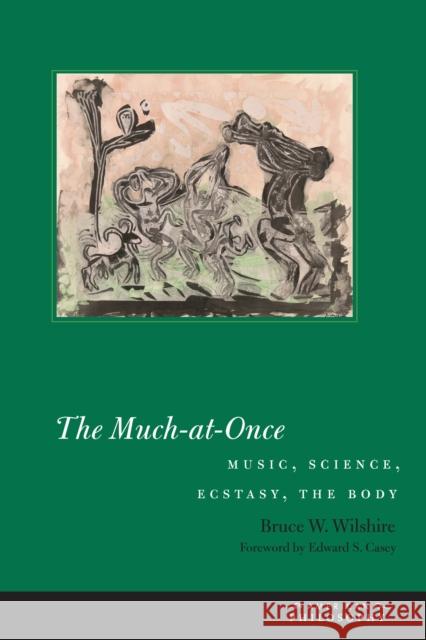
In this capstone work, the late Bruce Wilshire seeks to rediscover the fullness of life in the world by way of a more complete activation of the body's potentials. Appealing to our powers of hearing and feeling, with a special emphasis on music, he engages a rich array of composers, writers, and thinkers ranging from Beethoven and Mahler to Emerson and William James. Wilshire builds on James's concept of the much-at-once to name the superabundance of the world that surrounds, nourishes, holds, and stimulates us; that pummels and provokes us; that responds to our deepest need--to feel...
In this capstone work, the late Bruce Wilshire seeks to rediscover the fullness of life in the world by way of a more complete activation of the body'...
In this capstone work, the late Bruce Wilshire seeks to rediscover the fullness of life in the world by way of a more complete activation of the body's potentials. Appealing to our powers of hearing and feeling, with a special emphasis on music, he engages a rich array of composers, writers, and thinkers ranging from Beethoven and Mahler to Emerson and William James. Wilshire builds on James's concept of the much-at-once to name the superabundance of the world that surrounds, nourishes, holds, and stimulates us; that pummels and provokes us; that responds to our deepest need--to feel...
In this capstone work, the late Bruce Wilshire seeks to rediscover the fullness of life in the world by way of a more complete activation of the body'...