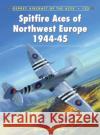
Spitfire Aces of Northwest Europe details the exploits of the 37 piolts that "made ace" flying Merlin-enguned Spitfires in bitter aerial clashes over northwest Eurpose in the final years of World War II.
After seizing air superiority over France before D-Day, the Spitfire battled Luftwaffe fighters over the V-2 rocket sites and Nazi Germany itself.
The iconic Spitfire underwent steady development throughout its service life, and by the start of 1944 it was the RAF's most numerous day fighter, equipping dozens of squadrons in the newly formed 2nd TAF and the Air Defense of...
Spitfire Aces of Northwest Europe details the exploits of the 37 piolts that "made ace" flying Merlin-enguned Spitfires in bitter aerial clashes ov...
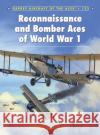
This book profiles a wide variety of British, French, German, Austro-Hungarian and American aircraft, ranging from frontline stalwarts like the RE 8 and AR 1 to the swift Salmson 2A2 and the compact, fighter-like Halberstadt CL II.
Oft-overshadowed by the fighters that either protected or threatened them, two-seater reconnaissance aircraft performed the oldest and most strategically vital aerial task of World War 1 - a task that required them to return with the intelligence they gathered at all costs. Bomber sorties were equally important and dangerous, and the very nature of both...
This book profiles a wide variety of British, French, German, Austro-Hungarian and American aircraft, ranging from frontline stalwarts like the RE ...
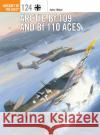
Once Nazi Germany had conquered Norway in 1940, just a handful of Gruppen flying the Bf 109 and Bf 110 fighters was able to shatter all opposition and dominate the air in the Arctic Circle. Yet as the dual threat of the Royal Air Force and the Red Air Force grew, the Luftwaffe was forced to increase its fighter presence to full Geschwader strength with the formation of JG 5 Eismeer (Ice-Sea) in early 1942.
The struggle for the frozen skies of the arctic raged on until the end of the war as the embattled JG 5 produced some of the Eastern Front's leading aces: pilots of the caliber...
Once Nazi Germany had conquered Norway in 1940, just a handful of Gruppen flying the Bf 109 and Bf 110 fighters was able to shatter all opposition ...
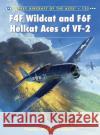
The first VF-2 was a prewar unit that had been dubbed the 'hottest outfit afloat' due to the skill of their non-commissioned pilots. This first unit only saw combat at the Battle of the Coral Sea, although VF-2 pilots flying Grumman F4F Wildcats were able to rack up 17 claims there during the bitter 48-hour period of fighting. The second 'Fighting Two' was armed with the new Grumman F6F-3 Hellcat fighter. Arriving in Hawaii in October 1943, the squadron so impressed Cdr Edward H 'Butch' O'Hare, the Medal of Honor-winning first US Navy ace of World War 2, that he requested the squadron replace...
The first VF-2 was a prewar unit that had been dubbed the 'hottest outfit afloat' due to the skill of their non-commissioned pilots. This first unit o...
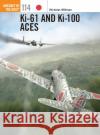
This is the story of the elite Japanese Army Air force (JAAF) aces that flew the Kawasaki Ki-61 Hien (Swallow), and the Ki-100 Goshikisen in the Pacific Theatre of World War 2. The former, codenamed 'Tony' by the allies, was a technically excellent aircraft, possessing power, stability and a good rate of climb - differing radically from the usual Japanese philosophy of building light, ultra-manoeuvrable fighters. Its pilots soon realised, however, that the type was plagued by a number of dangerous mechanical issues. Then as the war moved relentlessly closer to Japan's doorstep, a desperate,...
This is the story of the elite Japanese Army Air force (JAAF) aces that flew the Kawasaki Ki-61 Hien (Swallow), and the Ki-100 Goshikisen in the Pacif...
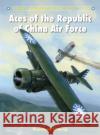
The ace pilots of the Republic of China Air Force have long been shrouded in mystery and obscurity, as their retreat to Taiwan in 1949 and a blanket martial law made records of the RoCAF all but impossible to access. Now, for the first time, the colorful story of these aces can finally be told. Using the latest research based on released archival information and full-color illustrations, this book charts the history of the top scoring pilots of the RoCAF from the beginning of the gruelling, eight-year Sino-Japanese War to the conclusion of the Civil War against the Chinese Communists....
The ace pilots of the Republic of China Air Force have long been shrouded in mystery and obscurity, as their retreat to Taiwan in 1949 and a blanket m...
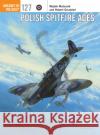
Of all Allied airmen, Polish pilots had had the most experience of fighting the Luftwaffe by the time the war came to Britain. As the Battle of Britain raged, they quickly proved themselves as highly aggressive and skilful interceptors, especially when flying the famous Spitfire. The Polish Air Force eventually became the largest non-Commonwealth Spitfire operator, using some 1,500 Mks I, II, V, IX and XVI to devastating effect. Top scoring USAAF ace of the ETO, Francis "Gabby" Gabreski and a whole host of other Allied and Commonwealth aces flew with Polish squadrons, adding even more to...
Of all Allied airmen, Polish pilots had had the most experience of fighting the Luftwaffe by the time the war came to Britain. As the Battle of Britai...
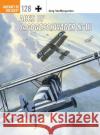
Royal Prussian Jagdgeschwader Nr III was the third of Germany's vaunted fighter wings to be formed during World War 1. Commanded by the Pour le Merite winner and well-respected ace Hauptmann Bruno Loerzer for its entire existence, it was composed of the celebrated Jasta 'Boelcke', along with Jagdstaffeln 26, 27 and 36. Equipped largely with the new Fokker triplane, these four units would play an important role in the Kaiserschlacht as part of the 17. Armee.
As Germany's fortunes waned in the summer of 1918, the aces of JG III nonetheless did their best to stem the tides of British,...
Royal Prussian Jagdgeschwader Nr III was the third of Germany's vaunted fighter wings to be formed during World War 1. Commanded by the Pour le Mer...
Although seen as a replacement for the A6M Zero-sen carrier-based fighter, the Mitsubishi J2M Raiden was actually designed as a land-based naval interceptor optimized for speed rather than maneuverability. Engine cooling problems for its Mitsubishi Kasai 23 engine and airflow and flight control issues plagued the Raiden's development, but despite these production delays, aces Sadaaki Akamatsu Yoshihiro Aoki, Susumu Ito and Susumu Ishihara all claimed significant scores in the Raiden.
Kawanishi's N1K family of fighters were privately developed by the manufacturer from the N1K Kyofu...
Although seen as a replacement for the A6M Zero-sen carrier-based fighter, the Mitsubishi J2M Raiden was actually designed as a land-based naval in...
Eighty years after the Spitfire was first developed, it remains an icon of military aviation. Though many associate its victory during the Battle of Britain as the high point in the history of the Spitfire, the years following were of equal importance. Having weathered the initial storm, at the start of 1941 Fighter Command took the fight to the Germans with offensive missions over the Channel.
This book reveals how RAF squadrons, first using the Spitfire I and II and then, following the introduction of the Bf 109, the cannon-armed Spitfire V, embarked on a range of missions which...
Eighty years after the Spitfire was first developed, it remains an icon of military aviation. Though many associate its victory during the Battle o...