• Wyszukiwanie zaawansowane
  • Kategorie
  • Kategorie BISAC
  • Książki na zamówienie
  • Promocje
  • Granty
  • Książka na prezent
  • Opinie
  • Pomoc
  • Załóż konto
  • Zaloguj się

Fluxional Organometallic and Coordination Compounds » książka


zaloguj się | załóż konto
Logo Krainaksiazek.pl

koszyk

konto

szukaj
topmenu
Księgarnia internetowa
Szukaj
Książki na zamówienie
Promocje
Granty
Książka na prezent
Moje konto
Pomoc
 
 
Wyszukiwanie zaawansowane
Pusty koszyk
Bezpłatna dostawa dla zamówień powyżej 20 złBezpłatna dostawa dla zamówień powyżej 20 zł

Kategorie główne

• Nauka
 [2946912]
• Literatura piękna
 [1852311]

  więcej...
• Turystyka
 [71421]
• Informatyka
 [150889]
• Komiksy
 [35717]
• Encyklopedie
 [23177]
• Dziecięca
 [617324]
• Hobby
 [138808]
• AudioBooki
 [1671]
• Literatura faktu
 [228371]
• Muzyka CD
 [400]
• Słowniki
 [2841]
• Inne
 [445428]
• Kalendarze
 [1545]
• Podręczniki
 [166819]
• Poradniki
 [480180]
• Religia
 [510412]
• Czasopisma
 [525]
• Sport
 [61271]
• Sztuka
 [242929]
• CD, DVD, Video
 [3371]
• Technologie
 [219258]
• Zdrowie
 [100961]
• Książkowe Klimaty
 [124]
• Zabawki
 [2341]
• Puzzle, gry
 [3766]
• Literatura w języku ukraińskim
 [255]
• Art. papiernicze i szkolne
 [7810]
Kategorie szczegółowe BISAC

Fluxional Organometallic and Coordination Compounds

ISBN-13: 9780470858394 / Angielski / Twarda / 2008 / 344 str.
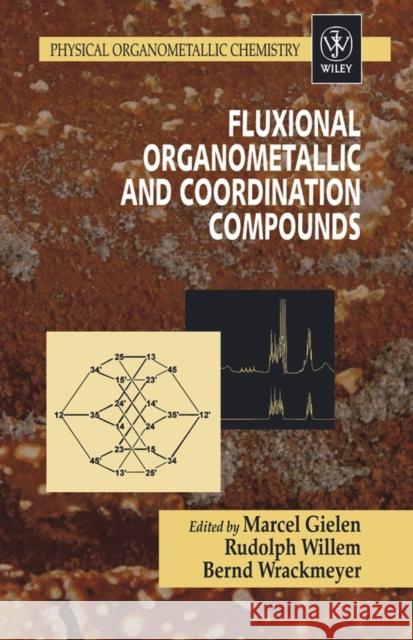
Marcel Gielen; Rudolph Willem; Bernd Wrackmeyer
Fluxional Organometallic and Coordination Compounds Marcel Gielen Rudolph Willem Bernd Wrackmeyer 9780470858394 John Wiley & Sons - książkaWidoczna okładka, to zdjęcie poglądowe, a rzeczywista szata graficzna może różnić się od prezentowanej.

Fluxional Organometallic and Coordination Compounds

ISBN-13: 9780470858394 / Angielski / Twarda / 2008 / 344 str.

Marcel Gielen; Rudolph Willem; Bernd Wrackmeyer
cena 1667,42
(netto: 1588,02 VAT:  5%)

Najniższa cena z 30 dni: 1660,55
Termin realizacji zamówienia:
ok. 30 dni roboczych
Bez gwarancji dostawy przed świętami

Darmowa dostawa!

This series offers leading contributions by well-known chemists reviewing the state of the art of this wide research area. Physical organometallic chemistry aims to develop new insights and to promote novel interest and investigations applicable to organometallic chemistry. This volume focuses on several important topics on fluxionality in organometallic and coordination chemistry, reviewed by experts in each of the respective fields. It is intended to provide both authoritative concepts and stimulating ideas in order to tackle dynamics from different angles, aiming at an interdisciplinary approach. The fascinating fluxionality of metal-ligand interactions has been in the centre of interest ever since modern coordination and organometallic chemistry started, and has expanded towards bioinorganic chemistry, catalysis and materials sciences.

  • Provides information on some of the most relevant physical methods for studying dynamic processes
  • Presents numerous examples of dynamic behavior, demonstrating the efficiency of the respective method and stimulating further applications
  • Connects main group, transition metal and solid state chemistry in the question for dynamics

Kategorie:
Nauka, Chemia
Kategorie BISAC:
Science > Chemia - Fizyczna
Science > Chemia - Organiczna
Wydawca:
John Wiley & Sons
Seria wydawnicza:
Physical Organometallic Chemistry
Język:
Angielski
ISBN-13:
9780470858394
Rok wydania:
2008
Numer serii:
000131825
Ilość stron:
344
Waga:
0.62 kg
Wymiary:
23.62 x 15.9 x 2.46
Oprawa:
Twarda
Wolumenów:
01
Dodatkowe informacje:
Bibliografia
Wydanie ilustrowane

Contributors.

Series Preface.

Preface.

1. Polyhedral Dynamics and the Jahn Teller Effect (R. Bruce King).

1. Introduction.

2. Polyhedron Topology.

3. Polyhedral Isomerizations: Microscopic Models.

3.1 Diamond Square Diamond Processes.

3.2 Gale Diagrams.

3.3 Generation of Metallaborane Structures by Diamond Square Diamond Transformations in Deltahedra.

4. Polyhedral Isomerizations: Macroscopic Models.

4.1 Topological Representations of Polyhedral Isomerizations.

4.2 Topological Representations of Jahn Teller Distortions.

5. Acknowledgement.

6. References.

2. NMR Studies of Intramolecular Dynamics in Allylic Type Triorganoboranes (I. D. Gridnev and O. L. Tok).

1. Introduction.

2. Discovery Activation Parameters of [1,3]–B Shifts.

3. Fluxional Linear Polyunsaturated Allylboranes.

3.1 2,4–Pentadienyl(di–n–propyl)borane.

3.2 2,4,6–Heptatrienyl(di–n–propyl)borane.

4. DynamicBeha vior of CyclicAll ylboranes.

4.1 Dynamic Equilibria Between 2–(Dialkylboryl)methylenecyclobutanes

and 1–(Dialkylboryl)cyclobutenes.

4.2 DynamicPr operties of Cyclopentadienyl and Pentamethylcyclopentadienyl Derivatives of Boron.

4.3 Synthesis and DynamicPr operties of 1–Indenyl(diethyl)borane.

4.4 DynamicBeha vior of Cycloheptadienyl(di–n–propyl) borane.

4.5 Synthesis and DynamicPr operties of Cycloheptatrienyl(di–npropyl) borane. Equilibrium with 7–(Di–n–propylboryl)norcaradiene.

4.6 Three Independent Dynamic Processes in the Irontricarbonyl Complex of Cycloheptatrienyl(di–n–propyl)borane.

4.7 Cyclooctatetraenyl(di–n–propyl)borane.

4.8 SigmatropicMigr ations and Thermal Rearrangements in Cyclononatetraenyl(di–n–propyl)borane. Comparison with the DynamicPr operties of Cyclononatetraenyl(trimethyl)tin.

4.9 BorotropicMigr ations in Phenalenyl(di–n–propyl)borane 24.

5. Diverse Chemoselectivity of Cyclic Polyunsaturated Organoboranes.

5.1 Chemical Behavior of Borane 23.

5.2 Diverse Chemoselectivity of 9–Cyclopentyl–9–borabarbaralane 54e.

6. Conclusion.

7. References.

3. Dynamic Behavior of Group 5 and 6 Transition Metal Complexes with NMR (S. Sakharov).

1. Introduction.

2. Rotational Isomerism in Amido and Ketimido Complexes.

2.1 Rotational Isomerism in Oxofluoramido Complexes of Tungsten(VI).

2.2 Restricted M NR2 Rotation in the Dinuclear Complexes with M26+ Core (M =W,Mo).

2.3 Features of DynamicBeha vior of Amido Cyclopentadienyl

Complexes of Group 5 Transition Metals.

2.4 Internal Hindered Rotation of Ketimido Ligands.

3. DynamicBeha vior of d0 Transition Metal Complexes with n–Donor Two–Center Ligands.

3.1 Isomerization of Fluorocomplexes of Group 5 6 with O, N–Two–Center Ligands.

3.2 Isomerism of Transition Metal Complexes with N, N–Two–center Ligands.

3.3 Nature of Bonding of n–Donor Two–center Ligands in d0 Transition Metal Complexes.

3.4 Mechanism of Internal Hindered Rotation of —2–Bound Ligands.

4. Conclusion.

5. References.

4. Conformational Mobility in Chelated Square–planar Rh, Ir, Pd, and Pt Complexes (P. Espinet and J. A. Casares).

1. Introduction.

2. Conformational Changes in Five–member Metallacycles.

3. Conformational Changes in Six–member Metallacycles.

4. Conformational Changes in Five– or Six–member Metallacycles Involving Coordinated Olefins.

5. Conformational Changes in Seven–member Metallacycles.

6. Conformational Changes in Higher Metallacycles.

7. Acknowledegment.

8. References.

5. Dynamic and Kinetic Aspects of Metallodrugs by NMR (F. Li and H. Sun).

1. Introduction.

2. Methods of Study by NMR.

3. Platinum Anticancer Drugs.

3.1 195Pt, 15N and Inverse [1H, 15N] NMR Spectroscopy.

3.2 Activation of Platinum Anticancer Drugs: Kinetics and Equilibria of Aquation.

3.3 Platination of Nucleotides and DNA.

3.4 Interaction of Platinum Agents with Amino Acids, Peptides and Proteins.

4. Titanium and Ruthenium Anticancer Agents.

5. Gold Antiarthritic Drugs.

6. Antimony Antiparasitic and Bismuth Antiulcer Drugs.

7. Vanadium Antidiabetic Mimetics.

8. MRI Contrast Agents.

9. Concluding Remarks.

10. Abbreviations.

11. Acknowledgements.

12. References.

6. Dynamics by EPR: Picosecond to Microsecond Time Scales (S. Van Doorslaer and G. Jeschke).

1. Introduction.

2. Scope of EPR Spectroscopy.

2.1 Native Paramagnetic Centers.

2.2 Spin Labels and Spin Probes.

3. A Brief Primer on EPR Spectroscopy.

3.1 Interactions of Electron Spins with Their Environment.

3.2 Relaxation.

3.3 Measurement Techniques.

4. Detection of Dynamic Processes by EPR.

4.1 Slow Tumbling.

4.2 Exchange Processes.

4.3 Dynamic Jahn Teller Effect.

4.4 Chemically Induced Dynamic Electron Polarization (CIDEP).

5. Application Example: How to Combine Different EPR Techniques.

6. Acknowledgements.

7. References.

7. SR Studies of Molecular Dynamics in Organometallics (U. A. Jayasooriya).

1. Introduction.

2. Muon.

3. Muon in Matter.

4. Experiment.

5. Muon in a Longitudinal MagneticField.

6. Muon Electron (Muonium Like) System.

7. Molecular Dynamics.

8. Studies of Organometallics.

8.1 Tetraphenyl Metals.

8.2 Benzene Chromium Tricarbonyl.

8.3 Cyclopentadienyl Manganese Tricarbonyl.

8.4 Ruthenocene.

8.5 Ferrocene.

8.6 Ferrocene Encapsulated in Zeolite.

9. Conclusion.

9. Acknowledgements.

10. References.

8. Proton Dynamics in Solids: Vibrational Spectroscopy with Neutrons (F. Fillaux).

1. Introduction.

2 .Vibrational Spectroscopy Techniques.

2.1 Some Definitions.

2.2 Optical Techniques.

2.3 Neutron Scattering Techniques.

2.4 Potassium Hydrogen Bistrifluoroacetate.

3. Vibrational Dynamics of Protons in Solids.

3.1 Force–Field Calculations: Normal versus Localized Modes.

3.2 The Proton Crystal Model.

4. Tunnelling.

4.1 Proton Transfer.

4.2 Rotational Tunnelling.

5. Conclusions.

6. References.

Index.

This series offers leading contributions by well–known chemists reviewing the state of the art of this wide research area. Physical organometallic chemistry aims to develop new insights and to promote novel interest and investigations applicable to organometallic chemistry.

Structure and reactivity are complex functions of various dynamic processes. The understanding of these dynamic properties is based on theoretical concepts (e.g. graph theory, Jahn–Teller effect) and the application of advanced physical methods (e.g. NMR–, EPR–, µ–SR spectroscopy or INS). This volume focuses on several important topics on fluxionality in organometallic and coordination chemistry, reviewed by experts in each of the respective fields. It is intended to provide both authoritative concepts and stimulating ideas in order to tackle dynamics from different angles, aiming at an interdisciplinary approach.

The fascinating fluxionality of metal–ligand interactions has been in the centre of interest ever since modern coordination and organometallic chemistry started, and has expanded towards bioinorganic chemistry, catalysis and materials sciences.

Fluxional Organometallic and Coordination Compounds

  • Provides information on some of the most relevant physical methods for studying dynamic processes
  • Presents numerous examples of dynamic behavior, demonstrating the efficiency of the respective method and stimulating further applications
  • Connects main group, transition metal and solid state chemistry in the question for dynamics

This volume will be an invaluable reference for researchers in organometallic and coordination chemistry, in computational and theoretical chemistry, in NMR and other spectroscopic methods.


Udostępnij

Facebook - konto krainaksiazek.pl


Opinie o Krainaksiazek.pl na Opineo.pl

Partner Mybenefit

Krainaksiazek.pl w programie rzetelna firma Krainaksiaze.pl - płatności przez paypal

Czytaj nas na:

Facebook - krainaksiazek.pl
  • książki na zamówienie
  • granty
  • książka na prezent
  • kontakt
  • pomoc
  • opinie
  • regulamin
  • polityka prywatności

Zobacz:

  • Księgarnia czeska

  • Wydawnictwo Książkowe Klimaty

1997-2025 DolnySlask.com Agencja Internetowa

© 1997-2022 krainaksiazek.pl
     
KONTAKT | REGULAMIN | POLITYKA PRYWATNOŚCI | USTAWIENIA PRYWATNOŚCI
Zobacz: Księgarnia Czeska | Wydawnictwo Książkowe Klimaty | Mapa strony | Lista autorów
KrainaKsiazek.PL - Księgarnia Internetowa

Polityka prywatnosci - link
Krainaksiazek.pl - płatnośc Przelewy24
Przechowalnia Przechowalnia





