• Wyszukiwanie zaawansowane
  • Kategorie
  • Kategorie BISAC
  • Książki na zamówienie
  • Promocje
  • Granty
  • Książka na prezent
  • Opinie
  • Pomoc
  • Załóż konto
  • Zaloguj się

New Autonomous Systems » książka


zaloguj się | załóż konto
Logo Krainaksiazek.pl

koszyk

konto

szukaj
topmenu
Księgarnia internetowa
Szukaj
Książki na zamówienie
Promocje
Granty
Książka na prezent
Moje konto
Pomoc
 
 
Wyszukiwanie zaawansowane
Pusty koszyk
Bezpłatna dostawa dla zamówień powyżej 20 złBezpłatna dostawa dla zamówień powyżej 20 zł

Kategorie główne

• Nauka
 [2950560]
• Literatura piękna
 [1849509]

  więcej...
• Turystyka
 [71097]
• Informatyka
 [151150]
• Komiksy
 [35848]
• Encyklopedie
 [23178]
• Dziecięca
 [617388]
• Hobby
 [139064]
• AudioBooki
 [1657]
• Literatura faktu
 [228597]
• Muzyka CD
 [383]
• Słowniki
 [2855]
• Inne
 [445295]
• Kalendarze
 [1464]
• Podręczniki
 [167547]
• Poradniki
 [480102]
• Religia
 [510749]
• Czasopisma
 [516]
• Sport
 [61293]
• Sztuka
 [243352]
• CD, DVD, Video
 [3414]
• Technologie
 [219456]
• Zdrowie
 [101002]
• Książkowe Klimaty
 [124]
• Zabawki
 [2311]
• Puzzle, gry
 [3459]
• Literatura w języku ukraińskim
 [254]
• Art. papiernicze i szkolne
 [8079]
Kategorie szczegółowe BISAC

New Autonomous Systems

ISBN-13: 9781848219359 / Angielski / Twarda / 2016 / 234 str.
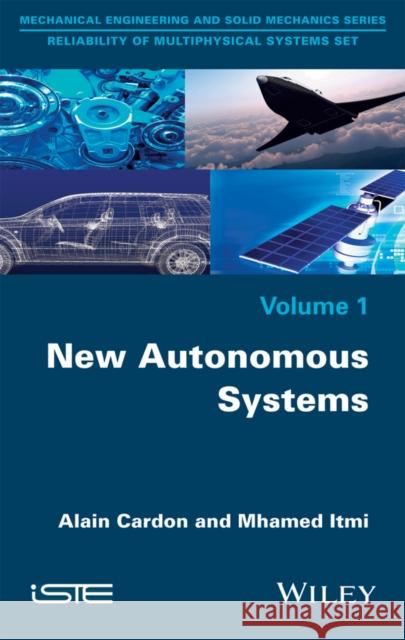
Alain Cardon; Mhamed Itmi
New Autonomous Systems Alain Cardon Mhamed Itmi 9781848219359 Wiley-Iste - książkaWidoczna okładka, to zdjęcie poglądowe, a rzeczywista szata graficzna może różnić się od prezentowanej.

New Autonomous Systems

ISBN-13: 9781848219359 / Angielski / Twarda / 2016 / 234 str.

Alain Cardon; Mhamed Itmi
cena 709,07
(netto: 675,30 VAT:  5%)

Najniższa cena z 30 dni: 706,15
Termin realizacji zamówienia:
ok. 30 dni roboczych
Dostawa w 2026 r.

Darmowa dostawa!

The idea of autonomous systems that are able to make choices according to properties which allow them to experience, apprehend and assess their environment is becoming a reality. These systems are capable of auto-configuration and self-organization. This book presents a model for the creation of autonomous systems based on a complex substratum, made up of multiple electronic components that deploy a variety of specific features. This substratum consists of multi-agent systems which act continuously and autonomously to collect information from the environment which they then feed into the global system, allowing it to generate discerning and concrete representations of its surroundings. These systems are able to construct a so-called artificial corporeity which allows them to have a sense of self, to then behave autonomously, in a way reminiscent of living organisms.


Kategorie:
Technologie
Kategorie BISAC:
Technology & Engineering > Robotics
Wydawca:
Wiley-Iste
Język:
Angielski
ISBN-13:
9781848219359
Rok wydania:
2016
Ilość stron:
234
Waga:
0.50 kg
Wymiary:
23.39 x 15.6 x 1.42
Oprawa:
Twarda
Wolumenów:
01
Dodatkowe informacje:
Bibliografia
Wydanie ilustrowane

Introduction ix

List of Algorithms xi

Chapter 1. Systems and their Design 1

1.1. Modeling systems 1

1.1.1. Conventional systems 2

1.1.2. Complex systems 3

1.1.3. System of systems 3

1.2. Autonomous systems 5

1.3. Agents and multi–agent systems 6

1.3.1. The weak notion of agent 7

1.3.2. The strong notion of agent 7

1.3.3. Cognitive agents and reactive agents 8

1.3.4. Multi–agent systems 9

1.3.5. Reactive agent–based MAS 10

1.3.6. Cognitive agent–based MAS 11

1.4. Systems and organisms 13

1.5. The issue of modeling an autonomous system 13

Chapter 2. The Global Architecture of an Autonomous System 17

2.1. Introduction 17

2.2. Reactivity of a system 17

2.3. The basic structure of an autonomous system: the substratum 18

2.3.1. A detailed example: smoothing the flow or urban traffic 20

2.4. The membrane of autonomous systems 22

2.4.1. Membrane and information 25

2.5. Two types of proactivity and the notion of artificial organ 26

2.5.1. Weak proactivity 26

2.5.2. Strong proactivity 27

2.5.3. Measuring proactivity with dynamic graphs 30

2.6. Autonomy and current representation 31

2.6.1. Current representation in an autonomous system 32

2.7. The unifying system that generates representations 33

Chapter 3. Designing a Multi–agent Autonomous System 41

3.1. Introduction 41

3.2. The object layer on the substratum 41

3.3. The agent representation of the substratum: interface agents, organs and the notion of sensitivity 44

3.3.1. Artificial organs 46

3.3.2. Sensitivity of the corporeity 47

3.4. The interpretation system and the conception agents 47

3.4.1. The properties of a conception agent in the interpretation system 49

3.4.2. An example 52

3.4.3. Creating a conception agent 57

3.5. Aggregates of conception agents 58

3.6. The intent and the activity of conception agents 60

3.7. Agentifying conception agents 63

3.8. Activity of a conception agent 65

3.9. The three layers of conceptual agentification and the role of control 70

3.9.1. First guiding principle for the architecture of an autonomous system 74

3.10. Semantic lattices and the emergence of representations in the interpretation system 77

3.11. The general architecture of the interpretation system 84

3.12. Agentification of knowledge and organizational memory 86

3.13. Setting up the membrane network of an autonomous system 94

3.14. Behavioral learning of the autonomous system 96

Chapter 4. Generation of Current Representation and Tendencies 105

4.1. Introduction 105

4.2. Generation of current representation and semantic lattices 105

4.2.1. Openness and deployment: major properties of autonomous systems 106

4.2.2. Incentive–based control and evaluation agents 107

4.2.3. Evaluation agents access to organizational memory 110

4.2.4. The role of evaluation agents in the extracted lattice 110

4.2.5. The notion of dynamic lattices 110

4.2.6. Algorithms for generating representations 111

4.2.7. Mathematical interpretation 115

4.3. The cause leading the system to choose a concrete intent 116

4.3.1. Determination of intent 118

4.3.2. Intent and tendencies 120

4.4. Presentation of artificial tendencies 123

4.5. Algorithm for the generation of a stream of representations under tendencies 134

Chapter 5. The Notions of Point of View, Intent and Organizational Memory  137

5.1. Introduction 137

5.2. The notion of point of view in the generation of representations 137

5.3. Three organizational principles of the interpretation system for leading the intent 144

5.3.1. Principle of continuity engagement 145

5.3.2. The bifurcation principle 146

5.3.3. The principle of necessary reason and reliability  147

5.4. Algorithms for intent decisions 147

5.6. Organizational memory and the representation of artificial life experiences 151

5.7. Effective autonomy and the role of the modulation component  156

5.8. Degree of organizational freedom 159

Chapter 6. Towards the Minimal Self of an Autonomous System 161

6.1. Introduction 161

6.2. The need for tendencies when leading the system  161

6.3. Needs and desires of the autonomous system 164

6.4. A scaled–down autonomous system: the artificial proto–self 168

6.5. The internal choice of expressed tendencies and the minimal self  171

6.6. The incentive to produce representations 176

6.7. Minimal self affectivity: emotions and sensations 179

6.8. Algorithms for tendency activation 182

6.9. The feeling of generating representations 188

Chapter 7. Global Autonomy of Distributed Autonomous Systems 197

7.1. Introduction 197

7.2. Enhancement of an autonomous system by itself 197

7.3. Communication among autonomous systems in view of their union 201

7.4. The autonomous meta–system composed of autonomous systems 204

7.5. The system generating autonomous systems: the meta–level of artificial living 207

Conclusion 211

Bibliography 213

Index 215

Alain Cardon is a researcher at INSA Rouen, in France. He has previously held various university teaching positions within informatics and specializes in AI, multi–agent systems and machine consciousness.

Mhamed Itmi is Associate Professor at INSA Rouen, in France. His research interests include decision support in AI, distributed systems and simulation using autonomous systems.

Cardon, Alain Diplome enSciences Sociales et ethnologie, (Macale... więcej >


Udostępnij

Facebook - konto krainaksiazek.pl


Opinie o Krainaksiazek.pl na Opineo.pl

Partner Mybenefit

Krainaksiazek.pl w programie rzetelna firma Krainaksiaze.pl - płatności przez paypal

Czytaj nas na:

Facebook - krainaksiazek.pl
  • książki na zamówienie
  • granty
  • książka na prezent
  • kontakt
  • pomoc
  • opinie
  • regulamin
  • polityka prywatności

Zobacz:

  • Księgarnia czeska

  • Wydawnictwo Książkowe Klimaty

1997-2025 DolnySlask.com Agencja Internetowa

© 1997-2022 krainaksiazek.pl
     
KONTAKT | REGULAMIN | POLITYKA PRYWATNOŚCI | USTAWIENIA PRYWATNOŚCI
Zobacz: Księgarnia Czeska | Wydawnictwo Książkowe Klimaty | Mapa strony | Lista autorów
KrainaKsiazek.PL - Księgarnia Internetowa

Polityka prywatnosci - link
Krainaksiazek.pl - płatnośc Przelewy24
Przechowalnia Przechowalnia





