




Wyniki wyszukiwania:
wyszukanych pozycji: 4
 |
The History of Nuclear War I: How Hiroshima and Nagasaki Were Devastated by Nuclear Weapons in August 1945.
ISBN: 9781491821145 / Angielski / Miękka / 2013 / 178 str. Termin realizacji zamówienia: ok. 16-18 dni roboczych. In August of 1945, some 200,000 people died at Hiroshima and Nagasaki from two nuclear weapon explosions during Nuclear War I. This book details the following historical events that led to Nuclear War I: Fermi and Szilard worked on nuclear fission at Columbia University in 1939. Plutonium-239 was discovered in 1940. Einstein informed President Roosevelt of possible German uranium bombs. Fermi built the world's first nuclear reactor in 1942, to manufacture plutonium. General Groves and Oppenheimer led the U.S. effort to build atomic bombs as part of the Manhattan Project. Soviet spies...
In August of 1945, some 200,000 people died at Hiroshima and Nagasaki from two nuclear weapon explosions during Nuclear War I. This book details the f...
|
cena:
80,69 |
 |
The History of Hydrogen Bomb and Why It Should Be Banned.
ISBN: 9781504984843 / Angielski / Miękka / 2016 / 134 str. Termin realizacji zamówienia: ok. 16-18 dni roboczych. One of the first applications of the atomic bomb after Nuclear War I was to serve as the trigger for much more powerful hydrogen bombs. The explosion of an atom bomb emits nuclear radiation, heat energy, and photons. These emissions compress fusion fuel to thermonuclear conditions. From 1945 to 1949, the United States had a monopoly on nuclear weapons until August 29, 1949, when the USSR exploded its first nuclear device. Edward Teller was already actively working on the design of hydrogen bombs, but J. Robert Oppenheimer opposed these efforts. It was President Harry S. Truman who... One of the first applications of the atomic bomb after Nuclear War I was to serve as the trigger for much more powerful hydrogen bombs. The explosi... |
cena:
71,17 |
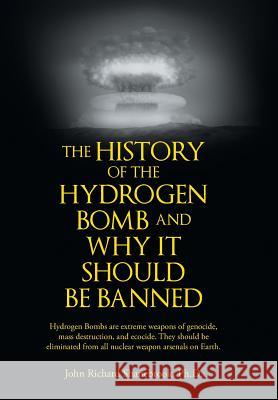 |
The History of Hydrogen Bomb and Why It Should Be Banned.
ISBN: 9781504984836 / Angielski / Twarda / 2016 / 134 str. Termin realizacji zamówienia: ok. 16-18 dni roboczych. One of the first applications of the atomic bomb after Nuclear War I was to serve as the trigger for much more powerful hydrogen bombs. The explosion of an atom bomb emits nuclear radiation, heat energy, and photons. These emissions compress fusion fuel to thermonuclear conditions. From 1945 to 1949, the United States had a monopoly on nuclear weapons until August 29, 1949, when the USSR exploded its first nuclear device. Edward Teller was already actively working on the design of hydrogen bombs, but J. Robert Oppenheimer opposed these efforts. It was President Harry S. Truman who... One of the first applications of the atomic bomb after Nuclear War I was to serve as the trigger for much more powerful hydrogen bombs. The explosi... |
cena:
114,21 |
 |
The History of Nuclear War I: How Hiroshima and Nagasaki Were Devastated by Nuclear Weapons in August 1945.
ISBN: 9781491821152 / Angielski / Twarda / 2013 / 178 str. Termin realizacji zamówienia: ok. 16-18 dni roboczych. In August of 1945, some 200,000 people died at Hiroshima and Nagasaki from two nuclear weapon explosions during Nuclear War I. This book details the following historical events that led to Nuclear War I: Fermi and Szilard worked on nuclear fission at Columbia University in 1939. Plutonium-239 was discovered in 1940. Einstein informed President Roosevelt of possible German uranium bombs. Fermi built the world's first nuclear reactor in 1942, to manufacture plutonium. General Groves and Oppenheimer led the U.S. effort to build atomic bombs as part of the Manhattan Project. Soviet spies...
In August of 1945, some 200,000 people died at Hiroshima and Nagasaki from two nuclear weapon explosions during Nuclear War I. This book details the f...
|
cena:
133,25 |




Czytaj nas na:
KrainaKsiazek.PL - Księgarnia Internetowa


