• Wyszukiwanie zaawansowane
  • Kategorie
  • Kategorie BISAC
  • Książki na zamówienie
  • Promocje
  • Granty
  • Książka na prezent
  • Opinie
  • Pomoc
  • Załóż konto
  • Zaloguj się

Family Business in China, Volume 1: A Historical Perspective » książka


zaloguj się | załóż konto
Logo Krainaksiazek.pl

koszyk

konto

szukaj
topmenu
Księgarnia internetowa
Szukaj
Książki na zamówienie
Promocje
Granty
Książka na prezent
Moje konto
Pomoc
 
 
Wyszukiwanie zaawansowane
Pusty koszyk
Bezpłatna dostawa dla zamówień powyżej 20 złBezpłatna dostawa dla zamówień powyżej 20 zł

Kategorie główne

• Nauka
 [2946600]
• Literatura piękna
 [1856966]

  więcej...
• Turystyka
 [72221]
• Informatyka
 [151456]
• Komiksy
 [35826]
• Encyklopedie
 [23190]
• Dziecięca
 [619653]
• Hobby
 [140543]
• AudioBooki
 [1577]
• Literatura faktu
 [228355]
• Muzyka CD
 [410]
• Słowniki
 [2874]
• Inne
 [445822]
• Kalendarze
 [1744]
• Podręczniki
 [167141]
• Poradniki
 [482898]
• Religia
 [510455]
• Czasopisma
 [526]
• Sport
 [61590]
• Sztuka
 [243598]
• CD, DVD, Video
 [3423]
• Technologie
 [219201]
• Zdrowie
 [101638]
• Książkowe Klimaty
 [124]
• Zabawki
 [2473]
• Puzzle, gry
 [3898]
• Literatura w języku ukraińskim
 [254]
• Art. papiernicze i szkolne
 [8170]
Kategorie szczegółowe BISAC

Family Business in China, Volume 1: A Historical Perspective

ISBN-13: 9783030513979 / Angielski / Miękka / 2021 / 200 str.
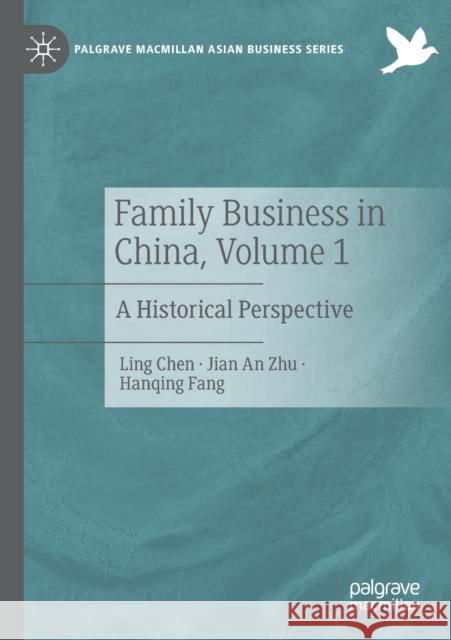
Ling Chen; Jian An Zhu; Hanqing Fang
Family Business in China, Volume 1: A Historical Perspective Ling Chen Jian An Zhu Hanqing Fang 9783030513979 Palgrave MacMillan - książkaWidoczna okładka, to zdjęcie poglądowe, a rzeczywista szata graficzna może różnić się od prezentowanej.

Family Business in China, Volume 1: A Historical Perspective

ISBN-13: 9783030513979 / Angielski / Miękka / 2021 / 200 str.

Ling Chen; Jian An Zhu; Hanqing Fang
cena 524,53 zł
(netto: 499,55 VAT:  5%)

Najniższa cena z 30 dni: 501,19 zł
Termin realizacji zamówienia:
ok. 22 dni roboczych
Bez gwarancji dostawy przed świętami

Darmowa dostawa!
inne wydania
Kategorie:
Nauka, Ekonomia i biznes
Kategorie BISAC:
Business & Economics > Small Business - General
Business & Economics > Przedsiębiorczość
Business & Economics > International - General
Wydawca:
Palgrave MacMillan
Język:
Angielski
ISBN-13:
9783030513979
Rok wydania:
2021
Ilość stron:
200
Waga:
0.27 kg
Wymiary:
21.01 x 14.81 x 1.17
Oprawa:
Miękka
Wolumenów:
01

Chapter 1. Introduction 

This chapter covers 1) motivation for this book; 2) the historical and anthropological angles we choose to use; 3) primary content; and 4) book structure. It also briefly explains the three inter-dependent issues that we intend to address: the past, present, and future of family and family business in China; unique challenges faced by Chinese family firms; and lessons learned in the past and recommendations for the future.  

Part 1.  Social foundation of the family system in Ancient China [Chapter 2-4]

Chapter 2. Household, family and clan
Chapter 3. Function of family/clan: Economy, society and culture
Chapter 4. Characteristics of the Chinese family system 
4.1     Clan: Between family and State 
4.2     Patriarchism: Father’s authority and family customs 
4.3     Equal division of family property: Succession and spinoff in a family system 
4.4     Structuration of family ethics: From family to society 

Part 1 explains the root of the family system in China, its components (household), and its extension (clan). 
Discussion starts with an overview of a household, family, and clan in ancient China (Chapter 2). It covers the topics of major concern, such as the family system and the place of individuals within it, ancestor worship that connects the past with the present, pseudo-kinship relations in a family and extended family systems, and the family and clan in relation to the wider society and the state. Partially built upon the work of Baker (1979), Levy (1949), Fei (1939) and Redding (1990), this part further discusses the economic, social, and cultural functions that the family system served in Ancient China (Chapter 3), as well as the four unique features that distinguish the family system in ancient China from those in western societies (Chapter 4). These are 1) clan as the connection between family and the state; 2) patriarchism as the facilitator of power structure and traditional customs in a family; 3) equal division of family property as the basic mechanism behind the succession and spinoff of the Chinese family system; and 4) structure of family ethics that build the legitimate ground for feudalism in China. 


 Part 2. Family system and family business in China 1850-1949 [Chapter 5-7]
Chapter 5.  Dynamics of family and the rise of business families 
Chapter 6.  Birth, governance, and succession of family business
Chapter 7.  Lessons learned 

Part 2 discusses the evolution of the family system and the rise of family business before the establishment of the People’s Republic of China in 1949. Built upon Wolf and Huang (1980) and Rowe (2010), this part starts with an explanation of the dynamics of the family system as well as the rise of business families in 1850-1949 (Chapter 5). Aligned with the work of Bergere (1989), it further discusses family involvement in business in this era in terms of the business format, governance structure, and family business succession (Chapter 6). This part ends with a discussion of the lessons learned from this historical period (Chapter 7).  
   

Part 3. Evolution of family system before and after the Reform era [Chapter 8-9]
Chapter 8.  Dynamics of family system 1950~1978 
Chapter 9.  Family system after 1978 
9.1     External drivers: Urbanization and “One-Child Policy” 
9.2     Family evolution: Function, structure, and relationship 
9.3     Unique challenges 
  
Part 3 explains the evolution of the family system before and after the “Open-up and Reform” in 1978. The key message here was threefold. First, Chapter 8 discusses the socialistic reform after 1949, which brought in an era of mandatory collectivization and production cooperative/brigade that partially replaced the natural family as the fundamental block in the social system (Davis & Harrell, 1993). Second, the urbanization and “one-child” policy greatly contributed to the transition of the family system in China after 1978 (Parish & Whyte, 1980; Scharping, 2013). Third, starting in the 1980s, the function of the family, the structure in the family system, and the nature of the family relationships have dramatically changed (Diamant, 2000), which brought in a number of unique challenges to Chinese families (Chapter 9).  


Chapter 10.  Conclusion

Ling Chen is Professor of Family Business and Business History in the School of Management, Zhejiang University, China. He is the Founding Director of the Institute of Family Business Research at Zhejiang University and has served as the Director of the Institute for Entrepreneurs since 2014. His main research areas are succession, professionalization, and corporate governance in family business, and comparative study in business history.

Jian An Zhu is a Professor and Dean of the Department of Applied Economics at Zhejiang University City College, China. Since 2011, he has served as the Director of the Institute of Entrepreneurship and Family Business.

Hanqing Fang is Assistant Professor of Business and Information Technology at Missouri University of Science and Technology, USA. His research primarily focuses on family firms, entrepreneurship, and strategic management.


Unlike other economies, family businesses in China are greatly affected by the derived Confucian culture, excessive marketization, as well as the seemingly endless institutional supervision by a transitional Chinese government. China has a strong historical legacy, devoted to patriarchal values and strong family-centered traditions.

This volume explores the social foundations and historical legacies of families, business families, and family businesses in China. It begins with an overview of a household, family, and clan in ancient China before an examination of the economic, social, and cultural functions that the family system served in Ancient China as well as the four unique features that distinguish the family system in ancient China from those in western societies. It later discusses the evolution of the family system and the rise of family business before the establishment of the People’s Republic of China in 1949. Finally, it evaluates the family system before and after the “Open-up and Reform” in 1978. This interdisciplinary work, incorporating sociological, anthropological, and institutional contexts pertaining to China, offers researchers the first advanced perspective of the development of family firms in China.




Udostępnij

Facebook - konto krainaksiazek.pl


Opinie o Krainaksiazek.pl na Opineo.pl

Partner Mybenefit

Krainaksiazek.pl w programie rzetelna firma Krainaksiaze.pl - płatności przez paypal

Czytaj nas na:

Facebook - krainaksiazek.pl
  • książki na zamówienie
  • granty
  • książka na prezent
  • kontakt
  • pomoc
  • opinie
  • regulamin
  • polityka prywatności

Zobacz:

  • Księgarnia czeska

  • Wydawnictwo Książkowe Klimaty

1997-2025 DolnySlask.com Agencja Internetowa

© 1997-2022 krainaksiazek.pl
     
KONTAKT | REGULAMIN | POLITYKA PRYWATNOŚCI | USTAWIENIA PRYWATNOŚCI
Zobacz: Księgarnia Czeska | Wydawnictwo Książkowe Klimaty | Mapa strony | Lista autorów
KrainaKsiazek.PL - Księgarnia Internetowa

Polityka prywatnosci - link
Krainaksiazek.pl - płatnośc Przelewy24
Przechowalnia Przechowalnia



