• Wyszukiwanie zaawansowane
  • Kategorie
  • Kategorie BISAC
  • Książki na zamówienie
  • Promocje
  • Granty
  • Książka na prezent
  • Opinie
  • Pomoc
  • Załóż konto
  • Zaloguj się

Archaea: Methods and Protocols » książka


zaloguj się | załóż konto
Logo Krainaksiazek.pl

koszyk

konto

szukaj
topmenu
Księgarnia internetowa
Szukaj
Książki na zamówienie
Promocje
Granty
Książka na prezent
Moje konto
Pomoc
 
 
Wyszukiwanie zaawansowane
Pusty koszyk
Bezpłatna dostawa dla zamówień powyżej 20 złBezpłatna dostawa dla zamówień powyżej 20 zł

Kategorie główne

• Nauka
 [2949524]
• Literatura piękna
 [1817948]

  więcej...
• Turystyka
 [70715]
• Informatyka
 [151291]
• Komiksy
 [35671]
• Encyklopedie
 [23176]
• Dziecięca
 [612440]
• Hobby
 [136066]
• AudioBooki
 [1740]
• Literatura faktu
 [226030]
• Muzyka CD
 [378]
• Słowniki
 [2918]
• Inne
 [445441]
• Kalendarze
 [1181]
• Podręczniki
 [166545]
• Poradniki
 [469898]
• Religia
 [508035]
• Czasopisma
 [502]
• Sport
 [61392]
• Sztuka
 [242759]
• CD, DVD, Video
 [3348]
• Technologie
 [219537]
• Zdrowie
 [98738]
• Książkowe Klimaty
 [124]
• Zabawki
 [2382]
• Puzzle, gry
 [3543]
• Literatura w języku ukraińskim
 [259]
• Art. papiernicze i szkolne
 [7107]
Kategorie szczegółowe BISAC

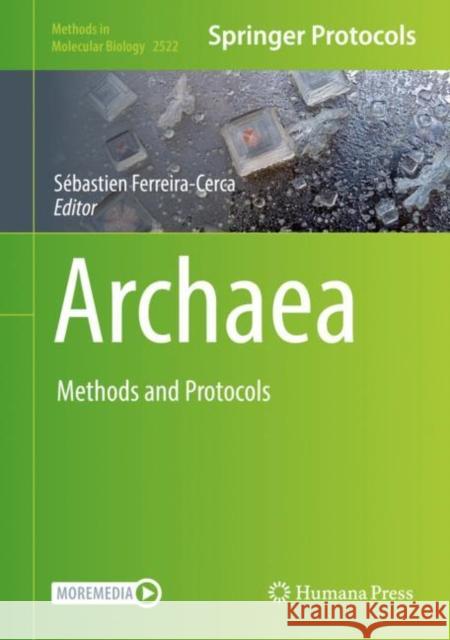
Archaea: Methods and Protocols

ISBN-13: 9781071624449 / Angielski / Twarda / 2022
Ferreira-Cerca, Sébastien
Archaea: Methods and Protocols Ferreira-Cerca, Sébastien 9781071624449 Springer US - książkaWidoczna okładka, to zdjęcie poglądowe, a rzeczywista szata graficzna może różnić się od prezentowanej.

Archaea: Methods and Protocols

ISBN-13: 9781071624449 / Angielski / Twarda / 2022

Ferreira-Cerca, Sébastien
cena 603,81
(netto: 575,06 VAT:  5%)

Najniższa cena z 30 dni: 578,30
Termin realizacji zamówienia:
ok. 16-18 dni roboczych.

Darmowa dostawa!
inne wydania

This volume provides an overview of well-established methods optimized for diverse archaeal model organisms and is a source of protocols facilitating access to the molecular and cellular biology characterization of these fascinating organisms. Chapters are divided into five parts detailing available genetic tools, molecular and cellular biology methods, strategies to study the ecophysiology of archaea, and classroom protocol. Each main thematic part is also introduced by future-oriented and authoritative primers. Written in the format of the highly successful Methods in Molecular Biology series, each chapter includes an introduction to the topic, lists necessary materials and reagents, includes tips on troubleshooting and known pitfalls, and step-by-step, readily reproducible protocols.Authoritative and cutting-edge, Archaea: Methods and Protocols aims to be a foundation for future studies and to be a source of inspiration for new investigations in the field.


Kategorie:
Nauka, Biologia i przyroda
Kategorie BISAC:
Science > Biologia i przyroda
Science > Research & Methodology
Wydawca:
Springer US
Seria wydawnicza:
Methods in Molecular Biology
Język:
Angielski
ISBN-13:
9781071624449
Rok wydania:
2022
Waga:
1.25 kg
Wymiary:
25.4 x 17.8
Oprawa:
Twarda
Dodatkowe informacje:
Wydanie ilustrowane


1. Archaea: a goldmine for molecular biologists and evolutionists

Patrick Forterre


Part I: Genetic manipulation of Archaea

2. Progress and challenges in archaeal genetic manipulation

Catherine Harrison and Thorsten Allers


3. Genetic manipulation of Haloferax species

Ambika Dattani, Catherine Harrison, and Thorsten Allers


4. CRISPR interference as a tool to Repress Gene Expression in Haloferax volcanii

Thandi S. Schwarz, Sandra S. Schreiber, and Anita Marchfelder


5. Transformation Techniques for the Anaerobic Hyperthermophile Thermococcus kodakarensis

Geraldy L. S. Liman, Meghan E. Stettler and Thomas J. Santangelo


6. Genetic Methods and Construction of Chromosomal Mutations in Methanogenic Archaea

Johanna Thomsen, Katrin Weidenbach, William W. Metcalf and Ruth A. Schmitz


7. An interdomain conjugation protocol for plasmid-DNA transfer into Methanothermobacter thermautotrophicus ΔH

Christian Fink, Largus T. Angenen, and Bastian Molitor


8. Methods for Markerless Gene Deletion and Plasmid-Based Expression in Sulfolobus acidocaldarius

Xing Ye, Alejandra Recalde, Sonja-Verena Albers and Marleen van Wolferen


9. A Rapid Targeted Gene Inactivation Approach in Sulfolobus islandicus

Changyi Zhang, Serina M. Taluja, Emily N. Hallett, and Rachel J. Whitaker


10. Transposon Insertion Mutagenesis in hyperthermophilic crenarchaeon Sulfolobus islandicus

Changyi Zhang and Rachel J. Whitaker


11. Reprogramming CRISPR-mediated RNA interference for silencing of essential genes in Sulfolobales

Erika Wimmer, Isabelle Anna Zink and Christa Schleper


Part II: Molecular Biology of Archaea

12. Progress and challenges in archaeal molecular biology

Finn Werner


13. ChIP-seq Occupancy Mapping of the Archaeal Transcription Machinery

Fabian Blombach, Kathy L. Smollett, and Finn Werner


14. Conversion of ribosome-protected mRNA to DNA and deep sequencing for ribosome profiling in Haloferax volcanii

 Diego Rivera Gelsinger, Emma Dallon, and Jocelyne DiRuggiero


15. Small RNA-sequencing library preparation for the halophilic archaeon Haloferax volcanii

Diego Rivera Gelsinger and Jocelyne DiRuggiero

16. Quantitative Mass Spectrometry by SILAC in Haloferax volcanii – Ricardo L. Couto-Rodriguez, Daniel Gal, Lana J. McMillan, Jin Koh, Sixue Chen, and Julie A. Maupin-Furlow


17. Proteome turnover analysis in Haloferax volcanii by a heavy isotope multilabelling approach

Roberto A. Paggi, Stefan P. Albaum, Ansgar Poetsch, and Micaela Cerletti


18. Proteomic sample preparation and data analysis in line with the Archaeal Proteome

Stefan Schulze and Mechthild Pohlschroder.


19. In vivo protein crosslinking and co-immunoprecipitation in Haloferax volcanii

Roberto A. Paggi, Rosana E. De Castro and Micaela Cerletti


20. Proteolytic activity assays in haloarchaea

Roberto Alejandro Paggi, María Inés. Giménez, and Rosana Esther De Castro


21. Carotenoids from Haloarchaea: Extraction, fractionation and characterization

María Sandra Churio, Micaela Cerletti, and Rosana Esther De Castro


22. Metal nanoparticles biosynthesis using the halophilic archaeon Haloferax volcanii Mariana Inés Costa and María Inés Giménez


23. Simplified enzymatic synthesis of 2-keto-3-deoxy-D-gluconate from D-gluconate using the gluconate dehydratase from Thermoproteus tenax

Svenja Höfmann, Promise Aku Dziwornu, Thomas Klaus, Thomas Knura, Roland Wohlgemuth, Christopher Bräsen, and Bettina Siebers


PART III: Cellular Biology of Archaea

24. Progress and Challenges in Archaeal Cellular Biology Analysis

Marleen van Wolferen and Sonja-Verena Albers


25. Methods to Analyze Motility in Eury- And Crenarchaea

Megha Patro, Marleen van Wolferen, Xing Ye, Sonja-Verena Albers, and Tessa E.F. Quax


26. Immersed Liquid Biofilm and Honeycomb Pattern Formations in Haloferax volcanii

 Zuha Mutan, Heather Schiller, Stefan Schulze, and Mechthild Pohlschroder


27. Cost-effective and Versatile Analysis of Archaeal Surface Adhesion Under Shaking and Standing Conditions

 Stefan Schulze, Heather Schiller, Zuha Mutan, Jordan Solomonic, Orkan Telhan, and Mechthild Pohlschroder


28. Cell Adhesion and Biofilm Formation Analysis

Débora Nercessian and Juan Pablo Busalmen


29. BrdU incorporation and labelling of nascent DNA to Investigate Archaeal Replication using super-resolution imaging

Roxane Lestini, Yoann Collien, Debora Olivier, Nicolas Olivier, and Hannu Myllykallio


30. Isolation, Purification, and Characterization of Membrane Vesicles from Haloarchaea

Joshua Mills and Susanne Erdmann


31. Archaeal Viruses: Production of Virus Particles and Vesicle-Like Viruses and Purification Using Asymmetrical Flow Field-Flow Fractionation

 Katri Eskelin and Hanna M. Oksanen


Part IV: Environmental Biology

32. Progress and Challenges in Studying the Ecophysiology of Archaea

Panagiotis S. Adam, Till L. V. Bornemann, and Alexander J. Probst


33. Reconstruction of Archaeal Genomes Assembly from Short-Read Metagenomes

Till L. V. Bornemann, Panagiotis S. Adam, and Alexander J. Probst


Part V: Outreach protocol

34. Outreach: Accessible and Insightful Scientific Learning Experiences Using the Microorganism Haloferax volcanii

 Heather Schiller, Criston Young, Stefan Schulze, and Mechthild Pohlschroder


This volume provides an overview of well-established methods optimized for diverse archaeal model organisms and is a source of protocols facilitating access to the molecular and cellular biology characterization of these fascinating organisms. Chapters are divided into five parts detailing available genetic tools, molecular and cellular biology methods, strategies to study the ecophysiology of archaea, and classroom protocol. Each main thematic part is also introduced by future-oriented and authoritative primers. Written in the format of the highly successful Methods in Molecular Biology series, each chapter includes an introduction to the topic, lists necessary materials and reagents, includes tips on troubleshooting and known pitfalls, and step-by-step, readily reproducible protocols.Authoritative and cutting-edge, Archaea: Methods and Protocols aims to be a foundation for future studies and to be a source of inspiration for new investigations in the field.




Udostępnij

Facebook - konto krainaksiazek.pl


Opinie o Krainaksiazek.pl na Opineo.pl

Partner Mybenefit

Krainaksiazek.pl w programie rzetelna firma Krainaksiaze.pl - płatności przez paypal

Czytaj nas na:

Facebook - krainaksiazek.pl
  • książki na zamówienie
  • granty
  • książka na prezent
  • kontakt
  • pomoc
  • opinie
  • regulamin
  • polityka prywatności

Zobacz:

  • Księgarnia czeska

  • Wydawnictwo Książkowe Klimaty

1997-2026 DolnySlask.com Agencja Internetowa

© 1997-2022 krainaksiazek.pl
     
KONTAKT | REGULAMIN | POLITYKA PRYWATNOŚCI | USTAWIENIA PRYWATNOŚCI
Zobacz: Księgarnia Czeska | Wydawnictwo Książkowe Klimaty | Mapa strony | Lista autorów
KrainaKsiazek.PL - Księgarnia Internetowa

Polityka prywatnosci - link
Krainaksiazek.pl - płatnośc Przelewy24
Przechowalnia Przechowalnia




