• Wyszukiwanie zaawansowane
  • Kategorie
  • Kategorie BISAC
  • Książki na zamówienie
  • Promocje
  • Granty
  • Książka na prezent
  • Opinie
  • Pomoc
  • Załóż konto
  • Zaloguj się

Genetic Flux in Plants » książka


zaloguj się | załóż konto
Logo Krainaksiazek.pl

koszyk

konto

szukaj
topmenu
Księgarnia internetowa
Szukaj
Książki na zamówienie
Promocje
Granty
Książka na prezent
Moje konto
Pomoc
 
 
Wyszukiwanie zaawansowane
Pusty koszyk
Bezpłatna dostawa dla zamówień powyżej 20 złBezpłatna dostawa dla zamówień powyżej 20 zł

Kategorie główne

• Nauka
 [2946912]
• Literatura piękna
 [1852311]

  więcej...
• Turystyka
 [71421]
• Informatyka
 [150889]
• Komiksy
 [35717]
• Encyklopedie
 [23177]
• Dziecięca
 [617324]
• Hobby
 [138808]
• AudioBooki
 [1671]
• Literatura faktu
 [228371]
• Muzyka CD
 [400]
• Słowniki
 [2841]
• Inne
 [445428]
• Kalendarze
 [1545]
• Podręczniki
 [166819]
• Poradniki
 [480180]
• Religia
 [510412]
• Czasopisma
 [525]
• Sport
 [61271]
• Sztuka
 [242929]
• CD, DVD, Video
 [3371]
• Technologie
 [219258]
• Zdrowie
 [100961]
• Książkowe Klimaty
 [124]
• Zabawki
 [2341]
• Puzzle, gry
 [3766]
• Literatura w języku ukraińskim
 [255]
• Art. papiernicze i szkolne
 [7810]
Kategorie szczegółowe BISAC

Genetic Flux in Plants

ISBN-13: 9783709187678 / Angielski / Miękka / 2011 / 256 str.
Barbara Hohn; Elisabeth S. Dennis
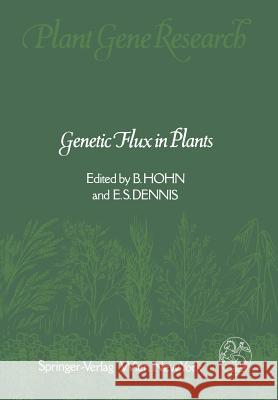
Genetic Flux in Plants Barbara Hohn Elisabeth S. Dennis 9783709187678 Springer - książkaWidoczna okładka, to zdjęcie poglądowe, a rzeczywista szata graficzna może różnić się od prezentowanej.

Genetic Flux in Plants

ISBN-13: 9783709187678 / Angielski / Miękka / 2011 / 256 str.

Barbara Hohn; Elisabeth S. Dennis
cena 201,72
(netto: 192,11 VAT:  5%)

Najniższa cena z 30 dni: 192,74
Termin realizacji zamówienia:
ok. 22 dni roboczych
Bez gwarancji dostawy przed świętami

Darmowa dostawa!

Genetic material is in flux: this is one of the most exciting recent concepts in molecular biology. This volume of "Plant Gene Research" describes changes that occur in the genetic material of plants. It is worthwhile re- membering that the first examples of unstable genomes were described for maize before DNA was known to be the genetic material. Now trans- posable elements like the ones found in maize have been described in almost all organisms and have become incorporated into our thinking about genome structure. Flux in the plant genome is not restricted to transposable elements or to nuclear genes. Exchanges of genetic material have been demonstrated within organelle DNA, between organelle DNAs or between organelle and nuclear DNAs. Such exchanges may only occur over evolutionary times or may be a continuing process. Also the environment alters the plant genome. Stress, either viral, nutri- tional or tissue-culture induced causes heritable changes in the genome. Infection with the crown gall bacterium Agrobacterium tumefaciens results in the transfer of bacterial DNA into the plant genome.


Kategorie:
Nauka, Biologia i przyroda
Kategorie BISAC:
Science > Botanika
Technology & Engineering > Agriculture - Forestry
Science > Biochemia
Wydawca:
Springer
Seria wydawnicza:
Plant Gene Research
Język:
Angielski
ISBN-13:
9783709187678
Rok wydania:
2011
Wydanie:
Softcover Repri
Numer serii:
000036284
Ilość stron:
256
Waga:
0.47 kg
Wymiary:
24.4 x 17.0
Oprawa:
Miękka
Wolumenów:
01

Section 1 Movement of Genetic Information from the Environment to the Plant.- 1 Viruses.- 2 DNA Flux Across Genetic Barriers: The Crown Gall Phenomenon.- I. Introduction: Agrobacterium tumefaciens, a Natural Instance of Genetic Engineering.- A. General Introduction.- B. In Search of the TIP.- C. A More Precise Picture of the T-DNA.- II. The T-DNA Is Designed to Be Functional in the Plant Cell.- A. T-DNA Gene Structure and Its Expression in Plant Cells.- B. Functional Organization of the T-DNA.- C. Agrobacterium rhizogenes, an Analogous System.- D. Some Speculations About the Origin of the T-DNA.- III. Transfer and Integration of the T-DNA in the Plant Cell Nucleus.- A. Agrobacterium Holds the Key.- B. Early Interactions Between Agrobacterium and Plant Cells.- C. T-region and T-DNA Border Sequences.- D. The 25-bp Repeat Sequence.- E. T-DNA Integration Compared to Other Mobile Elements.- F. Crossing the Cellular and Genetic Barriers.- G. T-DNA Stability.- H. Domestication of the Ti Plasmid.- IV. Conclusion.- V. Acknowledgements.- VI. References.- Section II Movement of Genetic Information Between the Plant Organelles.- 3 Movement of Genetic Material Between the Chloroplast and Mitochondrion in Higher Plants.- I. Inter-Organelle DNA Transposition.- II. Sequences Homologous to Chloroplast DNA in Higher Plant Mitochondrial Genomes.- A. The Genome of Zea mays.- B. Other Higher Plant Species.- III. Functionality of the Chloroplast Pseudogene Sequences in the Mitochondrial Genome.- IV. Mechanism of Sequence Transfer.- V. Rate of Sequence Transposition and Selection of Novel Genotypes.- VI. References.- 4 Movement of Genetic Information Between the Chloroplast and Nucleus.- 5 Movement of Genetic Information Between Plant Organelles: Mitochondria-Nucle.- I. Introduction.- II. Organisms Exhibiting Common Mitochondrial and Nuclear DNA Sequences.- III. Common Mitochondrial and Nuclear DNA Sequences in Maize.- IV. Concluding Remarks.- V. References.- Section III Movement of Genetic Information Within Plant Organelles.- 6 Supernumerary DNAs in Plant Mitochondria.- I. Diversity of Genetic Organization in Plant Mitochondrial DNA.- II. Structure of Plasmid-like DNAs.- III. Reversion to Fertility in cms-S.- IV. A. The Diversity Paradox for Maize Mitochondrial DNA.- B. Evolutionary Mechanisms in Maize mtDNA.- V. References.- 7 Plant Mitochondrial DNA: Unusual Variation on a Common Theme.- I. Introduction.- II. The “Extra” DNA in Plant Mitochondria.- A. The Number of Translation Products Does Not Vary with Genome Size.- B. The Sequence Complexity of Mitochondrial RNA Is Large.- C. Are There More Mitochondrial Genes in Plants than in Other Organisms?.- D. Does Mitochondrial DNA Have a Sequence-Independent Function?.- E. Is Mitochondrial DNA Selfish or Ignorant?.- F. Interorganellar DNA.- G. Why Is the Mitochondrial Genome so Large?.- III. Circular Mitochondrial DNA.- A. A Brief History.- B. Circles in Native Plant Tissue.- C. Circles in Cultured Cells.- D. What Do the Circles Represent?.- E. Evidence for a Circular Mitochondrial Genome.- 1. Site-Specific Versus General Recombination.- 2. Circular Molecules Are Not Common in Mitochondrial DNA from Whole Plant Tissue.- 3. Circles and mtDNA Replication.- 4. Is the Genome Really Circular?.- 5. Is Circularity of the Genome Important for Mitochondrial Function?.- IV. Summary and Conclusions.- A. The “Extra” DNA.- B. Circles.- V. References.- 8 Repeated Sequences and Genome Change.- I. Introduction.- II Concerted Evolution.- III. Transposable Elements and Dispersed Repeats.- IV. Repeated DNA Flux and Species Divergence.- V. Concluding Remarks.- VI. References.- 9 Sequence Variation and Stress.- I. Introduction.- II. Environmentally Induced DNA Changes in Flax.- III. Nuclear DNA Variation.- IV. Analysis of Nuclear DNA.- V. Ribosomal DNA Variation.- VI. 5 S DNA Variation.- VII. Satellite DNA.- VIII. Other Repetitive Sequences.- IX. Somaclonal Variation.- X. Instabilities in Hybrid Plants.- XI. Discussion.- XII. References.- 10 The Activation of Maize Controlling Elements.- I. Introduction.- II. Unstable Mutations in Maize.- A. Genetic Loci.- B. General Considerations.- C. Two-Element Systems in Maize.- D. Controlling Element Families.- III. Induction of Controlling Element Activity.- A. Behavior of Broken Chromosomes.- B. Unorthodox Type of Chromosome Rearrangements in BFB Plants.- C. Burst of Mutability Following Chromosome Breakage.- D. Examples of Controlling Element Activation by BFB Cycles.- IV. Biology of Ac/Ds Elements.- A. Chromosome Breakage at Ds.- B. The Ac/Ds Family of Transposable Controlling Elements.- C. Mutator Function of Ac.- D. Molecular Biology of Ac/Ds.- E. Relationship Between Autonomous and Non-autonomous Components.- F. DsElements That Are Structurally Related to Ac.- G. DsElements Capable of Chromosome Dissociation.- H. Type I Elements.- I. Transposition of Ac from a Gene Locus.- V. Cryptic and Active Forms of Ac/Ds Elements.- A. General Considerations.- B. Cryptic Ac-like DNA.- C. Differences Between Active and Cryptic Copies of Ac.- D. Cycling Activity of the Mutator Component of Ac.- VI. Concluding Remarks.- VII. Acknowledgements.- VIII. References.- 11 Somaclonal Variation: The Myth of Clonal Uniformity.- I. Introduction.- II. In Vitro Culture and Genetic Flux.- A. Tissue Culture Instability.- 1. Chromosomal Instability.- 2. Morphological Changes.- 3. Biochemical Changes.- B. Somaclonal Variation.- 1. Ubiquity of Somaclonal Variation.- 2. Maize.- 3. Wheat.- 4. Tomato.- 5. Sugarcane.- 6. Potato.- III. Factors Influencing Somaclonal Variation.- A. Sexual Versus Asexual Species.- B. Preexisting Versus Culture Induced Variation.- C. Genotype.- D. Explant Type and Culture Mode.- E. Duration of Culture.- IV. Origin of Tissue Culture Instability and Somaclonal Variation.- A. Chromosomal Aberrations.- B. DNA Amplification.- C. Transposable Elements.- D. Somaclonal Variation—Analysis and Understanding.- V. Benefits and Disbenefits of Somaclonal Variation.- VI. Conclusions.- VII. Acknowledgements.- VIII. References.


Udostępnij

Facebook - konto krainaksiazek.pl


Opinie o Krainaksiazek.pl na Opineo.pl

Partner Mybenefit

Krainaksiazek.pl w programie rzetelna firma Krainaksiaze.pl - płatności przez paypal

Czytaj nas na:

Facebook - krainaksiazek.pl
  • książki na zamówienie
  • granty
  • książka na prezent
  • kontakt
  • pomoc
  • opinie
  • regulamin
  • polityka prywatności

Zobacz:

  • Księgarnia czeska

  • Wydawnictwo Książkowe Klimaty

1997-2025 DolnySlask.com Agencja Internetowa

© 1997-2022 krainaksiazek.pl
     
KONTAKT | REGULAMIN | POLITYKA PRYWATNOŚCI | USTAWIENIA PRYWATNOŚCI
Zobacz: Księgarnia Czeska | Wydawnictwo Książkowe Klimaty | Mapa strony | Lista autorów
KrainaKsiazek.PL - Księgarnia Internetowa

Polityka prywatnosci - link
Krainaksiazek.pl - płatnośc Przelewy24
Przechowalnia Przechowalnia





