Synthesis and Applications of Copolymers » książka





Synthesis and Applications of Copolymers
ISBN-13: 9781118057469 / Angielski / Twarda / 2014 / 400 str.
Synthesis and Applications of Copolymers
ISBN-13: 9781118057469 / Angielski / Twarda / 2014 / 400 str.
(netto: 544,25 VAT: 5%)
Najniższa cena z 30 dni: 570,11
ok. 30 dni roboczych.
Darmowa dostawa!
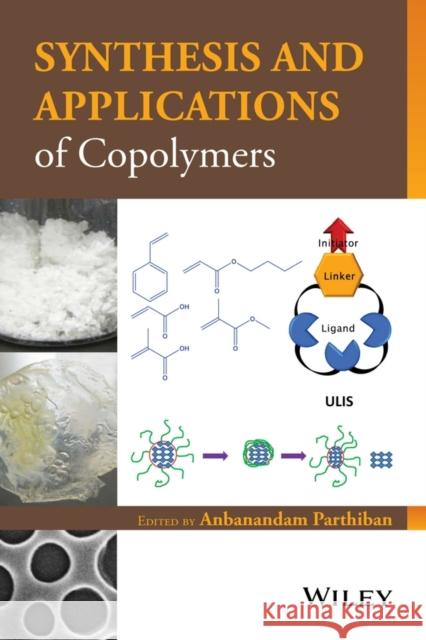
Understanding the reactivity of monomers is crucial in creating copolymers and determining the outcome of copolymerization. Covering the fundamental aspects of polymerization, Synthesis and Applications of Copolymers explores the reactivity of monomers and reaction conditions that ensure that the newly formed polymeric materials exhibit desired properties. Referencing a wide-range of disciplines, the book provides researchers, students, and scientists with the preparation of a diverse variety of copolymers and their recent developments, with a particular focus on copolymerization, crystallization, and techniques like nanoimprinting and micropatterning.
Wydanie ilustrowane
Preface xii
Contributors xv
SECTION I SYNTHESIS OF COPOLYMERS 1
1 Trends in Synthetic Strategies for Making (CO)Polymers 3
Anbanandam Parthiban
1.1 Background and Introduction, 3
1.2 Significance of Control Over Arrangement of Monomers in Copolymers, 5
1.3 Chain–Growth Condensation Polymerization, 5
1.3.1 Sequential Self–Repetitive Reaction (SSRR), 6
1.3.2 Poly(phenylene Oxide)s by Chain–Growth Condensation Polymerization, 8
1.3.3 Hydroxybenzoic Acids as AA Type Monomer in Nucleophilic Aliphatic Substitution Polymerization, 8
1.4 Sequence–Controlled Polymerization, 9
1.4.1 Sequence–Controlled Copolymers of N–Substituted Maleimides, 10
1.4.2 Alternating Copolymers by Ring–Opening Polymerization, 10
1.4.3 Selective Radical Addition Assisted by a Template, 11
1.4.4 Alternating AB–Type Sequence–Controlled Polymers, 11
1.4.5 Metal–Templated ABA Sequence Polymerization, 11
1.4.6 Sequence–Controlled Vinyl Copolymers, 12
1.4.7 Sequence–Regulated Polymerization Induced by Dual–Functional Template, 13
1.5 Processing of Thermoset Polymers: Dynamic Bond Forming Processes and Self–Healing Materials, 13
1.5.1 Plasticity of Networked Polymers Induced by Light, 14
1.5.2 Radically Exchangeable Covalent Bonds, 14
1.5.3 Self–Repairing Polyurethane Networks, 15
1.5.4 Temperature–Induced Self–Healing in Polymers, 15
1.5.5 Diels Alder Chemistry at Room Temperature, 15
1.5.6 Trithiocarbonate–Centered Responsive Gels, 16
1.5.7 Shuffling of Trithiocarbonate Units Induced by Light, 16
1.5.8 Processable Organic Networks, 17
1.6 Miscellaneous Developments, 17
1.6.1 Atom Transfer Radical Polymerization (ATRP) Promoted by Unimolecular Ligand–Initiator Dual–Functional Systems (ULIS), 17
1.6.2 Unsymmetrical Ion–Pair Comonomers and Polymers, 20
1.6.3 Imidazole–Derived Zwitterionic Polymers, 21
1.6.4 Post–Modification of Polymers Bearing Reactive Pendant Groups, 22
1.7 Conclusion, 23
References, 24
2 Functional Polyolefins from the Coordination Copolymerization of Vinyl Monomers 29
Fabio Di Lena and JoÞao A. S. Bomfim
2.1 Molecular Aspects of Olefin Coordination to Metals, 29
2.2 Fundamentals of Homopolymerization of Alkenes, 30
2.3 Copolymerization of Ethene and other Alkenes, 34
2.4 Copolymerization of Alkenes and Carbon Monoxide, 35
2.5 Copolymerization of Alkenes and Polar Vinyl Monomers, 37
2.5.1 Migratory Insertion Polymerization, 37
2.5.2 Polymerization via a Dual Radical/Migratory Insertion Pathway, 40
2.5.3 Coordinative Group Transfer Polymerization, 41
2.6 Copolymerization of Polar Vinyl Monomers and Carbon Monoxide, 41
2.7 Why are Phosphine Sulfonate Ligands so Special? 43
2.8 Telechelic and End–Capped Macromolecules, 44
2.9 On the Use of Chemoinformatics for a More Rapid Development of the Field, 44
2.10 Conclusion and Outlook, 45
References, 46
3 General Aspects of Copolymerization 54
Alex Van Herk
3.1 Copolymerization in Chain Reactions, 54
3.1.1 Derivation of the Copolymerization Equation, 55
3.1.2 Types of Copolymers, 57
3.1.3 Polymerization Rates in Copolymerizations, 59
3.2 Measuring Copolymerization Parameters, 60
3.3 Influence of Reaction Conditions, 63
3.4 Short–Chain Effects in Copolymerization, 63
3.5 Synthesis of Block Copolymers With Controlled Chain Architecture, 64
References, 66
4 Polymers Bearing Reactive, Pendant Cyclic Carbonate (CC) Group: Syntheses, Post–Polymerization Modifications, and Applications 67
Satyasankar Jana
4.1 Introduction, 67
4.2 Cyclic Carbonate (CC) Monomers and Polymers, 68
4.2.1 Cyclic Carbonate (CC) Monomers and Their Synthesis, 68
4.2.2 Polymerization of Cyclic Carbonate (CC) Monomers, 75
4.2.3 Alternative Route to Synthesize Pendant CC (Co)polymers by CO2 Addition/Fixation Reaction, 83
4.3 Chemical Modification of Pendant CC Polymers, 85
4.4 Applications of Pendant CC Polymers, 88
4.4.1 Fixing CO2 into Polymer, 88
4.4.2 Surface Coating, 90
4.4.3 Solid or Gel Polymer Electrolyte for Lithium–Ion Batteries, 90
4.4.4 Enzyme Immobilization, 91
4.4.5 Photopolymerization, 91
4.4.6 Polymer Blends, 92
4.5 Conclusion, 92
References, 93
5 Monomers and Polymers Derived from Renewable or Partially Renewable Resources 101
Anbanandam Parthiban
5.1 Building Blocks from Renewable Resources, 101
5.2 Polyesters Incorporated with Isosorbide, 105
5.2.1 Poly(hydroxy ester)s Derived from Macrolides, 106
5.2.2 Semicrystalline Polymers from Fatty Acids, 107
5.2.3 Cyclic Ester Derived from a Natural Precursor, 107
5.2.4 Polymerization of Dilactone Derived from 12–Hydroxy Stearic Acid, 107
5.2.5 Thermoplastic Elastomers Derived from Polylactide and Polymenthide, 108
5.3 Rosin and Developments Associated with Rosin, 110
5.3.1 Polyamides and Polyesters Derived from Modified Levopimeric Acid, 110
5.3.2 Radical Polymerization of Modified Dehydroabietic Acid, 112
5.3.3 ATRP of Vinyl Monomers Derived from Dehydroabietic Acid, 112
5.3.4 Block Copolymers Derived from Dehydroabietic Acid Derivative, 112
5.4 Polyurethanes from Vegetable Oils, 113
5.4.1 Polyurethanes Derived from Plant Oil Triglycerides, 114
5.4.2 Long–Chain Unsaturated Diisocyanates Derived from Fatty Acids of Vegetable Origin, 114
5.5 CO2 as Renewable Resource Comonomer, 115
5.6 Renewable Triblock Copolymer–Based Pressure–Sensitive Adhesives (PSA), 115
5.7 Photocurable Renewable Resource Polyester, 116
5.8 Renewable Resource–Derived Waterborne Polyesters, 116
5.8.1 Polyesters Made Up of Isosorbide and Succinic Acid, 117
5.8.2 Polyesters Modified with Citric Acid, 117
5.9 Polymers Formed by Combining Renewable Resource Monomers with that Derived from Petroleum Feedstock, 117
5.10 Conclusion and Outlook, 120
References, 121
6 Microporous Organic Polymers: Synthesis, Types, and Applications 125
Shujun Xu and Bien Tan
6.1 Introduction, 125
6.2 Preparations of MOPS, 126
6.2.1 Polymers of Intrinsic Microporosity, 126
6.2.2 Hypercrosslinked Polymer, 132
6.2.3 Covalent Organic Frameworks, 134
6.2.4 Conjugated Microporous Polymers, 138
6.3 Hydrogen Adsorption, 141
6.3.1 HCPs for Hydrogen Adsorption, 142
6.3.2 PIMs for Hydrogen Adsorption, 144
6.3.3 COFs for Hydrogen Adsorption, 145
6.3.4 CMPs for Hydrogen Adsorption, 145
6.4 Carbon Dioxide Capture, 145
6.5 Separations, 149
6.5.1 HCPs for Separations, 150
6.5.2 PIMs for Separations, 153
6.5.3 CMPs for Separations, 153
6.6 Catalysis, 153
6.7 Prospect, 155
References, 156
7 Dendritic Copolymers 165
Srinivasa Rao Vinukonda
7.1 Introduction, 165
7.2 Synthesis Approaches or Strategies, 166
7.2.1 AB2 + A2 Approach, 166
7.2.2 AB2 + AB Approach, 167
7.2.3 B3 + A2 + B2 Approach (Biocatalyst), 167
7.2.4 Macromonomers Approach, 167
7.2.5 Dendrigraft Approach, 171
7.2.6 Linear Dendritic Copolymers, 173
7.2.7 Living Anionic Polymerization, 178
7.2.8 Controlled Living Radical Polymerization, 185
7.2.9 Click Chemistry, 194
7.3 Properties of Dendritic Copolymers, 198
7.3.1 Molecular Weight and Molecular Weight Distribution, 198
7.3.2 Degree of Branching (DB), 200
7.3.3 Intrinsic Viscosity, 202
7.4 Applications of Dendritic Copolymers, 203
References, 204
SECTION II APPLICATIONS OF COPOLYMERS 215
8 A New Class of Ion–Conductive Polymer Electrolytes: CO2/Epoxide Alternating Copolymers With Lithium Salts 217
Yoichi Tominaga
8.1 Introduction, 217
8.2 Experimental, 220
8.2.1 Preparation of Monomers and Catalyst, 220
8.2.2 Copolymerization of Epoxides with CO2, 220
8.2.3 Preparation of Electrolyte Membranes, 222
8.2.4 Measurements, 222
8.3 Results and Discussion, 222
8.3.1 NMR Characterization, 222
8.3.2 Characteristics of Polycarbonates, 224
8.3.3 Thermal Analysis of Polycarbonates, 225
8.3.4 Impedance Measurement of Copolymers, 228
8.3.5 FT–IR Measurement, 231
8.3.6 PEC System: Effect of Salt Concentration, 232
8.4 Conclusion, 235
References, 236
9 Block Copolymer Nanopatterns as Enabling Platforms for Device Applications Status, Issues, and Challenges 239
Sivashankar Krishnamoorthy
9.1 Introduction, 239
9.2 Block Copolymer Templates for Pattern Transfer Applications, 240
9.2.1 Dimensional Scalability and Fine–Tunability Down to Sub–10 nm Length Scales, 240
9.2.2 Directing Self–Assembly of Block Copolymers, 241
9.2.3 Block Copolymers for Directed Nanoscale Synthesis and Self–Assembly, 244
9.2.4 High Resolution Nanolithography, 244
9.2.5 Nanomanufacturing Material Patterns for Applications, 245
9.2.6 Top–Down Patterning of Block Copolymer Nanostructures, 249
9.3 Specific Instances in Exploitation of Block Copolymers in Device Applications, 251
9.3.1 Memory Devices, 251
9.3.2 Integrated Circuit Elements, 254
9.3.3 Photovoltaic and Optoelectronics Applications, 255
9.3.4 Sensors, 256
9.3.5 Nanoporous Membranes for Size–Exclusive Filtration or Sensing, 261
9.4 Conclusions, 263
References, 263
10 Stimuli–Responsive Copolymers and Their Applications 274
He Tao
10.1 Introduction, 274
10.2 Temperature–Responsive Copolymers and Applications, 275
10.2.1 Temperature–Responsive Copolymers Based on LCST, 276
10.3 pH–Responsive Copolymers and Applications, 284
10.3.1 pH–Responsive Segments, 285
10.3.2 Polymer Nanoparticles/Micelles Prepared from pH–Responsive Copolymers, 287
10.3.3 pH–Responsive Surfaces and Hydrogels, 287
10.3.4 Typical Applications of pH–Responsive Copolymers, 289
10.4 Biologically Responsive Copolymers and Applications, 290
10.4.1 Glucose–Responsive Copolymers and Applications, 290
10.5 Field–Responsive Copolymers and Applications, 293
10.5.1 Electric–Responsive Copolymers, 294
10.5.2 Magneto–Responsive Copolymers, 294
10.5.3 Light–Responsive Copolymers, 295
10.6 Conclusion, 297
References, 297
11 Pharmaceutical Polymers 307
Natarajan Venkatesan and Hideki Ichikawa
11.1 Introduction to Pharmaceutical Polymers, 307
11.2 Applications of Pharmaceutical Polymers, 308
11.2.1 Polymers as Excipients, 308
11.2.2 Functional Excipients, 317
11.2.3 Drug Delivery Agents, 320
11.2.4 Solubility and Bioavailability Enhancement, 322
11.2.5 Transdermal Drug Delivery, 324
11.2.6 Novel Polymeric Hydrogels for Drug Delivery Applications, 324
11.3 Summary, 329
References, 329
12 Polymer Conjugates of Proteins and Drugs to Improve Therapeutics 334
Parijat Kanaujia and Ajazuddin
12.1 Introduction, 334
12.2 Polymers for Therapeutic Conjugation, 335
12.2.1 Poly(ethylene Glycol) Protein Conjugate, 336
12.2.2 Significance of PEG, 337
12.2.3 Chemistry of Protein PEG Conjugation, 338
12.2.4 Biofate of PEGylated Proteins, 348
12.3 PEGylated Proteins in Clinical Practice, 351
12.3.1 PEG Conjugate with Low Molecular Weight Drugs, 351
12.3.2 PEG Structures for Small–Molecule PEGylation, 351
12.3.3 Advantages of PEGylated Drugs, 355
12.4 N–(2–Hydroxypropyl) Methacrylamide (HPMA) Copolymer Conjugate, 358
12.5 Poly(l–Glutamic Acid) Conjugates, 362
12.6 Polysialic Acid (PSA) Conjugates, 363
12.7 Conclusion, 364
References, 365
Index 373
Anbanadam Parthiban is a Research Scientist at the Institute of Chemical and Engineering Sciences under the Agency for Science, Technology and Research (A∗STAR), Singapore. After receiving his Ph.D. in Chemistry from the Indian Institute of Technology (IIT), Madras Dr. Parthiban worked in a corporate R&D Centre developing thickeners and additives for lubricants. He has 40 journal publications and 9 patents and is an active reviewer of manuscripts for major polymer journals. He also evaluates proposals for government funded research agencies.
This book comprehensively covers fundamental aspects of polymerization, emphasizing the synthesis, applications, and advances of copolymers. It focuses on monomers and reaction conditions for newly formed polymeric materials that exhibit desired properties. Providing a broad scope of up–to–date discussion, the book helps readers better understand synthetic methodology and chemistry.
Chapters begin with detailed discussion on synthetic techniques and trends in controlling chain length, functionality, composition, and arrangement as well as developments in copolymerzation. The following chapters focus on topics in polymer processing, from renewable processes and materials to the application of copolymers obtained by fixing carbon dioxide. Several popular applications and tools are covered, including stimuli responsive polymers, pharmaceutical polymers, nano–patterns, self–assembly, microporous materials and polymer–drug conjugates.
Overall, the book introduces experimental advances in an expanding area that can lead to further research and multidisciplinary applications.




Czytaj nas na:
1997-2026 DolnySlask.com Agencja Internetowa
KrainaKsiazek.PL - Księgarnia Internetowa


