• Wyszukiwanie zaawansowane
  • Kategorie
  • Kategorie BISAC
  • Książki na zamówienie
  • Promocje
  • Granty
  • Książka na prezent
  • Opinie
  • Pomoc
  • Załóż konto
  • Zaloguj się

Hydrogen Bonding in Polymeric Materials » książka

zaloguj się | załóż konto
Logo Krainaksiazek.pl

koszyk

konto

szukaj
topmenu
Księgarnia internetowa
Szukaj
Książki na zamówienie
Promocje
Granty
Książka na prezent
Moje konto
Pomoc
 
 
Wyszukiwanie zaawansowane
Pusty koszyk
Bezpłatna dostawa dla zamówień powyżej 40 złBezpłatna dostawa dla zamówień powyżej 40 zł

Kategorie główne

• Nauka
 [3082669]
• Literatura piękna
 [1815279]

  więcej...
• Turystyka
 [52558]
• Informatyka
 [156281]
• Komiksy
 [36475]
• Encyklopedie
 [23167]
• Dziecięca
 [613277]
• Hobby
 [105022]
• AudioBooki
 [1527]
• Literatura faktu
 [194886]
• Muzyka CD
 [275]
• Słowniki
 [2945]
• Inne
 [440204]
• Kalendarze
 [541]
• Podręczniki
 [165980]
• Poradniki
 [422905]
• Religia
 [509675]
• Czasopisma
 [473]
• Sport
 [61151]
• Sztuka
 [248589]
• CD, DVD, Video
 [3353]
• Technologie
 [230496]
• Zdrowie
 [98648]
• Książkowe Klimaty
 [126]
• Zabawki
 [2521]
• Puzzle, gry
 [3467]
• Literatura w języku ukraińskim
 [276]
• Art. papiernicze i szkolne
 [6689]
Kategorie szczegółowe BISAC

Hydrogen Bonding in Polymeric Materials

ISBN-13: 9783527341887 / Angielski / Twarda / 2018 / 384 str.
Shiao-Wei Kuo
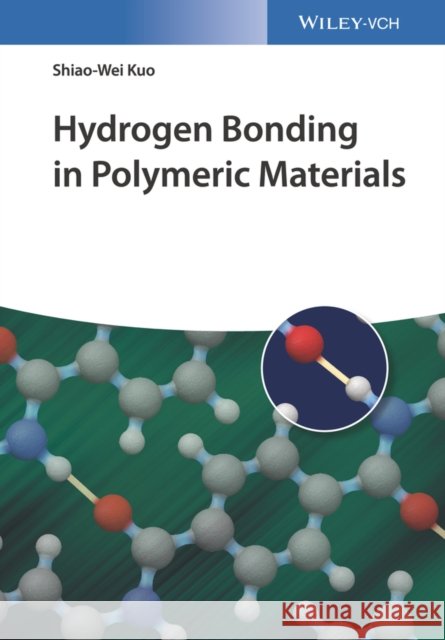
Hydrogen Bonding in Polymeric Materials Shiao-Wei Kuo 9783527341887 Wiley-Vch - książkaWidoczna okładka, to zdjęcie poglądowe, a rzeczywista szata graficzna może różnić się od prezentowanej.

Hydrogen Bonding in Polymeric Materials

ISBN-13: 9783527341887 / Angielski / Twarda / 2018 / 384 str.

Shiao-Wei Kuo
cena 813,27 zł
(netto: 774,54 VAT:  5%)

Najniższa cena z 30 dni: 731,48 zł
Termin realizacji zamówienia:
ok. 16-18 dni roboczych.

Darmowa dostawa!

Summarizing our current knowledge of the topic, this book describes the roles and effects of hydrogen bonding in polymer materials by reviewing the latest developments over recent years.

Kategorie:
Nauka, Chemia
Kategorie BISAC:
Science > Physics - Polymer
Wydawca:
Wiley-Vch
Język:
Angielski
ISBN-13:
9783527341887
Rok wydania:
2018
Ilość stron:
384
Waga:
0.89 kg
Wymiary:
25.4 x 17.3 x 2.3
Oprawa:
Twarda
Wolumenów:
01

Preface ix

Abbreviation xi

1 Hydrogen Bonding in Polymeric Materials 1

1.1 Introduction 1

1.1.1 Hydrogen Bonds 2

1.1.2 Characterization of Hydrogen Bonding 3

References 6

2 Hydrogen Bonding in Polymer Blends 9

2.1 Thermodynamic Properties of Polymer Blends 10

2.2 Association Model Approach 12

2.3 Measurement of Hydrogen Bonding Using Infrared Spectroscopy 14

2.3.1 Self–Association Equilibrium Constants 14

2.3.2 Interassociation Equilibrium Constants 17

2.4 Factors Influencing Hydrogen Bonds 20

2.4.1 Intramolecular Screening Effect 21

2.4.2 Functional Group Accessibility 21

2.4.3 Acidity of H–Bond Donor Groups 23

2.4.4 Basicity of H–Bond Acceptor Groups 24

2.4.5 Steric Hindrance 25

2.4.6 Bulky Group Effect 25

2.4.7 Temperature Effect 26

2.4.8 Solvent Effect 28

2.5 Miscibility EnhancementThrough Hydrogen Bonding 28

2.5.1 Miscibility Characterization 28

2.5.2 Incorporation of H–Bonding Functional Groups in Polymer Chains 30

2.5.3 Effect of Inert Diluent Segment 32

2.5.4 Ternary Polymer Blends 33

References 36

3 Physical Properties of Hydrogen–Bonded Polymers 41

3.1 Glass Transition Temperatures 41

3.1.1 Positive Deviation of Glass Transition Temperature 41

3.1.2 Negative Deviation of Glass Transition Temperature 48

3.2 Melting Temperature (Tm) 50

3.3 Dynamic Behavior 51

3.4 Crystallization Behavior 54

References 56

4 Surface Properties of Hydrogen–Bonded Polymers 61

4.1 Low Surface Energy Polymers 61

4.1.1 Polybenzoxazines 63

4.1.2 Poly(vinyl phenol) 67

4.1.3 Antisticking Applications of PBZs 72

4.1.4 Tuning the Surface Properties of PBZ Thin Films 73

4.2 Superhydrophobic Surfaces 78

4.2.1 Superhydrophobic Surfaces of PBZ after Plasma Treatment 80

4.2.2 PBZ/SiO2 Hybrid Superhydrophobic Surfaces 82

4.2.3 PBZ/CNT Hybrid Superhydrophobic Surfaces 85

References 88

5 Sequence Distribution Effects in Hydrogen–Bonded Copolymers 93

5.1 Block Copolymers versus Random Copolymers 93

5.2 Block Copolymers versus Polymer Blends 98

5.3 Separated Coils versus Chain Aggregates 102

References 105

6 Hydrogen Bond–Mediated Self–Assembled Structures of Block Copolymers 107

6.1 Self–Assembled Structures in the Bulk State 107

6.1.1 Mixtures of Diblock Copolymers and Low–Molecular–Weight Compounds 109

6.1.2 Diblock Copolymer/Homopolymer Mixtures 111

6.1.2.1 Immiscible A B Diblock Segments; C is MiscibleWith B, but ImmiscibleWith A 111

6.1.2.2 Immiscible A B Diblock Segments; C is Miscible with Both A and B 119

6.1.2.3 Miscible A and B Diblock Segments; C is Miscible with Both A and B 126

6.1.2.4 Miscible A and B Diblock Segments; C is Miscible with B, but Immiscible with A 130

6.1.3 Diblock Copolymer Mixture 133

6.2 Self–Assembled Structures in Solution 140

6.2.1 Mixtures of Block Copolymers and Low–Molecular–Weight Compounds 141

6.2.2 Block Copolymer/Homopolymer Mixtures 145

6.2.3 Diblock Copolymer Mixtures 147

6.2.4 Noncovalently Bonded Micelles (Block–Free Copolymers) 152

References 159

7 Mesoporous Materials Prepared Through Hydrogen Bonding 167

7.1 Mesoporous Silica Materials 167

7.1.1 Monomodal Mesoporous Silicas by A B Block Copolymer 169

7.1.2 Monomodal Mesoporous Silicas Formed Using A B Block Copolymer/Homopolymer Blends 179

7.1.3 Hierarchical Mesoporous Silica Materials 186

7.2 Mesoporous Phenolic/Carbon Materials 197

7.2.1 Mesoporous Phenolic/Carbon Materials from A B Block Copolymers 197

7.2.2 Mesoporous Phenolic/Carbon Materials from A B Block Copolymer/Homopolymer Blends 207

7.2.3 Mesoporous Phenolic/Carbon Materials from A B C Triblock Copolymers 213

References 215

8 Bioinspired Hydrogen Bonding in Biomacromolecules 219

8.1 Polypeptides 219

8.1.1 Secondary Structural Characterization of Polypeptides 221

8.1.2 Secondary and Self–Assembled Structures of Polypeptide–Based Blends 226

8.1.3 Secondary and Self–Assembled Structures through Polypeptide–Based Block Copolymer 244

8.2 DNA–Like Multiple H–Bonding Interactions in Polymers 252

8.2.1 Supramolecular Polymer Blends Featuring Multiple H–Bonding Interactions 252

8.2.2 Thermoplastic Supramolecular Polymeric Elastomers 259

8.2.3 Self–Healing Supramolecular Polymers 262

8.2.4 Optoelectronic Supramolecular Polymers 263

8.2.5 Supramolecular Polymers with Carbon Nanotubes 267

8.2.6 Double–Helical Supramolecular Polymers 275

References 281

9 Hydrogen Bonding in POSS Nanocomposites 287

9.1 Introduction to POSS Nanocomposites 287

9.2 General Approaches for Synthesizing POSS Compounds 288

9.2.1 Monofunctional POSS Compounds 288

9.2.2 Bifunctional POSS Compounds 289

9.2.3 Multifunctional POSS Compounds 292

9.3 Varying the Miscibility of Polymer/POSS Nanocomposites through H–Bonding 292

9.4 POSS Nanocomposites by H–Bonding Interaction 297

9.4.1 Phenolic Systems 297

9.4.2 PVPh Systems 306

9.4.3 PNIPAm Systems 311

9.4.4 Polypeptide Systems 312

9.4.5 Polybenzoxazine Systems 317

9.4.6 Polyimide Systems 323

9.4.7 Photoresist Systems 335

9.4.8 Nanoparticle Systems 337

9.4.8.1 POSS NPs Presenting Various Functional Groups 337

9.4.8.2 POSS NP Modified Clay 344

9.4.8.3 POSS–Modified Gold Nanoparticles 345

References 348

Index 357

Shiao–Wei Kuo is Professor in the Department of Materials and Optoelectronic Science at National Sun Yat–Sen University, Taiwan. He received his PhD in Applied Chemistry from National Chiao–Tung University, Taiwan. After some years of postdoctoral research work there and in the University of Akron, USA, he joined National Sun Yat–Sen University as a faculty member. His research interests include polymers, supramolecules, self–assembly nanostructures, mesoporous materials, POSS nanocomposites, low surface free energy materials, and polypeptides. He has published over 300 research papers and several book chapters.

Summarizing our current knowledge of the topic, this book describes the roles and effects of hydrogen bonding in polymer materials by reviewing the latest developments over recent years.

To this end, it discusses all relevant aspects from the fundamentals, via characterization, to properties and applications in various polymeric materials, including polymer blends, block copolymers, mesoporous materials, biomacromolecules and nanocomposites.

Invaluable reading for scientists in polymers and materials as well as those working in macromolecular chemistry.


Udostępnij

Facebook - konto krainaksiazek.pl


Opinie o Krainaksiazek.pl na Opineo.pl

Partner Mybenefit

Krainaksiazek.pl w programie rzetelna firma Krainaksiaze.pl - płatności przez paypal

Czytaj nas na:

Facebook - krainaksiazek.pl
  • książki na zamówienie
  • granty
  • książka na prezent
  • kontakt
  • pomoc
  • opinie
  • regulamin
  • polityka prywatności

Zobacz:

  • Księgarnia czeska

  • Wydawnictwo Książkowe Klimaty

1997-2026 DolnySlask.com Agencja Internetowa

© 1997-2022 krainaksiazek.pl
     
KONTAKT | REGULAMIN | POLITYKA PRYWATNOŚCI | USTAWIENIA PRYWATNOŚCI
Zobacz: Księgarnia Czeska | Wydawnictwo Książkowe Klimaty | Mapa strony | Lista autorów
KrainaKsiazek.PL - Księgarnia Internetowa

Polityka prywatnosci - link
Krainaksiazek.pl - płatnośc Przelewy24
Przechowalnia Przechowalnia







