• Wyszukiwanie zaawansowane
  • Kategorie
  • Kategorie BISAC
  • Książki na zamówienie
  • Promocje
  • Granty
  • Książka na prezent
  • Opinie
  • Pomoc
  • Załóż konto
  • Zaloguj się

Guidelines for Combustible Dust Hazard Analysis » książka

zaloguj się | załóż konto
Logo Krainaksiazek.pl

koszyk

konto

szukaj
topmenu
Księgarnia internetowa
Szukaj
Książki na zamówienie
Promocje
Granty
Książka na prezent
Moje konto
Pomoc
 
 
Wyszukiwanie zaawansowane
Pusty koszyk
Bezpłatna dostawa dla zamówień powyżej 40 złBezpłatna dostawa dla zamówień powyżej 40 zł

Kategorie główne

• Nauka
 [3095879]
• Literatura piękna
 [1808839]

  więcej...
• Turystyka
 [52296]
• Informatyka
 [156325]
• Komiksy
 [36240]
• Encyklopedie
 [23054]
• Dziecięca
 [611350]
• Hobby
 [103057]
• AudioBooki
 [1749]
• Literatura faktu
 [194894]
• Muzyka CD
 [411]
• Słowniki
 [2972]
• Inne
 [446389]
• Kalendarze
 [243]
• Podręczniki
 [166428]
• Poradniki
 [418942]
• Religia
 [507670]
• Czasopisma
 [553]
• Sport
 [61084]
• Sztuka
 [249534]
• CD, DVD, Video
 [3437]
• Technologie
 [231188]
• Zdrowie
 [98069]
• Książkowe Klimaty
 [126]
• Zabawki
 [2529]
• Puzzle, gry
 [3979]
• Literatura w języku ukraińskim
 [272]
• Art. papiernicze i szkolne
 [8685]
Kategorie szczegółowe BISAC

Guidelines for Combustible Dust Hazard Analysis

ISBN-13: 9781119010166 / Angielski / Twarda / 2017 / 256 str.
Center for Chemical Process Safety (CCPS)
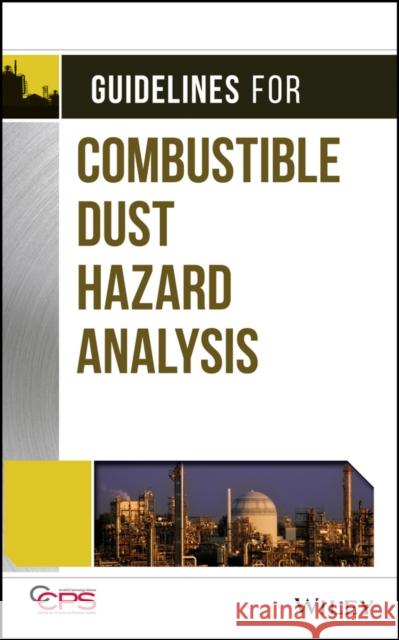
Guidelines for Combustible Dust Hazard Analysis Center for Chemical Process Safety (CCPS 9781119010166 Wiley-Aiche - książkaWidoczna okładka, to zdjęcie poglądowe, a rzeczywista szata graficzna może różnić się od prezentowanej.

Guidelines for Combustible Dust Hazard Analysis

ISBN-13: 9781119010166 / Angielski / Twarda / 2017 / 256 str.

Center for Chemical Process Safety (CCPS)
cena 550,67
(netto: 524,45 VAT:  5%)

Najniższa cena z 30 dni: 539,55
Termin realizacji zamówienia:
ok. 30 dni roboczych.

Darmowa dostawa!

This book describes how to conduct a Combustible Dust Hazard Analysis (CDHA) for processes handling combustible solids. The book explains how to do a dust hazard analysis by using either an approach based on compliance with existing consensus standards, or by using a risk based approach. Worked examples in the book help the user understand how to do a combustible dust hazards analysis.


Kategorie:
Nauka, Chemia
Kategorie BISAC:
Science > Chemistry - Industrial & Technical
Wydawca:
Wiley-Aiche
Język:
Angielski
ISBN-13:
9781119010166
Rok wydania:
2017
Ilość stron:
256
Waga:
1.82 kg
Wymiary:
23.62 x 15.75 x 1.78
Oprawa:
Twarda
Wolumenów:
01
Dodatkowe informacje:
Bibliografia
Glosariusz/słownik

Table of Contents vii

LIST OF TABLES xiii

LIST OF FIGURES xv

ACRONYMS AND ABBREVIATIONS xvii

GLOSSARY xix

ACKNOWLEDGMENTS xxiv

PREFACE xxvii

1. Introduction 1

1.1 Purpose of Book 1

1.2 Book Road Map 2

1.3 References 4

2. Background 5

2.1 Nature of the dust fire and explosion problem 5

2.1.1 Dust explosion statistics 5

2.1.2 Case Study: Hoeganaes Corporation 5

Findings and Lessons 10

2.2 Requirements for dust fires and explosions 11

2.2.1 Layer Fire. 12

2.2.3 Flash Fires and Explosions 12

2.3 Combustibility and Explosivity Parameters 15

2.3.1 Explosibility Screening Test 15

2.3.2 Deflagration Index, KSt (bar–m/sec) 18

2.3.3 Maximum Pressure, Pmax (Bar) 18

2.3.4 Minimum Explosible Concentration, MEC (g/m3) 19

2.3.5 Minimum Ignition Energy, MIE (mJoules, mJ) 19

2.3.6 Minimum Auto Ignition Temperature Cloud, MAIT ( aC) 20

2.3.7 Layer Ignition Temperature, LIT ( aC) 20

2.3.8 Limiting Oxygen Concentration, LOC (vol% O2) 20

vii

viii GUIDELINES FOR COMBUSTIBLE DUST HAZARD ANALYSIS

2.3.9 Volume Resistivity (Ohm–m) 20

2.4 Comparison to combustible vapors 21

2.5 Effect of Parameters 22

2.6 Summary 22

2.7 References 23

3. The Hazards Within Dust Inside Equipment 25

3.1 Methods of Prevention, Protection, Mitigation 25

3.1.1 Ignition Control 26

3.1.2 Inerting/Oxidant Control 28

3.1.3 Combustible Concentration Control 28

3.1.4 Deflagration Venting 28

3.1.5 Deflagration Suppression 29

3.1.6 Containment 29

3.1.7 Deflagration Isolation 30

3.2 Issues 30

3.2.1 Air/Material Separators 32

3.2.2 Size Reduction Equipment (grinders, mills, etc.) 34

3.2.3 Dryers 35

3.2.4 Silos/Hoppers 36

3.2.5 Portable containers 37

3.2.6 Conveyors 38

3.2.7 Blenders/Mixers 41

3.2.8 Feeding into Vessels having Flammable Vapor Atmospheres 41

3.3 Summary 42

3.4 References 42

4. Hazards of Dust External to Equipment 45

4.1 Case Study Imperial Sugar 45

4.2 Issues Inside a Room or Building 48

4.3 Methods of Prevention and protection 49

4.3.1 Control of Dust Deposits Outside of Equipment 49

4.3.2 Ignition Control 52

4.3.3 Damage Limiting Construction 52

TABLE OF CONTENTS ix

4.4 Summary 52

4.5 References 53

5. Traditional Approach to Hazard Assessment and Control 55

5.1 Introduction 55

5.1.1 Process Safety Information (PSI) 55

5.1.2 Competent Team 56

5.2 Steps to the Traditional Approach 56

5.2.1 Step 1 Is a combustible dust involved? 57

5.2.2 Step 2 Determine Which Standards Apply 58

5.2.3 Step 3 – Determine where fire/explosion hazards exist 62

5.2.4 Step 4 Review Unit Operation vs. Standard Requirements for Prevention and Mitigation of Fires/Explosions   63

5.2.5 Step 5 Make recommendations 65

5.2.6 Step 6 Document the DHA 65

5.2.7 Step 7 Implement the recommendations 66

5.3 Summary 67

5.4 References 68

6. Risk–based Approach to Dust Hazard Analysis 69

6.1 Introduction 69

6.2 Technique for a Risk–based DHA 70

6.2.1 Step 1: Identify Failure Scenarios 70

6.2.2 Step 2: Evaluate the Consequences 70

6.2.3 Step 3: Are the Consequences Tolerable? 73

6.2.4 Step 4: Estimate Likelihood and Risk 73

6.2.5 Step 5: Is the Risk Tolerable 78

6.2.6 Step 6: Recommend and Evaluate Solutions 80

6.2.7 Step 7: Is the Mitigated Risk Tolerable? 81

6.2.8 Step 8: Document Results 81

6.3 DHA risk assessment, additional requirements 82

6.3.1 DHA Leader Competency 83

6.3.2 Documentation 83

6.4 Managing change and updating risk assessment 83

6.5 Summary 83

x GUIDELINES FOR COMBUSTIBLE DUST HAZARD ANALYSIS

6.6 References 84

7. Special Considerations: Combustible Dust Issues in Existing Facilities 87

7.1 Introduction 87

7.2 Existing Facilities and Combustible Dusts 87

7.2.1 Potential Issues 87

7.2.2 Issues Impact 91

7.2.3 Precautions 92

7.3 Summary 92

7.4 References 93

8. Worked Examples 95

8.1 INTRODUCTION 95

8.2 EXAMPLE 1 95

8.2.1 Process Description Example 1 95

8.2.2 Traditional DHA Example 1 95

8.2.3 Risk–based DHA Example 1 112

8.2.4 Comparison of Traditional vs. Risk–based Approach Example 1 167

8.3 EXAMPLE 2 169

8.3.1 Process Description 2 169

8.3.2 Traditional DHA 171

8.3.3 Risk–based DHA 173

8.3.4 Comparison of Traditional vs. Risk–based Approach Example 2 176

8.4 Example 3 177

8.4.1 Process Description Example 3 177

8.4.2 Traditional DHA Example 3 179

8.4.3 Risk–based DHA Example 3 181

8.5 Summary 188

8.6 References 188

Appendix A Regulations and Codes 191

A.1 Regulations 191

A.1.1 U.S. 191

TABLE OF CONTENTS xi

A.1.2 International 191

A.2 Codes 192

References 195

Appendix B 197

Additional Resources 197

B.1 Books 197

B.2 U.S. Chemical Safety Board Reports 197

B.3 Journal Articles 198

B.4 Other 199

Appendix C Data for Risk–based DHA 201

C.1 Probability Assessment of Process Unit Fire or Dust Explosion 201

C.1.2 Initiating Event Frequencies 204

C.1.3 Ignition Probabilities 205

C.1.4 Protection Layer PFDs 207

C.2 References 209

Appendix D  Good Practices 211

D.1 Self Assessment 211

D.2 Housekeeping 213

D.2.1 Combustible Dust Housekeeping Inspection Checklist 215

D.3 Explosion Protection Methods 217

Appendix E DHA Roadmap 219

Notes for Figure E.1 221

INDEX 223

Since 1985, the Center for Chemical Process Safety (CCPS) has been the global leader in developing and disseminating information on process safety management and technology. CCPS, an industry technology alliance of the American Institute of Chemical Engineers (AIChE), has published over 100 books in its process safety guidelines and process safety concepts series, and over 100 training modules through its Safety in Chemical Engineering Education (SACHE) series.

Center for Chemical Process Safety (CCPS) The CENTER FOR CHEMICAL PROCESS SAFETY (CCPS), an ... więcej >


Udostępnij

Facebook - konto krainaksiazek.pl


Opinie o Krainaksiazek.pl na Opineo.pl

Partner Mybenefit

Krainaksiazek.pl w programie rzetelna firma Krainaksiaze.pl - płatności przez paypal

Czytaj nas na:

Facebook - krainaksiazek.pl
  • książki na zamówienie
  • granty
  • książka na prezent
  • kontakt
  • pomoc
  • opinie
  • regulamin
  • polityka prywatności

Zobacz:

  • Księgarnia czeska

  • Wydawnictwo Książkowe Klimaty

1997-2026 DolnySlask.com Agencja Internetowa

© 1997-2022 krainaksiazek.pl
     
KONTAKT | REGULAMIN | POLITYKA PRYWATNOŚCI | USTAWIENIA PRYWATNOŚCI
Zobacz: Księgarnia Czeska | Wydawnictwo Książkowe Klimaty | Mapa strony | Lista autorów
KrainaKsiazek.PL - Księgarnia Internetowa

Polityka prywatnosci - link
Krainaksiazek.pl - płatnośc Przelewy24
Przechowalnia Przechowalnia






