Termin realizacji zamówienia: ok. 16-18 dni roboczych.
Darmowa dostawa!
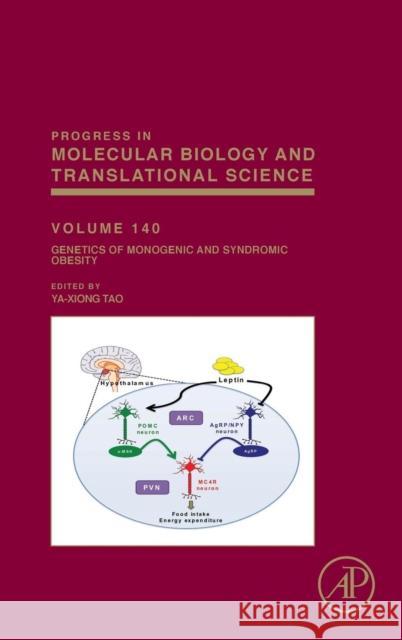
Genetics of Monogenic and Syndromic Obesity is the latest volume in the Progress in Molecular Biology and Translational Science series.
Contains contributions from leading authorities
Informs and updates on all the latest developments in the field
Widoczna okładka, to zdjęcie poglądowe, a rzeczywista szata graficzna może różnić się od prezentowanej. Nie gwarantujemy zgodności okładki z prezentowanym zdjęciem.
1. Single Gene and Syndromic Causes of Obesity: Illustrative Examples M.G. Butler 2. PCSK1 Variants and Human Obesity B. Ramos-Molina, M.G. Martin, and I. Lindberg 3. Rare Syndromes and Common Variants of the Brain-Derived Neurotrophic Factor Gene in Human Obesity J.C. Han 4. Mutations in Melanocortin-3 Receptor Gene and Human Obesity Z. Yang and Y.-X. Tao 5. Ghrelin Receptor Mutations and Human Obesity W. Wang and Y.-X. Tao 6. Epigenetics of Obesity A. Lopomo, E. Burgio, and L. Migliore 7. From Genome-wide Association Study to Phenome-wide Association Study: New Paradigms in Obesity Research Y.-P. Zhang, Y. Zhang and D.D. Duan 8. Genetics of Adiposity in Large Animal Models for Human Obesity-Studies on Pigs and Dogs M. Stachowiak, I. Szczerbal, and M. Switonski
Dr. Ya-Xiong Tao is currently Professor of Physiology at Auburn University College of Veterinary Medicine in Auburn, Alabama, USA. He has been working on several G protein-coupled receptors, including gonadotropin receptors regulating reproduction, and melanocortin receptors regulating energy and glucose homeostasis. He has published extensively in peer-reviewed biomedical journals and obtained funding for his research from National Institutes of Health, American Diabetes Association and American Heart Association, among others. He has delivered numerous lectures at universities and research institutes in USA, Canada, China, India, and Mexico. He has edited ten volumes, including seven volumes in Progress in Molecular Biology and Translational Science. He teaches several courses, including Physiology, Receptorology, Genomics and Personalized Medicine, and Molecular Endocrinology, for veterinarian, graduate, and undergraduate Honors students.