• Wyszukiwanie zaawansowane
  • Kategorie
  • Kategorie BISAC
  • Książki na zamówienie
  • Promocje
  • Granty
  • Książka na prezent
  • Opinie
  • Pomoc
  • Załóż konto
  • Zaloguj się

Environmental Process Analysis: Principles and Modeling » książka


zaloguj się | załóż konto
Logo Krainaksiazek.pl

koszyk

konto

szukaj
topmenu
Księgarnia internetowa
Szukaj
Książki na zamówienie
Promocje
Granty
Książka na prezent
Moje konto
Pomoc
 
 
Wyszukiwanie zaawansowane
Pusty koszyk
Bezpłatna dostawa dla zamówień powyżej 40 złBezpłatna dostawa dla zamówień powyżej 40 zł

Kategorie główne

• Nauka
 [3090713]
• Literatura piękna
 [1812092]

  więcej...
• Turystyka
 [52353]
• Informatyka
 [156406]
• Komiksy
 [36497]
• Encyklopedie
 [23076]
• Dziecięca
 [611051]
• Hobby
 [103270]
• AudioBooki
 [1744]
• Literatura faktu
 [194823]
• Muzyka CD
 [382]
• Słowniki
 [2994]
• Inne
 [446649]
• Kalendarze
 [242]
• Podręczniki
 [166396]
• Poradniki
 [420635]
• Religia
 [508575]
• Czasopisma
 [545]
• Sport
 [61132]
• Sztuka
 [249371]
• CD, DVD, Video
 [3442]
• Technologie
 [230899]
• Zdrowie
 [98302]
• Książkowe Klimaty
 [126]
• Zabawki
 [2532]
• Puzzle, gry
 [4027]
• Literatura w języku ukraińskim
 [273]
• Art. papiernicze i szkolne
 [8376]
Kategorie szczegółowe BISAC

Environmental Process Analysis: Principles and Modeling

ISBN-13: 9781118115015 / Angielski / Twarda / 2013 / 632 str.
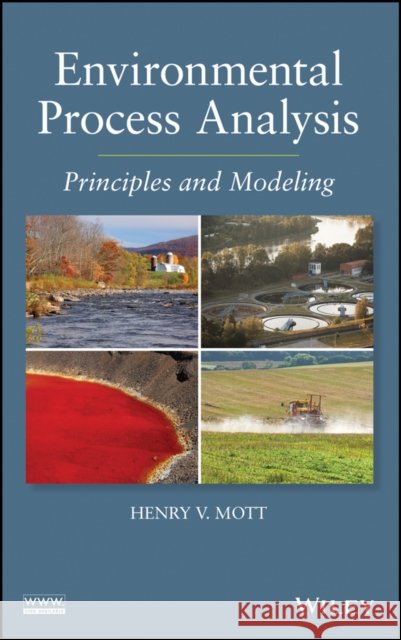
Henry V. Mott
Environmental Process Analysis: Principles and Modeling Mott, Henry V. 9781118115015 John Wiley & Sons - książkaWidoczna okładka, to zdjęcie poglądowe, a rzeczywista szata graficzna może różnić się od prezentowanej.

Environmental Process Analysis: Principles and Modeling

ISBN-13: 9781118115015 / Angielski / Twarda / 2013 / 632 str.

Henry V. Mott
cena 666,36
(netto: 634,63 VAT:  5%)

Najniższa cena z 30 dni: 651,59
Termin realizacji zamówienia:
ok. 30 dni roboczych.

Darmowa dostawa!

Enables readers to apply core principles of environmental engineering to analyze environmental systems Environmental Process Analysis takes a unique approach, applying mathematical and numerical process modeling within the context of both natural and engineered environmental systems. Readers master core principles of natural and engineering science such as chemical equilibria, reaction kinetics, ideal and non-ideal reactor theory, and mass accounting by performing practical real-world analyses. As they progress through the text, readers will have the opportunity to analyze a broad range of environmental processes and systems, including water and wastewater treatment, surface mining, agriculture, landfills, subsurface saturated and unsaturated porous media, aqueous and marine sediments, surface waters, and atmospheric moisture. The text begins with an examination of water, core definitions, and a review of important chemical principles. It then progressively builds upon this base with applications of Henry's law, acid/base equilibria, and reactions in ideal reactors. Finally, the text addresses reactions in non-ideal reactors and advanced applications of acid/base equilibria, complexation and solubility/dissolution equilibria, and oxidation/reduction equilibria. Several tools are provided to fully engage readers in mastering new concepts and then applying them in practice, including:

  • Detailed examples that demonstrate the application of concepts and principles
  • Problems at the end of each chapter challenging readers to apply their newfound knowledge to analyze environmental processes and systems
  • MathCAD worksheets that provide a powerful platform for constructing process models
Environmental Process Analysis serves as a bridge between introductory environmental engineering textbooks and hands-on environmental engineering practice. By learning how to mathematically and numerically model environmental processes and systems, readers will also come to better understand the underlying connections among the various models, concepts, and systems.

Kategorie:
Nauka, Chemia
Kategorie BISAC:
Science > Chemia - Organiczna
Science > Life Sciences - Ecology
Wydawca:
John Wiley & Sons
Język:
Angielski
ISBN-13:
9781118115015
Rok wydania:
2013
Ilość stron:
632
Waga:
0.99 kg
Wymiary:
23.62 x 16.0 x 3.56
Oprawa:
Twarda
Wolumenów:
01
Dodatkowe informacje:
Bibliografia

Preface xiii

Acknowledgments xvii

1. Introductory Remarks 1

1.1 Perspective / 1

1.2 Organization and Objectives / 2

1.3 Approach / 8

2. Water 11

2.1 Perspective / 11

2.2 Important Properties of Water / 12

3. Concentration Units for Gases, Liquids, and Solids 16

3.1 Selected Concentration Units / 16

3.2 The Ideal Gas Law and Gas Phase Concentration Units / 20

3.3 Aqueous Concentration Units / 23

3.4 Applications of Volume Fraction Units / 28

4. The Law of Mass Action and Chemical Equilibria 36

4.1 Perspective / 36

4.2 The Law of Mass Action / 37

4.3 Gas/Water Distributions / 38

4.4 Acid/Base Systems / 39

4.5 Metal Complexation Systems / 40

4.6 Water/Solid Systems (Solubility/Dissolution) / 41

4.7 Oxidation/Reduction Half Reactions / 43

5. Air / Water Distribution: Henry s Law 44

5.1 Perspective / 44

5.2 Henry s Law Constants / 46

5.3 Applications of Henry s Law / 51

6. Acid/Base Component Distributions 64

6.1 Perspective / 64

6.2 Proton Abundance in Aqueous Solutions: pH and the Ion Product of Water / 65

6.3 Acid Dissociation Constants / 69

6.4 Mole Accounting Relations / 70

6.5 Combination of Mole Balance and Acid/Base Equilibria / 74

6.6 Alkalinity, Acidity, and the Carbonate System / 82

6.7 Applications of Acid/Base Principles in Selected Environmental Contexts / 91

7. Mass Balance, Ideal Reactors, and Mixing 119

7.1 Perspective / 119

7.2 The Mass Balance / 120

7.3 Residence Time Distribution (RTD) Analyses / 121

7.4 Exit Responses for Ideal Reactors / 125

7.5 Modeling of Mixing in Ideal CMFRs / 130

7.6 Applications of CMFR Mixing Principles in Environmental Systems / 144

8. Reactions in Ideal Reactors 157

8.1 Perspective / 157

8.2 Chemical Stoichiometry and Mass/Volume Relations / 158

8.3 Reactions in Ideal Reactors / 171

8.4 Applications of Reactions in Ideal Reactors / 183

8.5 Interfacial Mass Transfer in Ideal Reactors / 216

9. Reactions in Nonideal Reactors 265

9.1 Perspective / 265

9.2 Exit Concentration Versus Time Traces / 266

9.3 Residence Time Distribution Density / 267

9.4 Cumulative Residence Time Distributions / 271

9.5 Characterization of RTD Distributions / 272

9.6 Models for Addressing Longitudinal Dispersion in Reactors / 275

9.7 Modeling Reactions in CMFRs in Series (TiS) Reactors / 280

9.8 Modeling Reactions with the Plug–Flow with Dispersion Model / 282

9.9 Modeling Reactions Using the Segregated Flow (SF) Model / 289

9.10 Applications of Nonideal Reactor Models / 291

9.11 Considerations for Analyses of Spatially Variant Processes / 305

9.12 Modeling Utilization and Growth in PFR–Like Reactors Using TiS and SF / 318

10. Acid–Base Advanced Principles 335

10.1 Perspective / 335

10.2 Activity Coefficient / 336

10.3 Temperature Dependence of Equilibrium Constants / 344

10.4 Nonideal Conjugate Acid/Conjugate Base Distributions / 350

10.5 The Proton Balance (Proton Condition) / 358

10.6 Analyses of Solutions Prepared by Addition of Acids, Bases, and Salts to Water / 365

10.7 Analysis of Mixed Aqueous Solutions / 380

10.8 Acid and Base Neutralizing Capacity / 396

10.9 Activity Versus Concentration for Nonelectrolytes / 417

11. Metal Complexation and Solubility 439

11.1 Perspective / 439

11.2 Hydration of Metal Ions / 440

11.3 Cumulative Formation Constants / 441

11.4 Formation Equilibria for Solids / 447

11.5 Speciation of Metals in Aqueous Solutions Containing Ligands / 448

11.6 Metal Hydroxide Solubility / 456

11.7 Solubility of Metal Carbonates / 467

11.8 Solubility of Other Metal Ligand Solids / 511

12. Oxidation and Reduction 519

12.1 Perspective / 519

12.2 Redox Half Reactions / 520

12.3 The Nernst Equation / 533

12.4 Electron Availability in Environmental Systems / 535

Appendices 571

References 599

Index 602

HENRY V. MOTT, PhD, Professor Emeritus of Civil and Environmental Engineering of the South Dakota School of Mines and Technology, is now a consultant in private practice and part–time instructor for the Civil Engineering Department of the University of Minnesota. Dr. Mott has developed and delivered a broad range of undergraduate and graduate courses, drawing upon his engineering practice experience to develop opportunities for students to apply fundamental principles in problem solving and design. His research has focused on contaminant fate and transport, physical/chemical/microbial processes, and environmental chemistry.

For questions regarding the content of Environmental Process Analysis, direct communications with the author can be initiated via the Author Page at www.hvmott.com.

Enables readers to apply core principles of environmental engineering to analyze environmental systems

Environmental Process Analysis takes a unique approach, applying mathematical and numerical process modeling within the context of both natural and engineered environmental systems. Readers master core principles of natural and engineering science such as chemical equilibria, reaction kinetics, ideal and non–ideal reactor theory, and mass accounting by performing practical real–world analyses. As they progress through the text, readers will have the opportunity to analyze a broad range of environmental processes and systems, including water and wastewater treatment, surface mining, agriculture, landfills, subsurface saturated and unsaturated porous media, aqueous and marine sediments, surface waters, and atmospheric moisture.

The text begins with an examination of water, core definitions, and a review of important chemical principles. It then progressively builds upon this base with applications of Henry′s law, acid/base equilibria, and reactions in ideal reactors. Finally, the text addresses reactions in non–ideal reactors and advanced applications of acid/base equilibria, complexation and solubility/dissolution equilibria, and oxidation/reduction equilibria.

Several tools are provided to fully engage readers in mastering new concepts and then applying them in practice, including:

  • Detailed examples that demonstrate the application of concepts and principles
  • Problems at the end of each chapter challenging readers to apply their newfound knowledge to analyze environmental processes and systems
  • MathCAD worksheets that provide a powerful platform for constructing process models

Environmental Process Analysis serves as a bridge between introductory environmental engineering textbooks and hands–on environmental engineering practice. By learning how to mathematically and numerically model environmental processes and systems, readers will also come to better understand the underlying connections among the various models, concepts, and systems.


Udostępnij

Facebook - konto krainaksiazek.pl


Opinie o Krainaksiazek.pl na Opineo.pl

Partner Mybenefit

Krainaksiazek.pl w programie rzetelna firma Krainaksiaze.pl - płatności przez paypal

Czytaj nas na:

Facebook - krainaksiazek.pl
  • książki na zamówienie
  • granty
  • książka na prezent
  • kontakt
  • pomoc
  • opinie
  • regulamin
  • polityka prywatności

Zobacz:

  • Księgarnia czeska

  • Wydawnictwo Książkowe Klimaty

1997-2026 DolnySlask.com Agencja Internetowa

© 1997-2022 krainaksiazek.pl
     
KONTAKT | REGULAMIN | POLITYKA PRYWATNOŚCI | USTAWIENIA PRYWATNOŚCI
Zobacz: Księgarnia Czeska | Wydawnictwo Książkowe Klimaty | Mapa strony | Lista autorów
KrainaKsiazek.PL - Księgarnia Internetowa

Polityka prywatnosci - link
Krainaksiazek.pl - płatnośc Przelewy24
Przechowalnia Przechowalnia





