• Wyszukiwanie zaawansowane
  • Kategorie
  • Kategorie BISAC
  • Książki na zamówienie
  • Promocje
  • Granty
  • Książka na prezent
  • Opinie
  • Pomoc
  • Załóż konto
  • Zaloguj się

Workbook for Organic Synthesis: The Disconnection Approach » książka


zaloguj się | załóż konto
Logo Krainaksiazek.pl

koszyk

konto

szukaj
topmenu
Księgarnia internetowa
Szukaj
Książki na zamówienie
Promocje
Granty
Książka na prezent
Moje konto
Pomoc
 
 
Wyszukiwanie zaawansowane
Pusty koszyk
Bezpłatna dostawa dla zamówień powyżej 20 złBezpłatna dostawa dla zamówień powyżej 20 zł

Kategorie główne

• Nauka
 [2949965]
• Literatura piękna
 [1857847]

  więcej...
• Turystyka
 [70818]
• Informatyka
 [151303]
• Komiksy
 [35733]
• Encyklopedie
 [23180]
• Dziecięca
 [617748]
• Hobby
 [139972]
• AudioBooki
 [1650]
• Literatura faktu
 [228361]
• Muzyka CD
 [398]
• Słowniki
 [2862]
• Inne
 [444732]
• Kalendarze
 [1620]
• Podręczniki
 [167233]
• Poradniki
 [482388]
• Religia
 [509867]
• Czasopisma
 [533]
• Sport
 [61361]
• Sztuka
 [243125]
• CD, DVD, Video
 [3451]
• Technologie
 [219309]
• Zdrowie
 [101347]
• Książkowe Klimaty
 [123]
• Zabawki
 [2362]
• Puzzle, gry
 [3791]
• Literatura w języku ukraińskim
 [253]
• Art. papiernicze i szkolne
 [7933]
Kategorie szczegółowe BISAC

Workbook for Organic Synthesis: The Disconnection Approach

ISBN-13: 9780470712269 / Angielski / Miękka / 2010 / 280 str.
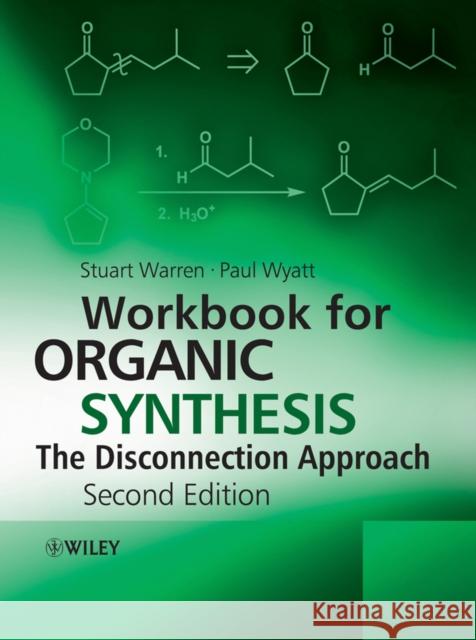
UK) Wyatt University of Bristol Paul (School of Chemistry
Workbook for Organic Synthesis: The Disconnection Approach Paul (School of Chemistry, University of Bristol, UK) Wyatt 9780470712269 John Wiley & Sons Inc - książkaWidoczna okładka, to zdjęcie poglądowe, a rzeczywista szata graficzna może różnić się od prezentowanej.

Workbook for Organic Synthesis: The Disconnection Approach

ISBN-13: 9780470712269 / Angielski / Miękka / 2010 / 280 str.

UK) Wyatt University of Bristol Paul (School of Chemistry
cena 225,67 zł
(netto: 214,92 VAT:  5%)

Najniższa cena z 30 dni: 223,36 zł
Termin realizacji zamówienia:
ok. 30 dni roboczych
Bez gwarancji dostawy przed świętami

Darmowa dostawa!

One approach to organic synthesis is retrosynthetic analysis. With this approach chemists start with the structures of their target molecules and progressively cut bonds to create simpler molecules. Reversing this process gives a synthetic route to the target molecule from simpler starting materials. This "disconnection" approach to synthesis is now a fundamental part of every organic synthesis course.

Workbook for Organic Synthesis: The Disconnection Approach, 2nd Edition

This workbook provides a comprehensive graded set of problems to illustrate and develop the themes of each of the chapters in the textbook "Organic Synthesis: The Disconnection Approach, 2nd Edition." Each problem is followed by a fully explained solution and discussion. The examples extend the student's experience of the types of molecules being synthesised by organic chemists, and the strategies they employ to control their syntheses. By working through these examples students will develop their skills in analysing synthetic challenges, and build a toolkit of strategies for planning new syntheses. Examples are drawn from pharmaceuticals, agrochemicals, natural products, pheromones, perfumery and flavouring compounds, dyestuffs, monomers, and intermediates used in more advanced synthetic work. Reasons for wishing to synthesise each compound are given. Together the workbook and textbook provide a complete course in retrosynthetic analysis.

Organic Synthesis: The Disconnection Approach, 2nd Edition

There are forty chapters in "Organic Synthesis: The Disconnection Approach, 2nd Edition" those on the synthesis of given types of molecules alternate with strategy chapters in which the methods just learnt are placed in a wider context. The synthesis chapters cover many ways of making each type of molecule starting with simple aromatic and aliphatic compounds with one functional group and progressing to molecules with many functional groups. The strategy chapters cover questions of selectivity, protection, stereochemistry, and develop more advanced thinking via reagents specifically designed for difficult problems. In its second edition updated examples and techniques are included and illustrated additional material has been added to take the student to the level required by the sequel, "Organic Synthesis: Strategy and Control." Several chapters contain extensive new material based on courses that the authors give to chemists in the pharmaceutical industry.

"Workbook for Organic Synthesis: The Disconnection Approach, 2nd edition," combined with the main textbook, provides a full course in retrosynthetic analysis for chemistry and biochemistry students, and a refresher course for organic chemists working in industry and academia.


Kategorie:
Nauka, Chemia
Kategorie BISAC:
Science > Chemia - Fizyczna
Science > Chemia - Organiczna
Wydawca:
John Wiley & Sons Inc
Język:
Angielski
ISBN-13:
9780470712269
Rok wydania:
2010
Wydanie:
Revised
Ilość stron:
280
Waga:
0.52 kg
Wymiary:
24.13 x 18.8 x 1.52
Oprawa:
Miękka
Wolumenów:
01
Dodatkowe informacje:
Bibliografia
Wydanie ilustrowane

"The book provides an excellent and pragmatic panorama of the various aspects of disconnective strategies, whilst keeping in mind the importance of protective strategies." ( Reviews, December 2010)

Preface vii

General References ix

1. The Disconnection Approach 1

2. Basic Principles: Synthons and Reagents: Synthesis of Aromatic Compounds 5

3. Strategy I: The Order of Events 11

4. One–Group C X Disconnections 15

5. Strategy II: Chemoselectivity 21

6. Two–Group C X Disconnections 29

7. Strategy III: Reversal of Polarity, Cyclisations, Summary of Strategy 35

8. Amine Synthesis 41

9. Strategy IV: Protecting Groups 49

10. One–Group C C Disconnections I: Alcohols 55

11. General Strategy A: Choosing a Disconnection 61

12. Strategy V: Stereoselectivity A 67

13. One–Group C C Disconnections II: Carbonyl Compounds 75

14. Strategy VI: Regioselectivity 81

15. Alkene Synthesis 87

16. Strategy VII: Use of Acetylenes (Alkynes) 93

17. Two–Group C C Disconnections I: Diels–Alder Reactions 99

18. Strategy VIII: Introduction to Carbonyl Condensations 105

19. Two–Group C C Disconnections II: 1,3–Difunctionalised Compounds 111

20. Strategy IX: Control in Carbonyl Condensations 115

21. Two–Group C C Disconnections III: 1,5–Difunctionalised Compounds Conjugate (Michael) Addition and Robinson Annelation 123

22. Strategy X: Aliphatic Nitro Compounds in Synthesis 129

23. Two–Group Disconnections IV: 1,2–Difunctionalised Compounds 133

24. Strategy XI: Radical Reactions in Synthesis 139

25. Two–Group Disconnections V: 1,4–Difunctionalised Compounds 147

26. Strategy XII: Reconnection 153

27. Two–Group C C Disconnections VI: 1,6–diCarbonyl Compounds 159

28. General Strategy B: Strategy of Carbonyl Disconnections 165

29. Strategy XIII: Introduction to Ring Synthesis: Saturated Heterocycles 173

30. Three–Membered Rings 181

31. Strategy XIV: Rearrangements in Synthesis 189

32. Four–Membered Rings: Photochemistry in Synthesis 195

33. Strategy XV: The Use of Ketenes in Synthesis 201

34. Five–Membered Rings 207

35. Strategy XVI: Pericyclic Reactions in Synthesis: Special Methods for Five–Membered Rings 213

36. Six–Membered Rings 221

37. General Strategy C: Strategy of Ring Synthesis 227

38. Strategy XVII: Stereoselectivity B 235

39. Aromatic Heterocycles 245

40. General Strategy D: Advanced Strategy 255

Index 263

Dr Stuart Warren Department of Chemistry, University of Cambridge, UK

Dr Warren is the author of the bestselling textbooks "Organic Synthesis: The Disconnection Approach" (Wiley), "Organic Synthesis: Strategy and Control" (Wiley) and "Organic Chemistry" (OUP)

Dr Paul Wyatt

School of Chemistry, University of Bristol, UK.
Dr Wyatt is Director of Undergraduate Studies for the School of Chemistry at Bristol University and also Director of BRISTOL ChemLabS – a HEFCE Centre for Excellence in Teaching & Learning.?He is co–author, with Warren, of "Organic Synthesis: Strategy and Control"

One approach to organic synthesis is retrosynthetic analysis. With this approach chemists start with the structures of their target molecules and progressively cut bonds to create simpler molecules. Reversing this process gives a synthetic route to the target molecule from simpler starting materials. This disconnection approach to synthesis is now a fundamental part of every organic synthesis course.

Workbook for Organic Synthesis: The Disconnection Approach, 2nd Edition

This workbook provides a comprehensive graded set of problems to illustrate and develop the themes of each of the chapters in the textbook Organic Synthesis: The Disconnection Approach, 2nd Edition. Each problem is followed by a fully explained solution and discussion. The examples extend the student s experience of the types of molecules being synthesised by organic chemists, and the strategies they employ to control their syntheses. By working through these examples students will develop their skills in analysing synthetic challenges, and build a toolkit of strategies for planning new syntheses. Examples are drawn from pharmaceuticals, agrochemicals, natural products, pheromones, perfumery and flavouring compounds, dyestuffs, monomers, and intermediates used in more advanced synthetic work. Reasons for wishing to synthesise each compound are given. Together the workbook and textbook provide a complete course in retrosynthetic analysis.

Organic Synthesis: The Disconnection Approach, 2nd Edition

There are forty chapters in Organic Synthesis: The Disconnection Approach, 2nd Edition: those on the synthesis of given types of molecules alternate with strategy chapters in which the methods just learnt are placed in a wider context. The synthesis chapters cover many ways of making each type of molecule starting with simple aromatic and aliphatic compounds with one functional group and progressing to molecules with many functional groups. The strategy chapters cover questions of selectivity, protection, stereochemistry, and develop more advanced thinking via reagents specifically designed for difficult problems. In its second edition updated examples and techniques are included and illustrated additional material has been added to take the student to the level required by the sequel, Organic Synthesis: Strategy and Control. Several chapters contain extensive new material based on courses that the authors give to chemists in the pharmaceutical industry.

Workbook for Organic Synthesis: The Disconnection Approach, 2nd edition, combined with the main textbook, provides a full course in retrosynthetic analysis for chemistry and biochemistry students, and a refresher course for organic chemists working in industry and academia.




Udostępnij

Facebook - konto krainaksiazek.pl


Opinie o Krainaksiazek.pl na Opineo.pl

Partner Mybenefit

Krainaksiazek.pl w programie rzetelna firma Krainaksiaze.pl - płatności przez paypal

Czytaj nas na:

Facebook - krainaksiazek.pl
  • książki na zamówienie
  • granty
  • książka na prezent
  • kontakt
  • pomoc
  • opinie
  • regulamin
  • polityka prywatności

Zobacz:

  • Księgarnia czeska

  • Wydawnictwo Książkowe Klimaty

1997-2025 DolnySlask.com Agencja Internetowa

© 1997-2022 krainaksiazek.pl
     
KONTAKT | REGULAMIN | POLITYKA PRYWATNOŚCI | USTAWIENIA PRYWATNOŚCI
Zobacz: Księgarnia Czeska | Wydawnictwo Książkowe Klimaty | Mapa strony | Lista autorów
KrainaKsiazek.PL - Księgarnia Internetowa

Polityka prywatnosci - link
Krainaksiazek.pl - płatnośc Przelewy24
Przechowalnia Przechowalnia



