• Wyszukiwanie zaawansowane
  • Kategorie
  • Kategorie BISAC
  • Książki na zamówienie
  • Promocje
  • Granty
  • Książka na prezent
  • Opinie
  • Pomoc
  • Załóż konto
  • Zaloguj się

Why Intelligence Fails » książka


zaloguj się | załóż konto
Logo Krainaksiazek.pl

koszyk

konto

szukaj
topmenu
Księgarnia internetowa
Szukaj
Książki na zamówienie
Promocje
Granty
Książka na prezent
Moje konto
Pomoc
 
 
Wyszukiwanie zaawansowane
Pusty koszyk
Bezpłatna dostawa dla zamówień powyżej 20 złBezpłatna dostawa dla zamówień powyżej 20 zł

Kategorie główne

• Nauka
 [2949965]
• Literatura piękna
 [1857847]

  więcej...
• Turystyka
 [70818]
• Informatyka
 [151303]
• Komiksy
 [35733]
• Encyklopedie
 [23180]
• Dziecięca
 [617748]
• Hobby
 [139972]
• AudioBooki
 [1650]
• Literatura faktu
 [228361]
• Muzyka CD
 [398]
• Słowniki
 [2862]
• Inne
 [444732]
• Kalendarze
 [1620]
• Podręczniki
 [167233]
• Poradniki
 [482388]
• Religia
 [509867]
• Czasopisma
 [533]
• Sport
 [61361]
• Sztuka
 [243125]
• CD, DVD, Video
 [3451]
• Technologie
 [219309]
• Zdrowie
 [101347]
• Książkowe Klimaty
 [123]
• Zabawki
 [2362]
• Puzzle, gry
 [3791]
• Literatura w języku ukraińskim
 [253]
• Art. papiernicze i szkolne
 [7933]
Kategorie szczegółowe BISAC

Why Intelligence Fails

ISBN-13: 9780801447853 / Angielski / Twarda / 2010 / 248 str.
Robert Jervis
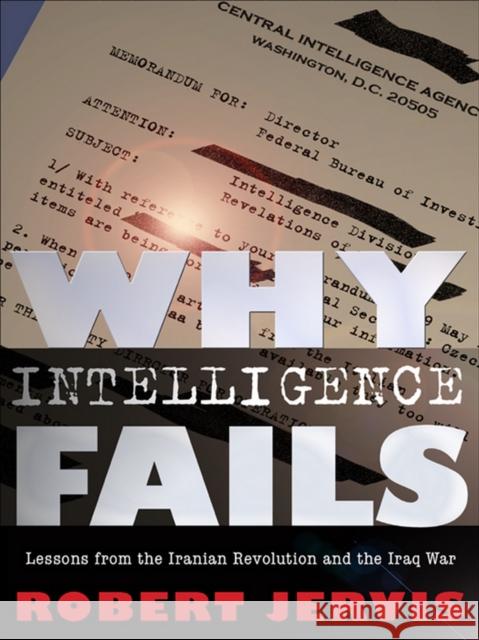
Why Intelligence Fails Jervis, Robert 9780801447853 Cornell University Press - książkaWidoczna okładka, to zdjęcie poglądowe, a rzeczywista szata graficzna może różnić się od prezentowanej.

Why Intelligence Fails

ISBN-13: 9780801447853 / Angielski / Twarda / 2010 / 248 str.

Robert Jervis
cena 214,62 zł
(netto: 204,40 VAT:  5%)

Najniższa cena z 30 dni: 210,91 zł
Termin realizacji zamówienia:
ok. 30 dni roboczych
Bez gwarancji dostawy przed świętami

Darmowa dostawa!
inne wydania

The U.S. government spends enormous resources each year on the gathering and analysis of intelligence, yet the history of American foreign policy is littered with missteps and misunderstandings that have resulted from intelligence failures. In Why Intelligence Fails, Robert Jervis examines the politics and psychology of two of the more spectacular intelligence failures in recent memory: the mistaken belief that the regime of the Shah in Iran was secure and stable in 1978, and the claim that Iraq had active WMD programs in 2002.The Iran case is based on a recently declassified report Jervis was commissioned to undertake by CIA thirty years ago and includes memoranda written by CIA officials in response to Jervis's findings. The Iraq case, also grounded in a review of the intelligence community's performance, is based on close readings of both classified and declassified documents, though Jervis's conclusions are entirely supported by evidence that has been declassified. In both cases, Jervis finds not only that intelligence was badly flawed but also that later explanations analysts were bowing to political pressure and telling the White House what it wanted to hear or were willfully blind were also incorrect. Proponents of these explanations claimed that initial errors were compounded by groupthink, lack of coordination within the government, and failure to share information. Policy prescriptions, including the recent establishment of a Director of National Intelligence, were supposed to remedy the situation.In Jervis's estimation, neither the explanations nor the prescriptions are adequate. The inferences that intelligence drew were actually quite plausible given the information available. Errors arose, he concludes, from insufficient attention to the ways in which information should be gathered and interpreted, a lack of self-awareness about the factors that led to the judgments, and an organizational culture that failed to probe for weaknesses and explore alternatives. Evaluating the inherent tensions between the methods and aims of intelligence personnel and policymakers from a unique insider's perspective, Jervis forcefully criticizes recent proposals for improving the performance of the intelligence community and discusses ways in which future analysis can be improved."


Kategorie:
Nauka, Historia
Kategorie BISAC:
Political Science > Intelligence & Espionage
History > Middle East - General
History > Wars & Conflicts - Iraq War (2003-2011)
Wydawca:
Cornell University Press
Seria wydawnicza:
Cornell Studies in Security Affairs (Hardcover)
Język:
Angielski
ISBN-13:
9780801447853
Rok wydania:
2010
Numer serii:
000005570
Ilość stron:
248
Waga:
0.51 kg
Wymiary:
23.88 x 15.75 x 2.03
Oprawa:
Twarda
Wolumenów:
01
Dodatkowe informacje:
Bibliografia
Obwoluta
Jervis, Robert THOMAS BRUNEAU is a Professor of National Security... więcej >


Udostępnij

Facebook - konto krainaksiazek.pl


Opinie o Krainaksiazek.pl na Opineo.pl

Partner Mybenefit

Krainaksiazek.pl w programie rzetelna firma Krainaksiaze.pl - płatności przez paypal

Czytaj nas na:

Facebook - krainaksiazek.pl
  • książki na zamówienie
  • granty
  • książka na prezent
  • kontakt
  • pomoc
  • opinie
  • regulamin
  • polityka prywatności

Zobacz:

  • Księgarnia czeska

  • Wydawnictwo Książkowe Klimaty

1997-2025 DolnySlask.com Agencja Internetowa

© 1997-2022 krainaksiazek.pl
     
KONTAKT | REGULAMIN | POLITYKA PRYWATNOŚCI | USTAWIENIA PRYWATNOŚCI
Zobacz: Księgarnia Czeska | Wydawnictwo Książkowe Klimaty | Mapa strony | Lista autorów
KrainaKsiazek.PL - Księgarnia Internetowa

Polityka prywatnosci - link
Krainaksiazek.pl - płatnośc Przelewy24
Przechowalnia Przechowalnia





