• Wyszukiwanie zaawansowane
  • Kategorie
  • Kategorie BISAC
  • Książki na zamówienie
  • Promocje
  • Granty
  • Książka na prezent
  • Opinie
  • Pomoc
  • Załóż konto
  • Zaloguj się

Theory of Robot Control » książka


zaloguj się | załóż konto
Logo Krainaksiazek.pl

koszyk

konto

szukaj
topmenu
Księgarnia internetowa
Szukaj
Książki na zamówienie
Promocje
Granty
Książka na prezent
Moje konto
Pomoc
 
 
Wyszukiwanie zaawansowane
Pusty koszyk
Bezpłatna dostawa dla zamówień powyżej 20 złBezpłatna dostawa dla zamówień powyżej 20 zł

Kategorie główne

• Nauka
 [2946600]
• Literatura piękna
 [1856966]

  więcej...
• Turystyka
 [72221]
• Informatyka
 [151456]
• Komiksy
 [35826]
• Encyklopedie
 [23190]
• Dziecięca
 [619653]
• Hobby
 [140543]
• AudioBooki
 [1577]
• Literatura faktu
 [228355]
• Muzyka CD
 [410]
• Słowniki
 [2874]
• Inne
 [445822]
• Kalendarze
 [1744]
• Podręczniki
 [167141]
• Poradniki
 [482898]
• Religia
 [510455]
• Czasopisma
 [526]
• Sport
 [61590]
• Sztuka
 [243598]
• CD, DVD, Video
 [3423]
• Technologie
 [219201]
• Zdrowie
 [101638]
• Książkowe Klimaty
 [124]
• Zabawki
 [2473]
• Puzzle, gry
 [3898]
• Literatura w języku ukraińskim
 [254]
• Art. papiernicze i szkolne
 [8170]
Kategorie szczegółowe BISAC

Theory of Robot Control

ISBN-13: 9781447115038 / Angielski / Miękka / 2012 / 392 str.
Carlos Canudas De Wit; Bruno Siciliano; Georges Bastin
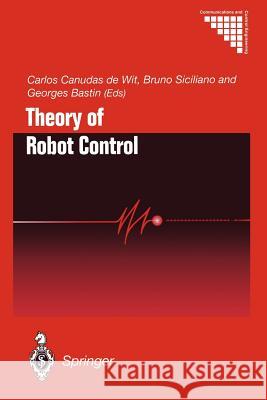
Theory of Robot Control Carlos Canuda Bruno Siciliano Georges Bastin 9781447115038 Springer - książkaWidoczna okładka, to zdjęcie poglądowe, a rzeczywista szata graficzna może różnić się od prezentowanej.

Theory of Robot Control

ISBN-13: 9781447115038 / Angielski / Miękka / 2012 / 392 str.

Carlos Canudas De Wit; Bruno Siciliano; Georges Bastin
cena 524,53 zł
(netto: 499,55 VAT:  5%)

Najniższa cena z 30 dni: 501,19 zł
Termin realizacji zamówienia:
ok. 22 dni roboczych
Bez gwarancji dostawy przed świętami

Darmowa dostawa!

The advent of new high-speed microprocessor technology together with the need for high-performance robots created substantial and realistic place for control theory in the field of robotics. Since the beginning of the 80's, robotics and control theory have greatly benefited from a mutual fertiliza- tion. On one hand, robot models (inherently highly nonlinear) have been used as good case studies for exemplifying general concepts of analysis and design of advanced control theory; on the other hand, robot manipulator by using new control algorithms. Fur- performance has been improved thermore, many interesting robotics problems, e. g., in mobile robots, have brought new control theory research lines and given rise to the development of new controllers (time-varying and nonlinear). Robots in control are more than a simple case study. They represent a natural source of inspiration and a great pedagogical tool for research and teaching in control theory. Several advanced control algorithms have been developed for different types of robots (rigid, flexible and mobile), based either on existing control techniques, e. g., feedback linearization and adaptive control, or on new control techniques that have been developed on purpose. Most of those results, although widely spread, are nowadays rather dispersed in different journals and conference proceedings. The purpose of this book is to collect some of the most fundamental and current results on theory of robot control in a unified framework, by editing, improving and completing previous works in the area.


Kategorie:
Technologie
Kategorie BISAC:
Technology & Engineering > Automation
Technology & Engineering > Robotics
Gardening > General
Wydawca:
Springer
Seria wydawnicza:
Communications and Control Engineering (Paperback)
Język:
Angielski
ISBN-13:
9781447115038
Rok wydania:
2012
Wydanie:
Softcover Repri
Numer serii:
000383647
Ilość stron:
392
Waga:
0.64 kg
Wymiary:
16.4 x 23.7 x 2.4
Oprawa:
Miękka
Wolumenów:
01

I Rigid manipulators.- 1 Modelling and identification.- 1.1 Kinematic modelling.- 1.1.1 Direct kinematics.- 1.1.2 Inverse kinematics.- 1.1.3 Differential kinematics.- 1.2 Dynamic modelling.- 1.2.1 Lagrange formulation.- 1.2.2 Newton-Euler formulation.- 1.2.3 Model computation.- 1.3 Identification of kinematic parameters.- 1.3.1 Model for identification.- 1.3.2 Kinematic calibration.- 1.3.3 Parameter identifiability.- 1.4 Identification of dynamic parameters.- 1.4.1 Use of dynamic model.- 1.4.2 Use of energy model.- 1.5 Further reading.- References.- 2 Joint space control.- 2.1 Dynamic model properties.- 2.2 Regulation.- 2.2.1 PD control.- 2.2.2 PID control.- 2.2.3 PD control with gravity compensation.- 2.3 Tracking control.- 2.3.1 Inverse dynamics control.- 2.3.2 Lyapunov-based control.- 2.3.3 Passivity-based control.- 2.4 Robust control.- 2.4.1 Constant bounded disturbance: integral action.- 2.4.2 Model parameter uncertainty: robust control.- 2.5 Adaptive control.- 2.5.1 Adaptive gravity compensation.- 2.5.2 Adaptive inverse dynamics control.- 2.5.3 Adaptive passivity-based control.- 2.6 Further reading.- References.- 3 Task space control.- 3.1 Kinematic control.- 3.1.1 Differential kinematics inversion.- 3.1.2 Inverse kinematics algorithms.- 3.1.3 Extension to acceleration resolution.- 3.2 Direct task space control.- 3.2.1 Regulation.- 3.2.2 Tracking control.- 3.3 Further reading.- References.- 4 Motion and force control.- 4.1 Impedance control.- 4.1.1 Task space dynamic model.- 4.1.2 Inverse dynamics control.- 4.1.3 PD control.- 4.2 Parallel control.- 4.2.1 Inverse dynamics control.- 4.2.2 PID control.- 4.3 Hybrid force/motion control.- 4.3.1 Constrained dynamics.- 4.3.2 Inverse dynamics control.- 4.3.3 Hybrid task specification and control.- 4.4 Further reading.- References.- II Flexible manipulators.- 5 Elastic joints.- 5.1 Modelling.- 5.1.1 Dynamic model properties.- 5.1.2 Reduced models.- 5.1.3 Singularly perturbed model.- 5.2 Regulation.- 5.2.1 Single link.- 5.2.2 PD control using only motor variables.- 5.3 Tracking control.- 5.3.1 Static state feedback.- 5.3.2 Two-time scale control.- 5.3.3 Dynamic state feedback.- 5.3.4 Nonlinear regulation.- 5.4 Further reading.- References.- 6 Flexible links.- 6.1 Modelling of a single-link arm.- 6.1.1 Euler-Bernoulli beam equations.- 6.1.2 Constrained and unconstrained modal analysis.- 6.1.3 Finite-dimensional models.- 6.2 Modelling of multilink manipulators.- 6.2.1 Direct kinematics.- 6.2.2 Lagrangian dynamics.- 6.2.3 Dynamic model properties.- 6.3 Regulation.- 6.3.1 Joint PD control.- 6.3.2 Vibration damping control.- 6.4 Joint tracking control.- 6.4.1 Inversion control.- 6.4.2 Two-time scale control.- 6.5 End-effector tracking control.- 6.5.1 Frequency domain inversion.- 6.5.2 Nonlinear regulation.- 6.6 Further reading.- References.- III Mobile robots.- 7 Modelling and structural properties.- 7.1 Robot description.- 7.1.1 Conventional wheels.- 7.1.2 Swedish wheel.- 7.2 Restrictions on robot mobility.- 7.3 Three-wheel robots.- 7.3.1 Type (3,0) robot with Swedish wheels.- 7.3.2 Type (3,0) robot with castor wheels.- 7.3.3 Type (2,0) robot.- 7.3.4 Type (2,1) robot.- 7.3.5 Type (1,1) robot.- 7.3.6 Type (1,2) robot.- 7.4 Posture kinematic model.- 7.4.1 Generic models of wheeled robots.- 7.4.2 Mobility, steerability and manoeuvrability.- 7.4.3 Irreducibility.- 7.4.4 Controllability and stabilizability.- 7.5 Configuration kinematic model.- 7.6 Configuration dynamic model.- 7.6.1 Model derivation.- 7.6.2 Actuator configuration.- 7.7 Posture dynamic model.- 7.8 Further reading.- References.- 8 Feedback linearization.- 8.1 Feedback control problems.- 8.1.1 Posture tracking.- 8.1.2 Point tracking.- 8.1.3 Velocity and torque control.- 8.2 Static state feedback.- 8.2.1 Omnidirectional robots.- 8.2.2 Restricted mobility robots.- 8.3 Dynamic state feedback.- 8.3.1 Dynamic extension algorithm.- 8.3.2 Differential flatness.- 8.3.3 Avoiding singularities.- 8.3.4 Solving the posture tracking problem.- 8.3.5 Avoiding singularities for Type (2,0) robots.- 8.4 Further reading.- References.- 9 Nonlinear feedback control.- 9.1 Unicycle robot.- 9.1.1 Model transformations.- 9.1.2 Linear approximation.- 9.1.3 Smooth state feedback stabilization.- 9.2 Posture tracking.- 9.2.1 Linear feedback control.- 9.2.2 Nonlinear feedback control.- 9.3 Path following.- 9.3.1 Linear feedback control.- 9.3.2 Nonlinear feedback control.- 9.4 Posture stabilization.- 9.4.1 Smooth time-varying control.- 9.4.2 Piecewise continuous control.- 9.4.3 Time-varying piecewise continuous control.- 9.5 Further reading.- References.- A Control background.- A.1 Lyapunov theory.- A. 1.1 Autonomous systems.- A.1.2 Nonautonomous systems.- A.1.3 Practical stability.- A.2 Singular perturbation theory.- A.3 Differential geometry theory.- A.3.1 Normal form.- A.3.2 Feedback linearization.- A.3.3 Stabilization of feedback linearizable systems.- A.4 Input-output.- A.4.1 Function spaces and operators.- A.4.2 Passivity.- A.4.3 Robot manipulators as passive systems.- A.4.4 Kalman-Yakubovich-Popov lemma.- A.5 Further reading.- References.

Siciliano, Bruno Bruno Siciliano is Professor of Control and Roboti... więcej >


Udostępnij

Facebook - konto krainaksiazek.pl


Opinie o Krainaksiazek.pl na Opineo.pl

Partner Mybenefit

Krainaksiazek.pl w programie rzetelna firma Krainaksiaze.pl - płatności przez paypal

Czytaj nas na:

Facebook - krainaksiazek.pl
  • książki na zamówienie
  • granty
  • książka na prezent
  • kontakt
  • pomoc
  • opinie
  • regulamin
  • polityka prywatności

Zobacz:

  • Księgarnia czeska

  • Wydawnictwo Książkowe Klimaty

1997-2025 DolnySlask.com Agencja Internetowa

© 1997-2022 krainaksiazek.pl
     
KONTAKT | REGULAMIN | POLITYKA PRYWATNOŚCI | USTAWIENIA PRYWATNOŚCI
Zobacz: Księgarnia Czeska | Wydawnictwo Książkowe Klimaty | Mapa strony | Lista autorów
KrainaKsiazek.PL - Księgarnia Internetowa

Polityka prywatnosci - link
Krainaksiazek.pl - płatnośc Przelewy24
Przechowalnia Przechowalnia





