• Wyszukiwanie zaawansowane
  • Kategorie
  • Kategorie BISAC
  • Książki na zamówienie
  • Promocje
  • Granty
  • Książka na prezent
  • Opinie
  • Pomoc
  • Załóż konto
  • Zaloguj się

The Syrian Information and Propaganda War: The Role of Cognitive Bias » książka


zaloguj się | załóż konto
Logo Krainaksiazek.pl

koszyk

konto

szukaj
topmenu
Księgarnia internetowa
Szukaj
Książki na zamówienie
Promocje
Granty
Książka na prezent
Moje konto
Pomoc
 
 
Wyszukiwanie zaawansowane
Pusty koszyk
Bezpłatna dostawa dla zamówień powyżej 20 złBezpłatna dostawa dla zamówień powyżej 20 zł

Kategorie główne

• Nauka
 [2952079]
• Literatura piękna
 [1850969]

  więcej...
• Turystyka
 [71058]
• Informatyka
 [151066]
• Komiksy
 [35579]
• Encyklopedie
 [23181]
• Dziecięca
 [620496]
• Hobby
 [139036]
• AudioBooki
 [1646]
• Literatura faktu
 [228729]
• Muzyka CD
 [379]
• Słowniki
 [2932]
• Inne
 [445708]
• Kalendarze
 [1409]
• Podręczniki
 [164793]
• Poradniki
 [480107]
• Religia
 [510956]
• Czasopisma
 [511]
• Sport
 [61267]
• Sztuka
 [243299]
• CD, DVD, Video
 [3411]
• Technologie
 [219640]
• Zdrowie
 [100984]
• Książkowe Klimaty
 [124]
• Zabawki
 [2281]
• Puzzle, gry
 [3363]
• Literatura w języku ukraińskim
 [258]
• Art. papiernicze i szkolne
 [8020]
Kategorie szczegółowe BISAC

The Syrian Information and Propaganda War: The Role of Cognitive Bias

ISBN-13: 9783030932848 / Angielski / Miękka / 2023 / 414 str.
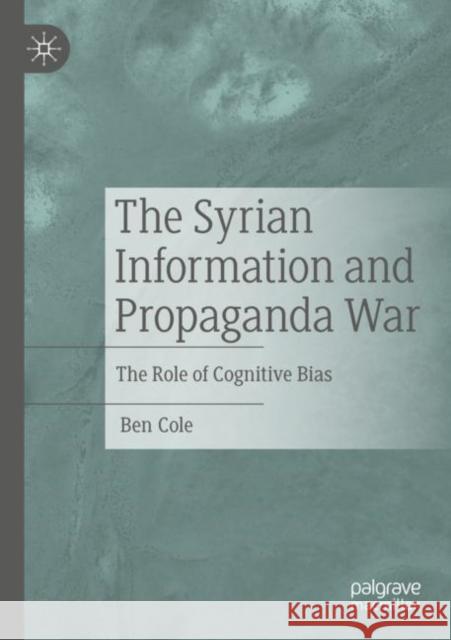
Ben Cole
The Syrian Information and Propaganda War: The Role of Cognitive Bias Ben Cole 9783030932848 Palgrave MacMillan - książkaWidoczna okładka, to zdjęcie poglądowe, a rzeczywista szata graficzna może różnić się od prezentowanej.

The Syrian Information and Propaganda War: The Role of Cognitive Bias

ISBN-13: 9783030932848 / Angielski / Miękka / 2023 / 414 str.

Ben Cole
cena 483,04
(netto: 460,04 VAT:  5%)

Najniższa cena z 30 dni: 462,63
Termin realizacji zamówienia:
ok. 22 dni roboczych
Dostawa w 2026 r.

Darmowa dostawa!
inne wydania

This book focuses on the propaganda war between the Syrian government and the opposition movement, which excludes the Islamic State and the Kurdish-led SDF. Drawing on international relations, psychology, and media studies, the book encourages readers to question the dominant discourse on the war. The core of the book outlines the propaganda battles over the main paradigms and narratives that framed the war, exploring the shortcomings of those paradigms and narratives, identifying who won the propaganda war and why, and assessing what impact it had on the military side of the war. In particular, it focuses on the role of cognitive bias amongst primary and secondary sources in determining the outcome of the propaganda war, and whether the influence of this propaganda is best explained by effects or limited effects theory. Through explaining the dynamics of the propaganda war, the book encourages readers to critically question the dominant discourse on the war, assists them in understanding primary and secondary reporting on the war, and shows that the impact of the propaganda war is best understood in terms of limited effects theory. The book's main findings are that: i) the opposition won the international propaganda war but failed to win the propaganda war inside Syria; ii) propaganda had relatively little effect on shaping attitudes either inside Syria or internationally (instead, its main effect was to reinforce attitudes that had already been shaped by other factors); and iii) the reality of the war lies between the conflicting paradigms and narratives being promoted by each side.


This book focuses on the propaganda war between the Syrian government and the opposition movement, which excludes the Islamic State and the Kurdish-led SDF. Drawing on international relations, psychology, and media studies, the book encourages readers to question the dominant discourse on the war. The core of the book outlines the propaganda battles over the main paradigms and narratives that framed the war, exploring the shortcomings of those paradigms and narratives, identifying who won the propaganda war and why, and assessing what impact it had on the military side of the war. In particular, it focuses on the role of cognitive bias amongst primary and secondary sources in determining the outcome of the propaganda war, and whether the influence of this propaganda is best explained by effects or limited effects theory. Through explaining the dynamics of the propaganda war, the book encourages readers to critically question the dominant discourse on the war, assists them in understanding primary and secondary reporting on the war, and shows that the impact of the propaganda war is best understood in terms of limited effects theory. The book's main findings are that: i) the opposition won the international propaganda war but failed to win the propaganda war inside Syria; ii) propaganda had relatively little effect on shaping attitudes either inside Syria or internationally (instead, its main effect was to reinforce attitudes that had already been shaped by other factors); and iii) the reality of the war lies between the conflicting paradigms and narratives being promoted by each side.

Kategorie:
Nauka, Polityka
Kategorie BISAC:
Political Science > International Relations - General
Language Arts & Disciplines > Journalism
Political Science > World - Middle Eastern
Wydawca:
Palgrave MacMillan
Język:
Angielski
ISBN-13:
9783030932848
Rok wydania:
2023
Dostępne języki:
Ilość stron:
414
Waga:
0.56 kg
Wymiary:
21.0 x 14.8
Oprawa:
Miękka
Dodatkowe informacje:
Wydanie ilustrowane

Chapter 1. Propaganda, Power and Bias.

Chapter 2. The Pre-uprising Propaganda War.

Chapter 3. Establishing The Dominant Discours.

Chapter 4. Assad is Sectarian.

Chapter 5. Assad Is Killing His Own People.

Chapter 6. Assad Is Using Chemical Weapons.

Chapter 7. Assad Protector Of The Nation.

Chapter 8. Syria Is Secular.

Chapter 9. The Rebels Are Extremists.

Chapter 10. Business As Usual.

Chapter 11. Limited Effects.

Chapter 12. Conclusion - Decoding The Propaganda War.

Ben Cole is Honorary Lecturer at the School of Psychology, University of Liverpool, UK. He wrote his PhD on “The Development of Blue Streak: An Analysis of Ideas in British Nuclear Weapon Procurement Policy”, which examined decision-making on nuclear weapon procurement in the UK in the 1950s. He currently specialises in the process by which individuals become radicalised into violent extremism; terrorist decision-making with regard to CBRN weapons; real-time monitoring and analysis of conflicts and terrorist movements using online media; and the war in Syria.

This book focuses on the propaganda war between the Syrian government and the opposition movement, which excludes the Islamic State and the Kurdish-led SDF. Drawing on international relations, psychology, and media studies, the book encourages readers to question the dominant discourse on the war. The core of the book outlines the propaganda battles over the main paradigms and narratives that framed the war, exploring the shortcomings of those paradigms and narratives, identifying who won the propaganda war and why, and assessing what impact it had on the military side of the war. In particular, it focuses on the role of cognitive bias amongst primary and secondary sources in determining the outcome of the propaganda war, and whether the influence of this propaganda is best explained by effects or limited effects theory. Through explaining the dynamics of the propaganda war, the book encourages readers to critically question the dominant discourse on the war, assists them in understanding primary and secondary reporting on the war, and shows that the impact of the propaganda war is best understood in terms of limited effects theory. The book's main findings are that: 1) the opposition won the international propaganda war but failed to win the propaganda war inside Syria; 2) propaganda had relatively little effect on shaping attitudes either inside Syria or internationally (instead, its main effect was to reinforce attitudes that had already been shaped by other factors); and 3) the reality of the war lies between the conflicting paradigms and narratives being promoted by each side. 

 

Ben Cole is Honorary Lecturer at the School of Psychology, University of Liverpool, UK. He currently specializes in the process by which individuals become radicalized into violent extremism; terrorist decision making with regard to CBRN weapons; real-time monitoring and analysis of conflicts and terrorist movements using online media; and the war in Syria. 


Udostępnij

Facebook - konto krainaksiazek.pl


Opinie o Krainaksiazek.pl na Opineo.pl

Partner Mybenefit

Krainaksiazek.pl w programie rzetelna firma Krainaksiaze.pl - płatności przez paypal

Czytaj nas na:

Facebook - krainaksiazek.pl
  • książki na zamówienie
  • granty
  • książka na prezent
  • kontakt
  • pomoc
  • opinie
  • regulamin
  • polityka prywatności

Zobacz:

  • Księgarnia czeska

  • Wydawnictwo Książkowe Klimaty

1997-2025 DolnySlask.com Agencja Internetowa

© 1997-2022 krainaksiazek.pl
     
KONTAKT | REGULAMIN | POLITYKA PRYWATNOŚCI | USTAWIENIA PRYWATNOŚCI
Zobacz: Księgarnia Czeska | Wydawnictwo Książkowe Klimaty | Mapa strony | Lista autorów
KrainaKsiazek.PL - Księgarnia Internetowa

Polityka prywatnosci - link
Krainaksiazek.pl - płatnośc Przelewy24
Przechowalnia Przechowalnia




