• Wyszukiwanie zaawansowane
  • Kategorie
  • Kategorie BISAC
  • Książki na zamówienie
  • Promocje
  • Granty
  • Książka na prezent
  • Opinie
  • Pomoc
  • Załóż konto
  • Zaloguj się

The Science of Cooking » książka


zaloguj się | załóż konto
Logo Krainaksiazek.pl

koszyk

konto

szukaj
topmenu
Księgarnia internetowa
Szukaj
Książki na zamówienie
Promocje
Granty
Książka na prezent
Moje konto
Pomoc
 
 
Wyszukiwanie zaawansowane
Pusty koszyk
Bezpłatna dostawa dla zamówień powyżej 20 złBezpłatna dostawa dla zamówień powyżej 20 zł

Kategorie główne

• Nauka
 [2946912]
• Literatura piękna
 [1852311]

  więcej...
• Turystyka
 [71421]
• Informatyka
 [150889]
• Komiksy
 [35717]
• Encyklopedie
 [23177]
• Dziecięca
 [617324]
• Hobby
 [138808]
• AudioBooki
 [1671]
• Literatura faktu
 [228371]
• Muzyka CD
 [400]
• Słowniki
 [2841]
• Inne
 [445428]
• Kalendarze
 [1545]
• Podręczniki
 [166819]
• Poradniki
 [480180]
• Religia
 [510412]
• Czasopisma
 [525]
• Sport
 [61271]
• Sztuka
 [242929]
• CD, DVD, Video
 [3371]
• Technologie
 [219258]
• Zdrowie
 [100961]
• Książkowe Klimaty
 [124]
• Zabawki
 [2341]
• Puzzle, gry
 [3766]
• Literatura w języku ukraińskim
 [255]
• Art. papiernicze i szkolne
 [7810]
Kategorie szczegółowe BISAC

The Science of Cooking

ISBN-13: 9783540674665 / Angielski / Twarda / 2000 / 244 str.
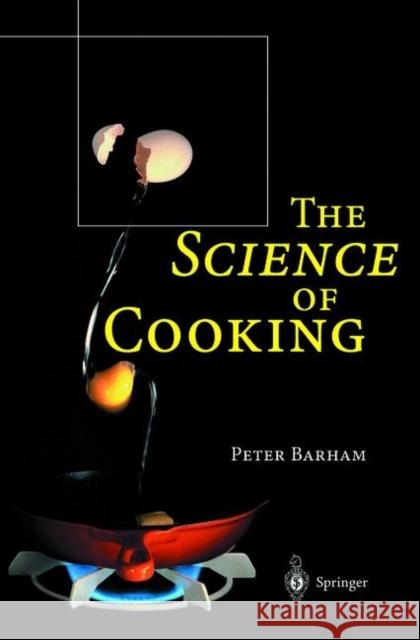
Peter Barham
The Science of Cooking Peter Barham 9783540674665 Springer-Verlag Berlin and Heidelberg GmbH &  - książkaWidoczna okładka, to zdjęcie poglądowe, a rzeczywista szata graficzna może różnić się od prezentowanej.

The Science of Cooking

ISBN-13: 9783540674665 / Angielski / Twarda / 2000 / 244 str.

Peter Barham
cena 362,27
(netto: 345,02 VAT:  5%)

Najniższa cena z 30 dni: 327,68
Termin realizacji zamówienia:
ok. 22 dni roboczych
Bez gwarancji dostawy przed świętami

Darmowa dostawa!

A kitchen is no different from most science laboratories and cookery may properly be regarded as an experimental science. Food preparation and cookery involve many processes which are well described by the physical sciences. Understanding the chemistry and physics of cooking should lead to improvements in performance in the kitchen. For those of us who wish to know why certain recipes work and perhaps more importantly why others fail, appreciating the underlying physical processes will inevitably help in unravelling the mysteries of the "art" of good cooking. Strong praise from the reviewers - "Will be stimulating for amateur cooks with an interest in following recipes and understanding how they work. They will find anecdotes and, sprinkled throughout the book, scientific points of information... The book is a pleasant read and is an invitation to become better acquainted with the science of cooking." - NATURE "This year, at last, we have a book which shows how a practical understanding of physics and chemistry can improve culinary performance Barham] first explains, in a lucid non-textbooky way, the principles behind taste, flavour and the main methods of food preparation, and then gives fool-proof basic recipes for dishes from roast leg of lab to chocolate souffle." - FINANCIAL TIMES WEEKEND "This book is full of interesting and relevant facts that clarify the techniques of cooking that lead to the texture, taste and aroma of good cuisine. As a physicist the author introduces the importance of models in preparing food, and their modification as a result of testing (tasting)."- THE PHYSICIST "Focuses quite specifically on the physics and food chemistry of practical domestic cooking in terms of real recipes... Each chapter starts with an overview of the scientific issues relevant to that food group, e.g. toughness of meat, thickening of sauces, collapse of sponge cakes and souffles. This is followed by actual recipes, with the purpose behind each ingredient and technique explained, and each recipe followed by a table describing some common problems, causes and solutions. Each chapter then ends with suggested experiments to illustrate some of the scientific principles exploited in the chapter." - FOOD & DRINK NEWSLETTER "


Kategorie:
Technologie
Kategorie BISAC:
Technology & Engineering > Food Science - General
Science > Chemia
Science > Fizyka
Wydawca:
Springer-Verlag Berlin and Heidelberg GmbH &
Język:
Angielski
ISBN-13:
9783540674665
Rok wydania:
2000
Wydanie:
2001
Ilość stron:
244
Waga:
0.54 kg
Wymiary:
24.0 x 16.7 x 2.0
Oprawa:
Twarda
Wolumenów:
01
Dodatkowe informacje:
Glosariusz/słownik
Wydanie ilustrowane

From the reviews:

"The Science of Cooking is organized into two distinct sections, with an introduction and ancillary material. ... The helpful Glossary provides basic definitions of chemical terms that many cooks may not have encountered. ... 'Foodies', chemists who are interested in food, and serious cooks will enjoy the spirit of this book." (Cheryl Baldwin Frech, Journal of Chemical Education, Vol. 81 (4), April, 2004)

"This year, at last, we have a book which shows how a practical understanding of physics and chemistry can improve culinary performance... [Barham] first explains, in a lucid non-textbooky way, the principles behind taste, flavour and the main methods of food preparation, and then gives fool-proof basic recipes for dishes from roast leg of lab to chocolate soufflé."
- FINANCIAL TIMES WEEKEND

"This book is full of interesting and relevant facts that clarify the techniques of cooking that lead to the texture, taste and aroma of good cuisine. As a physicist the author introduces the importance of models in preparing food, and their modification as a result of testing (tasting)."
-THE PHYSICIST

"Focuses quite specifically on the physics and food chemistry of practical domestic cooking in terms of real recipes. Industrial food technologists and process engineers will not find design equations or process flowsheets. Instead they, and those with more immediate home cooking interests, will find a clear, fascinating, informative and serviceable description of the scientific phenomena occurring during domestic cooking, and how to exploit an understanding thereof to achieve results consistently, adapt recipes confidently and adeptly rescue catastrophes. Each chapter starts with an overview of the scientific issues relevant to that food group, e.g. toughness of meat, thickening of sauces, collapse of sponge cakes and soufflés. This is followed by actual recipes, with the purpose behind each ingredient and technique explained, and each recipe followed by a table describing some common problems, causes and solutions. Each chapter then ends with suggested experiments to illustrate some of the scientific principles exploited in the chapter."
-FOOD & DRINK NEWSLETTER

"Will be stimulating for amateur cooks with an interest in following recipes and understanding how they work. They will find anecdotes and, sprinkled throughout the book, scientific points of information... The book is a pleasant read and is an invitation to become better acquainted with the science of cooking."
-NATURE

"You do not have to be a chemist or a physicist to cook a meal, any more than you need a qualification in engineering to drive a car; but in both cases, a little technical knowledge can help when things go wrong. That is the reasoning behind this odd volume that combines an explanation of the scientific principles of cooking with a down-to-earth guide to kitchen utensils, ... some experiments to try at home, and a random collection of around 40 recipes."
-THE ECONOMIST

"I believe that cooking is a bit like this: it is natural ability, not scientific knowledge that makes a good cook. Not withstanding, as physicists who are always asking "why is it so?," this book is full of interesting and relevant facts that clarify the techniques of cooking that lead to the texture, taste and aroma of good cuisine. As a physicist the author introduces the importance of models in preparing food, and their modification as a result of testing (tasting)"

- THE PHYSICIST

"...At last, we have a book which shows how a practical understanding of physics and chemistry can improve culinary performance ... [Barham] first explains, in a lucid non-textbooky way, the principles behind taste, flavour and the main methods of food preparation, and then gives fool-proof basic recipes for dishes from roast leg of lab to chocolate soufflé."

-Financial Times Weekend

"Will be stimulating for amateur cooks with an interest in following recipes and understanding how they work. They will find anecdotes and, sprinkled throughout the book, scientific points of information...The book is a pleasant read and is an invitation to become better acquainted with the science of cooking."

-Nature

1 Introduction.- 2 Sensuous Molecules — Molecular Gastronomy.- 3 Taste and Flavour.- 4 Heating and Eating — Physical Gastronomy.- 5 Cooking methods and utensils.- 6 Meat and Poultry.- 7 Fish.- 8 Breads.- 9 Sauces.- 10 Sponge Cakes.- 11 Pastry.- 12 Soufflés.- 13 Cooking with Chocolate.- Weights and Measurements.- Glossary of Terms.


Udostępnij

Facebook - konto krainaksiazek.pl


Opinie o Krainaksiazek.pl na Opineo.pl

Partner Mybenefit

Krainaksiazek.pl w programie rzetelna firma Krainaksiaze.pl - płatności przez paypal

Czytaj nas na:

Facebook - krainaksiazek.pl
  • książki na zamówienie
  • granty
  • książka na prezent
  • kontakt
  • pomoc
  • opinie
  • regulamin
  • polityka prywatności

Zobacz:

  • Księgarnia czeska

  • Wydawnictwo Książkowe Klimaty

1997-2025 DolnySlask.com Agencja Internetowa

© 1997-2022 krainaksiazek.pl
     
KONTAKT | REGULAMIN | POLITYKA PRYWATNOŚCI | USTAWIENIA PRYWATNOŚCI
Zobacz: Księgarnia Czeska | Wydawnictwo Książkowe Klimaty | Mapa strony | Lista autorów
KrainaKsiazek.PL - Księgarnia Internetowa

Polityka prywatnosci - link
Krainaksiazek.pl - płatnośc Przelewy24
Przechowalnia Przechowalnia





