• Wyszukiwanie zaawansowane
  • Kategorie
  • Kategorie BISAC
  • Książki na zamówienie
  • Promocje
  • Granty
  • Książka na prezent
  • Opinie
  • Pomoc
  • Załóż konto
  • Zaloguj się

The Role of Organic Matter in Modern Agriculture » książka


zaloguj się | załóż konto
Logo Krainaksiazek.pl

koszyk

konto

szukaj
topmenu
Księgarnia internetowa
Szukaj
Książki na zamówienie
Promocje
Granty
Książka na prezent
Moje konto
Pomoc
 
 
Wyszukiwanie zaawansowane
Pusty koszyk
Bezpłatna dostawa dla zamówień powyżej 20 złBezpłatna dostawa dla zamówień powyżej 20 zł

Kategorie główne

• Nauka
 [2949965]
• Literatura piękna
 [1857847]

  więcej...
• Turystyka
 [70818]
• Informatyka
 [151303]
• Komiksy
 [35733]
• Encyklopedie
 [23180]
• Dziecięca
 [617748]
• Hobby
 [139972]
• AudioBooki
 [1650]
• Literatura faktu
 [228361]
• Muzyka CD
 [398]
• Słowniki
 [2862]
• Inne
 [444732]
• Kalendarze
 [1620]
• Podręczniki
 [167233]
• Poradniki
 [482388]
• Religia
 [509867]
• Czasopisma
 [533]
• Sport
 [61361]
• Sztuka
 [243125]
• CD, DVD, Video
 [3451]
• Technologie
 [219309]
• Zdrowie
 [101347]
• Książkowe Klimaty
 [123]
• Zabawki
 [2362]
• Puzzle, gry
 [3791]
• Literatura w języku ukraińskim
 [253]
• Art. papiernicze i szkolne
 [7933]
Kategorie szczegółowe BISAC

The Role of Organic Matter in Modern Agriculture

ISBN-13: 9789024733606 / Angielski / Twarda / 1986 / 306 str.
Y. Chen; Y. Avinmelech; Y. Avnimelech
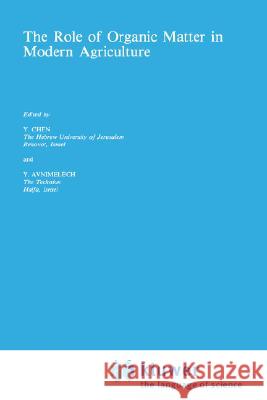
The Role of Organic Matter in Modern Agriculture Y. Chen Y. Avinmelech Y. Avnimelech 9789024733606 Springer - książkaWidoczna okładka, to zdjęcie poglądowe, a rzeczywista szata graficzna może różnić się od prezentowanej.

The Role of Organic Matter in Modern Agriculture

ISBN-13: 9789024733606 / Angielski / Twarda / 1986 / 306 str.

Y. Chen; Y. Avinmelech; Y. Avnimelech
cena 201,72
(netto: 192,11 VAT:  5%)

Najniższa cena z 30 dni: 192,74
Termin realizacji zamówienia:
ok. 22 dni roboczych
Bez gwarancji dostawy przed świętami

Darmowa dostawa!

The use of organic residues as a means of maintaining and increasing soil fertility is of long-standing. This tradition has been somewhat neglected since the introduc tion of mineral fertilizers at low cost. More and more farmers and scientists are now showing renewed interest in the proper and effective use of org tnic residues, composts and other recycled organic additives. The role and function of organic amendments in modern agricultural systems have become topics of major interest in the scientific and agricultural communities. Research work on residue disposal has provided new concepts on the interaction between organic components and soils as well as new handling technologies (e. g. pelletizing of organic residues). The trend to conserve energy has led scientists to study the minimal tillage system, to find ways of replacing conventional inorganic fertilizers with natural organic prod ucts or microbial preparations, and to develop new composting methods. The drive to achieve higher yields in commercial greenhouse farming has led to a search for optimum substrates as growth media and for improved management techniques. This has led to the introduction of organic substitutes for peat, nota bly those originating from agricultural wastes. Another important aspect is the current interest in organic farming, where use of synthetic chemicals is avoided or prohibited. An increasing percentage of the population in highly developed countries is willing to pay premium prices for food produced on soils where inorganic fertilizers and other agricultural chemicals have not been used."


Kategorie:
Nauka, Biologia i przyroda
Kategorie BISAC:
Technology & Engineering > Agriculture - General
Science > Environmental Science (see also Chemistry - Environmental)
Nature > Environmental Conservation & Protection - General
Wydawca:
Springer
Seria wydawnicza:
Developments in Plant and Soil Sciences
Język:
Angielski
ISBN-13:
9789024733606
Rok wydania:
1986
Wydanie:
1986
Numer serii:
000070325
Ilość stron:
306
Waga:
0.63 kg
Wymiary:
23.39 x 15.6 x 2.06
Oprawa:
Twarda
Wolumenów:
01
Dodatkowe informacje:
Bibliografia
Wydanie ilustrowane

1. Organic residues in modern agriculture.- 1.1 Introduction.- 1.2 Supply of nutrients by organic additives.- 1.3 Effects of organic additives on the physical properties of the — soil.- 1.4 Effects of organic amendments on yield.- 1.5 Conclusions.- 1.6 References.- Section 1: Nitrogen and phosphorus supply to plants by organic matter and their transformations.- 2. Effects of organic matter on nitrogen and phosphorus supply to plants.- 2.1 Introduction.- 2.2 Nitrogen.- 2.2.1 Forms of organic N in soil.- 2.2.2 N mineralization.- 2.2.2.1 Organic soils.- 2.2.2.2 Mineral soils.- 2.2.3 Available nitrogen.- 2.2.3.1 Chemical extractants.- 2.2.3.2 Incubation procedures.- 2.2.3.3 Field estimates of N availability.- 2.2.3.4 Crop uptake of soil N.- 2.2.4 Environmental influences.- 2.2.5 Forest soils.- 2.3 Phosphorus.- 2.3.1 Nature of soil organic P.- 2.3.2 P mineralization.- 2.3.2.1 Phosphatases.- 2.3.2.2 Effect of liming.- 2.3.3 Soil organisms in relation to P availability.- 2.4 Organic amendments.- 2.4.1 Animal manures.- 2.4.2 Other organic amendments.- 2.5 Conclusions.- 2.6 References.- 3. The role of organic matter and ammonium in producing high corn yields.- 3.1 Introduction.- 3.2 Review of literature.- 3.2.1 Beneficial effect on yields of organic manures.- 3.2.2 Ammonium and nitrate as a nitrogen source.- 3.2.3 Energy requirements for NH+4 -grown and NO?3 -grown — plants and for the combined sources.- 3.3 Results.- 3.4 Discussion.- 3.5 References.- 4. Nitrogen transformations in Histosols.- 4.1 Introduction.- 4.2 Histosol subsidence.- 4.3 Nitrogen mineralization.- 4.4 Nitrification.- 4.5 Nitrogen in drainage water of organic soils.- 4.6 Denitrification.- 4.7 Conclusions.- 4.8 References.- Section II: Effects of soil organic matter and redox on micronutrients availability to plants.- 5. Soil organic matter interactions with trace elements.- 5.1 Introduction.- 5.2 Importance of complexes of Fe, Mn, Zn and Cu with humic — substances to agriculture.- 5.2.1 Physiological and biochemical functions.- 5.2.2 Transport of micronutrients to plant roots.- 5.2.3 Supply of micronutrients to higher plants.- 5.3 Nature of organic complexing agents in soil.- 5.3.1 Defined biochemical compounds.- 5.3.2 Humic substances.- 5.3.2.1 Extraction and fractionation.- 5.3.2.2 Mechanisms of metal ion binding by humic and fulvic acids.- 5.3.2.3 Solubility characteristics.- 5.3.2.4 Metal ion binding capacity.- 5.3.2.5 Reduction properties.- 5.4 Use of micronutrient-enriched organic wastes and naturally — occuring metal organic complexes as soil amendments.- 5.4.1 Iron-organo complexes.- 5.4.1.1 Polyflavenoids and lignosulfonates.- 5.4.1.2 Manure and composts.- 5.4.1.3 Sewage sludge.- 5.4.1.4 Coal, lignite and peat.- 5.4.2 Zinc-, copper- and manganese- organo complexes.- 5.5 Stability constants of metal complexes with humic and fulvic — acids.- 5.5.1 General considerations.- 5.5.2 Modeling approaches.- 5.5.2.1 Macromolecule as the central group.- 5.5.2.2 Metal ion as the central group.- 5.5.2.3 Polynuclear complexes.- 5.6 Summary and conclusions.- 5.7 References.- 6. Effect of soil redox conditions on microbial oxidation of organic matter.- 6.1 Introduction.- 6.2 Sources and types of organic matter.- 6.2.1 Soil organic matter.- 6.2.2 Root exudates.- 6.2.3 Added substrates.- 6.3 Role of inorganic redox couples on microbial respiration.- 6.3.1 Aerobic respiration.- 6.3.2 Facultative anaerobic respiration.- 6.3.3 Nitrate respiration.- 6.3.4 Manganese respiration.- 6.3.5 Iron respiration.- 6.3.6 Anaerobic respiration.- 6.3.7 Sulfate respiration.- 6.3.7.1 Fermentation.- 6.4 Kinetics of microbial organic matter oxidation.- 6.4.1 Rate of reaction.- 6.4.2 Soil and environmental factors.- 6.4.2.1 Soil moisture.- 6.4.2.2 Oxidant supply.- 6.4.2.3 Temperature.- 6.4.3 Substrate factors.- 6.5 Influence of aerobic/anaerobic respiration of organic matter — on soil biochemical processes.- 6.5.1 Nitrogen.- 6.5.2 Phosphorus.- 6.5.3 Potassium, calcium and magnesium.- 6.5.4 Sulfur.- 6.5.5 Micronutrients and heavy metals.- 6.6 Agronomic and environmental significance.- 6.7 References.- Section III: Soil microorganisms, biofertilizers and biocontrol agents: their interactions with soil organic matter and effects on soil fertility.- 7. Soil microorganisms, soil organic matter and soil fertility.- 7.1 Introduction.- 7.2 The living fraction (plants, animals, microorganisms).- 7.3 The dead fraction: Fresh organic matter.- 7.4 The natural soil organic matter: Humus.- 7.5 The role of soil microorganisms in phosphorus availability — to higher plants.- 7.6 Subsoil, humus and fertility.- 7.7 Biological transformation of microbial residues in soil.- 7.8 Nitrogen fixation and soil organic matter.- 7.9 Rhizosphere microflora, organic matter and soil fertility.- 7.10 Soil organic matter and plant diseases.- 7.11 Conclusions.- 7.12 References.- 8. The role of organic matter in the introduction of biofertilizers and biocontrol agents to soils.- 8.1 Introduction.- 8.2 Rhizobium.- 8.3 Azotobacter and other free living bacteria.- 8.4 Vesicular-arbuscular mycorrhizae.- 8.5 Ectomycorrhiza.- 8.6 Systems for biological control of soilborne plant pathogens.- 8.7 Conclusions.- 8.8 References.- Section IV: Effects of soil organic matter and applied sewage sludge on soil structure and fertility.- 9. Soil organic matter extraction, fractionation, structure and effects on soil structure.- 9.1 Introduction.- 9.2 Structure of humus materials.- 9.3 Extraction of humic substances.- 9.4 Extraction of soil polysaccharides.- 9.5 Fractionation of humic substances.- 9.6 Fractionation of soil polysaccharides.- 9.7 Primary structures of humic substances.- 9.8 Secondary and terrtiary structures of humic substances.- 9.9 General conclusions from studies of humic structures.- 9.10 Structures of soil polysaccarides.- 9.11 Interactions of humus materials with soil inorganic — components.- 9.12 Humic substances — clay interactions.- 9.13 Soil polysaccharide — clay interactions.- 9.14 Humus — oxyhydroxide interactions.- 9.15 Humus and soil aggregates.- 9.16 References.- 10. Sewage sludge organic matter and soil properties.- 10.1 Introduction.- 10.2 Effect of sewage sludge organic matter on soil physical — properties.- 10.2.1 Bulk density.- 10.2.2 Aggregation and aggregate stability.- 10.2.3 Porosity and pore size distribution.- 10.3 Hydraulic conductivity.- 10.3.1 Moisture retention.- 10.3.2 Effect of sewage sludge organic matter on soil chemical — properties.- 10.3.3 Carbon.- 10.3.4 Nitrogen.- 10.3.5 pH.- 10.3.6 Cation exchange capacity.- 10.3.7 Electrical conductivity.- 10.3.8 Phosphorus.- 10.3.9 Metals.- 10.3.10 Redox potential.- 10.4 Effect of sewage sludge organic matter on soil biological — properties.- 10.4.1 Microorganisms.- 10.4.2 Macrofauna.- 10.4.3 Plants.- 10.5 References.- Section V: The use of peat and composts as container media.- 11. Peat and peat subsitutes as growth media for container-grown plants.- 11.1 Historical review.- 11.2 General introduction.- 11.2.1 Physical properties.- 11.2.2 Chemical properties.- 11.2.3 Other properties.- 11.3 Physical characteristics.- 11.3.1 Bulk and particle density.- 11.3.1.1 Particle and pore size distribution.- 11.3.2 Porosity and aeration.- 11.3.3 Water holding capacity (water retention curve).- 11.4 Chemical characteristics.- 11.4.1 Carbon/Nitrogen (C/N) ratio.- 11.4.2 Cation exchange capacity.- 11.4.3 Substrate pH.- 11.4.4 Nutrients availability in organic substrates.- 11.5 Biological characteristics.- 11.5.1 Decomposition rate.- 11.5.2 Effects of decomposition products.- 11.5.2.1 Enzymatic activity.- 11.5.2.2 Growth regulating activity.- 11.6 Organic materials used as growth media.- 11.6.1 Peat.- 11.6.2 Peat substitutes.- 11.6.2.1 Bark.- 11.6.2.2 Sawdust and woodchips.- 11.6.2.3 Sewage sludge and municipal composts.- 11.6.2.4 Treated animal excreta.- 11.6.2.5 Other organic materials.- 11.7 References.- 12. Effects of composts in growth media on soilborne pathogens.- 12.1 Introduction.- 12.2 The composting process.- 12.3 Maturity of composts.- 12.4 Chemical properties.- 12.5 Physical properties.- 12.6 Biological properties.- 12.7 References.


Udostępnij

Facebook - konto krainaksiazek.pl


Opinie o Krainaksiazek.pl na Opineo.pl

Partner Mybenefit

Krainaksiazek.pl w programie rzetelna firma Krainaksiaze.pl - płatności przez paypal

Czytaj nas na:

Facebook - krainaksiazek.pl
  • książki na zamówienie
  • granty
  • książka na prezent
  • kontakt
  • pomoc
  • opinie
  • regulamin
  • polityka prywatności

Zobacz:

  • Księgarnia czeska

  • Wydawnictwo Książkowe Klimaty

1997-2025 DolnySlask.com Agencja Internetowa

© 1997-2022 krainaksiazek.pl
     
KONTAKT | REGULAMIN | POLITYKA PRYWATNOŚCI | USTAWIENIA PRYWATNOŚCI
Zobacz: Księgarnia Czeska | Wydawnictwo Książkowe Klimaty | Mapa strony | Lista autorów
KrainaKsiazek.PL - Księgarnia Internetowa

Polityka prywatnosci - link
Krainaksiazek.pl - płatnośc Przelewy24
Przechowalnia Przechowalnia






