• Wyszukiwanie zaawansowane
  • Kategorie
  • Kategorie BISAC
  • Książki na zamówienie
  • Promocje
  • Granty
  • Książka na prezent
  • Opinie
  • Pomoc
  • Załóż konto
  • Zaloguj się

The Risk of Water Conflicts in Aotearoa-New Zealand » książka


zaloguj się | załóż konto
Logo Krainaksiazek.pl

koszyk

konto

szukaj
topmenu
Księgarnia internetowa
Szukaj
Książki na zamówienie
Promocje
Granty
Książka na prezent
Moje konto
Pomoc
 
 
Wyszukiwanie zaawansowane
Pusty koszyk
Bezpłatna dostawa dla zamówień powyżej 20 złBezpłatna dostawa dla zamówień powyżej 20 zł

Kategorie główne

• Nauka
 [2946912]
• Literatura piękna
 [1852311]

  więcej...
• Turystyka
 [71421]
• Informatyka
 [150889]
• Komiksy
 [35717]
• Encyklopedie
 [23177]
• Dziecięca
 [617324]
• Hobby
 [138808]
• AudioBooki
 [1671]
• Literatura faktu
 [228371]
• Muzyka CD
 [400]
• Słowniki
 [2841]
• Inne
 [445428]
• Kalendarze
 [1545]
• Podręczniki
 [166819]
• Poradniki
 [480180]
• Religia
 [510412]
• Czasopisma
 [525]
• Sport
 [61271]
• Sztuka
 [242929]
• CD, DVD, Video
 [3371]
• Technologie
 [219258]
• Zdrowie
 [100961]
• Książkowe Klimaty
 [124]
• Zabawki
 [2341]
• Puzzle, gry
 [3766]
• Literatura w języku ukraińskim
 [255]
• Art. papiernicze i szkolne
 [7810]
Kategorie szczegółowe BISAC

The Risk of Water Conflicts in Aotearoa-New Zealand

ISBN-13: 9783031066627 / Angielski / Miękka / 2023
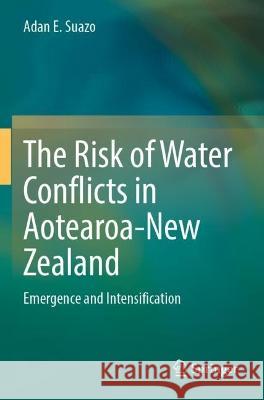
Adan E. Suazo
The Risk of Water Conflicts in Aotearoa-New Zealand Adan E. Suazo 9783031066627 Springer International Publishing - książkaWidoczna okładka, to zdjęcie poglądowe, a rzeczywista szata graficzna może różnić się od prezentowanej.

The Risk of Water Conflicts in Aotearoa-New Zealand

ISBN-13: 9783031066627 / Angielski / Miękka / 2023

Adan E. Suazo
cena 403,47
(netto: 384,26 VAT:  5%)

Najniższa cena z 30 dni: 385,52
Termin realizacji zamówienia:
ok. 22 dni roboczych
Bez gwarancji dostawy przed świętami

Darmowa dostawa!
inne wydania

This book focuses on water disputes in New Zealand: a country where such conflicts are assumed to be non-existing. Rarely are water disputes examined in areas where water resources abound, and where the political framework that governs their access and use is strong.Environmental security literature has devoted a significant amount of attention to the nexus between resource abundance and conflict.  Important research has assessed this relationship by focusing on non-renewable resource wealth as a causal determinant of conflict, but little is known about the conditions that influence the emergence and intensification of conflict in water abundant environments.  By most accounts, New Zealand is one of the most water-rich countries in the world.  Even though violent conflict over water does not normally materialize in New Zealand, conflicts and incompatible claims motivated by water bottling, the growth of some types of agriculture, tourism, and water treatment strategies, continue to surface.  Little, however, is known about how and why these conflicts emerge and intensify in a country such as New Zealand.To address this lacuna, this project asks the following research question: How and why does the commercialization of freshwater influence the emergence and intensification of hydropolitical conflict in New Zealand?  This study presents two central arguments.  First, that the introduction of a commercial enterprise motivates the emergence of hydropolitical conflict intentionality if the enterprise is incompatible with the interests of local communities.  And second, hydropolitical conflict risk intensifies in accordance with the level of trust that communities pose upon the approval and appeals process that supports a commercial operation.  To test these arguments, this study examines the effects of water bottling and water chlorination on the towns of Ashburton (Canterbury) and Glenorchy (Otago), by employing a tripartite analysis comprised, first, of a conflict intentionality and engagement assessment, second, of a comparative case study analysis, and third, of a conflict intentionality classification.  The data suggests that hydropolitical conflict risk is low when communities trust the approval and appeals process behind any given commercial operation.  Water-based conflict risk however is likely to escalate when local communities lose trust in the above processes and the institutions that administer them.


Kategorie:
Nauka, Geografia
Kategorie BISAC:
Science > Earth Sciences - Hydrology
Law > Civil Law
Science > Environmental Science (see also Chemistry - Environmental)
Wydawca:
Springer International Publishing
Język:
Angielski
ISBN-13:
9783031066627
Rok wydania:
2023
Waga:
0.24 kg
Wymiary:
23.5 x 15.5
Oprawa:
Miękka
Dodatkowe informacje:
Wydanie ilustrowane

Chapter 1. Introduction.- Chapter 2. Revisiting Abundance Theory.- Chapter 3. Water Abundance and Water Incompatibilities in New Zealand.- Chapter 4. Research Design.- Chapter 5. Glenorchy.- Chapter 6. Ashburton.- Chapter 7. Analysis.- Chapter 8. Conflict Intentionality Classification.- Chapter 9. Research Intersections and Limitations.- Chapter 10. Conclusions.

Adan E. Suazo is a Senior Policy Analyst at the Department of Internal Affairs (New Zealand) and a Research Associate at the National Centre for Peace and Conflict Studies at the University of Otago (New Zealand). His research interests include the conditions that influence the emergence and intensification of subnational water disputes, and the development of stakeholder identification and engagement strategies to support environmental peacebuilding processes. His policy work has included strengthening drinking water regulations, scoping national strategies to improve stormwater management, and leading work to reconfigure local governance structures. He has previously held posts in New Zealand’s Ministry for the Environment and has worked as an independent consultant on local water governance design and community engagement. As the founding Coordinator of the Loyola Sustainability Research Centre at Concordia University (Canada), he worked on sustainability and peacebuilding projects with the International Secretariat for the Convention on Biological Diversity, the United Nations Environmental Education and Training Unit, and Future Earth.

This book focuses on water disputes in New Zealand: a country where such conflicts are assumed to be non-existing. Rarely are water disputes examined in areas where water resources abound, and where the political framework that governs their access and use is strong.

Environmental security literature has devoted a significant amount of attention to the nexus between resource abundance and conflict.  Important research has assessed this relationship by focusing on non-renewable resource wealth as a causal determinant of conflict, but little is known about the conditions that influence the emergence and intensification of conflict in water abundant environments.  By most accounts, New Zealand is one of the most water-rich countries in the world.  Even though violent conflict over water does not normally materialize in New Zealand, conflicts and incompatible claims motivated by water bottling, the growth of some types of agriculture, tourism, and water treatment strategies, continue to surface.  Little, however, is known about how and why these conflicts emerge and intensify in a country such as New Zealand.

To address this lacuna, this project asks the following research question: How and why does the commercialization of freshwater influence the emergence and intensification of hydropolitical conflict in New Zealand?  This study presents two central arguments.  First, that the introduction of a commercial enterprise motivates the emergence of hydropolitical conflict intentionality if the enterprise is incompatible with the interests of local communities.  And second, hydropolitical conflict risk intensifies in accordance with the level of trust that communities pose upon the approval and appeals process that supports a commercial operation.  To test these arguments, this study examines the effects of water bottling and water chlorination on the towns of Ashburton (Canterbury) and Glenorchy (Otago), by employing a tripartite analysis comprised, first, of a conflict intentionality and engagement assessment, second, of a comparative case study analysis, and third, of a conflict intentionality classification.  The data suggests that hydropolitical conflict risk is low when communities trust the approval and appeals process behind any given commercial operation.  Water-based conflict risk however is likely to escalate when local communities lose trust in the above processes and the institutions that administer them.




Udostępnij

Facebook - konto krainaksiazek.pl


Opinie o Krainaksiazek.pl na Opineo.pl

Partner Mybenefit

Krainaksiazek.pl w programie rzetelna firma Krainaksiaze.pl - płatności przez paypal

Czytaj nas na:

Facebook - krainaksiazek.pl
  • książki na zamówienie
  • granty
  • książka na prezent
  • kontakt
  • pomoc
  • opinie
  • regulamin
  • polityka prywatności

Zobacz:

  • Księgarnia czeska

  • Wydawnictwo Książkowe Klimaty

1997-2025 DolnySlask.com Agencja Internetowa

© 1997-2022 krainaksiazek.pl
     
KONTAKT | REGULAMIN | POLITYKA PRYWATNOŚCI | USTAWIENIA PRYWATNOŚCI
Zobacz: Księgarnia Czeska | Wydawnictwo Książkowe Klimaty | Mapa strony | Lista autorów
KrainaKsiazek.PL - Księgarnia Internetowa

Polityka prywatnosci - link
Krainaksiazek.pl - płatnośc Przelewy24
Przechowalnia Przechowalnia




